
Disrupting Everything You’ve Been Told About GLP-1s - 271
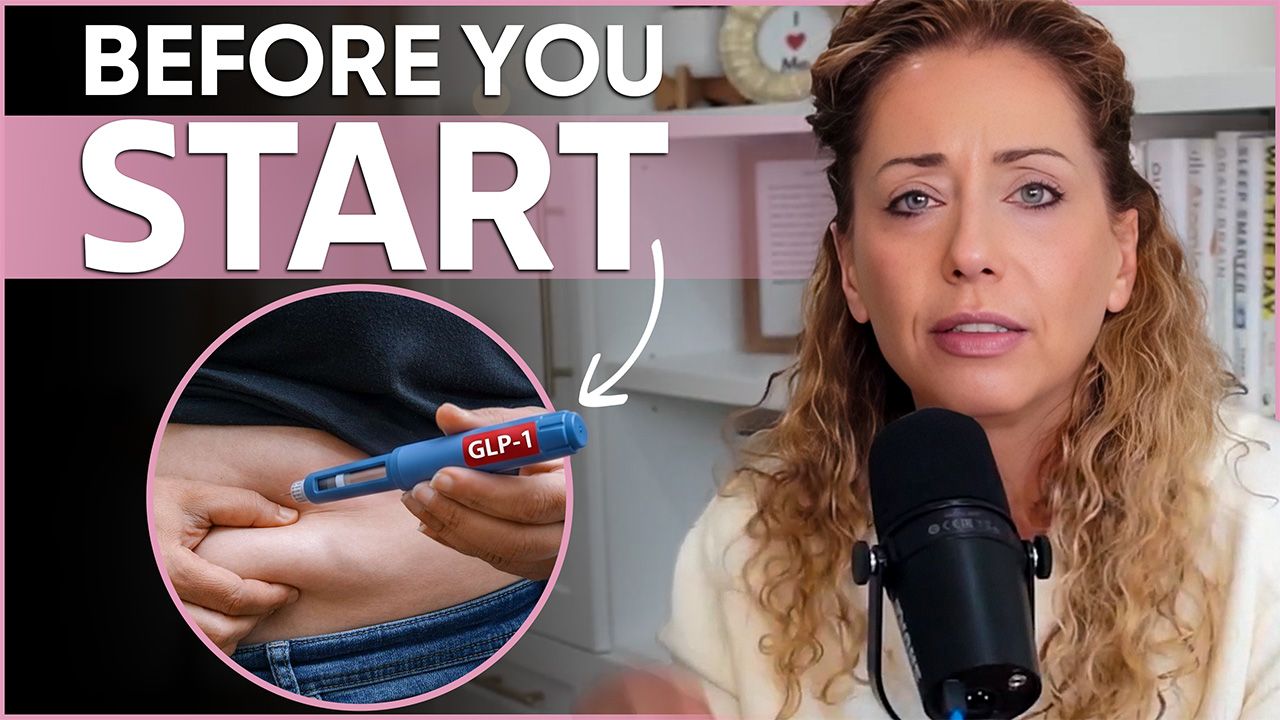
Everyone is talking about GLP-1s right now, but what if we’re missing the most important part of the conversation? In this episode, I’m diving into a conversation that most people are avoiding when it comes to GLP-1 weight loss drugs. I’m challenging the deep beliefs that drive the desire for weight loss in the first place.
Plus, I walk you through five critical areas about health that most of us overlook. If you’ve ever thought that losing weight will make you feel confident or worthy, this episode will shift your focus from shrinking your body to expanding your life. Real transformation doesn’t come from a prescription; it comes from within.

Conclusion:
Weight loss might change your body, but it won’t change how you feel about yourself unless you do the deeper work. You are already worthy. Now it’s time to learn how to show up like you believe it, and choose empowerment over quick fixes.
In This Episode:
00:00 The bigger GLP-1 conversation
05:10 Attaching self-worth to weighing less
10:18 Choosing identity over outcome goals
15:54 Find out your “why” for losing weight
20:58 3 questions to ask before starting GLP-1s
24:56 Empowerment and pride when you change from the inside out
29:22 The true source of self-confidence: my China story
33:39 Final takeaways and episode wrap-up
Mentioned in the Episode
Join Carrie every morning live on Instagram: https://www.instagram.com/carrie_lupoli/
Learn more about PFC Pals: https://pfcpals.com/
Join the waiting list for Carrie’s upcoming book, From Corset to Crown!
Sign up here: https://www.carrielupoli.com/corsettocrown
Listen to This Episode on Your Favorite Podcast Channel:
Follow and listen on Apple
Follow and listen on Spotify
Subscribe and watch on YouTube
Connect with Carrie Lupoli:
Other Related Episodes:
Looking for more tips to optimize your health? Listen to these episodes:
- The Dark Side of Keto: What’s Really Happening to Your Body?
- The Hidden Dangers of Intermittent Fasting (Women Over 40 Need This)
Transcript:
[00:00:00] Carrie Lupoli: Everyone right now is talking about GLP ones, the science, the side effects, whether they work, whether they don't, but today I'm not gonna get into any of that because I think we're missing a much bigger conversation. One about your identity, your self worth, and the belief that becoming smaller will somehow make you more.
[00:00:15] Carrie Lupoli: So today I'm gonna disrupt everything you've been told about GLP ones, because even if you think they work, they may not be giving you what you're. Actually looking for. And if we don't talk about that, we're just repeating the same cycle in a different form.
[00:00:34] Carrie Lupoli: Well, hey, diet disruptors, this is gonna be an interesting conversation 'cause I'm gonna dig into some of my thoughts, feelings, emotions around the weight loss shot around GLP ones around whether or not this is something that, uh, I feel like we should be as a society. Digging into now, I, I mean, I hear all the arguments from [00:01:00] doctors, dieticians, nutritionists, health coaches around the argument for GLP ones, and I totally get it.
[00:01:07] Carrie Lupoli: I am not going to use this episode today. At all to talk about any of that. I don't wanna talk about the science of the drug, the pros and the cons, because we could go back and forth on that all day. It's so interesting when you see my feed, because you see my feed of people that are pro GLP ones, and then people that are not pro GLP ones and they're always talking about the medication, the side effects, all of that kind of stuff.
[00:01:36] Carrie Lupoli: The, the muscle loss and dah, dah, dah. I am not gonna tap into that today at all. I think if you, if this is something that you feel like you want to do, you can find the research to support it scientifically, you can find the research to support, to not support it scientifically. When I went through fertility, I, uh, in infertility, I had many, many years of being [00:02:00] infertile.
[00:02:01] Carrie Lupoli: And my husband and I had to make a decision about where we were gonna draw the line in the sand when it came to interventions with this issue. Like how far down the road were we gonna go? And we knew that IVF was as far as we were gonna go if we could not be successful with IVF. Then we were going to look into adoption and as it turns out, we had our first daughter through IVF.
[00:02:26] Carrie Lupoli: We went through IVF again a second time, and, uh, while we. Got pregnant, we ended up losing the baby. And so then we knew that adoption was, uh, next on our list and, and I think everybody has to have an understanding of like, where am I willing to go when it comes to a pharmaceutical intervention for what I want or what I need?
[00:02:48] Carrie Lupoli: So we're not gonna get into that today. I am gonna get into a conversation that I don't think is brought up very often, and it has to do with the emotional, the [00:03:00] mental, the mindset and our worthiness when it comes to the GLP one. And, and that might sound odd, and you're like, what are we talking about? But.
[00:03:10] Carrie Lupoli: If, I mean I, I run the Diet Disruptors podcast. I am really trying to disrupt. The industry when it comes to the cultural conditioning that has been forced upon us since we were young. Essentially, it's re the whole reason I wrote my book from Corset to Crown. We were all forced in a way to wear a corset, not a physical one, but a metaphorical one.
[00:03:36] Carrie Lupoli: One that is based on food rules, cultural conditioning, and the belief that we have to be smaller in order to be. Better to be worthy. If someone says, you look great, it's code for you. Look smaller. We, in this country especially, but really, truly all around the world, have been so focused on the outside and we know that this is true.
[00:03:56] Carrie Lupoli: I mean, for generations, because my [00:04:00] mom's beliefs seeped into my beliefs, and it was her mom's beliefs that seeped into her beliefs. You can go down the path of weight loss drugs or the pharmaceutical interventions of trying to. Sell weight loss as also connected to health. And my contention is that the two are very different.
[00:04:23] Carrie Lupoli: When you chase weight loss, you are going after something for very specific reasons versus when you go after health. And so I feel like I have to bring into the conversation the GLP one, but through a different lens, a different perspective, one around diet culture. Because we aren't talking about this as much as we need to, and whenever I hear the GLP one argument, it's around the pros and the cons physically of taking a GLP one, which I have a lot of opinions on, [00:05:00] but I'm going to dig into the five things that.
[00:05:04] Carrie Lupoli: We haven't been talking about and we haven't been considering when it comes to a GLP one. So the first piece that I want us to tap into has everything to do with diet, culture, everything to do with, I believe, what the weight loss industry has been profiting on when it comes to women. It's the belief that our worth is based on a number on a scale that we believe we have to weigh less.
[00:05:34] Carrie Lupoli: That we have to continue to be on this journey of seeing how low we can get on the scale in order for us to be confident, in order for us to have self-worth. I know that was my case. I remember squeezing the fat in the back of my legs while looking in the mirror and watching my daughter walk in and see me doing it, believing that if my legs were smaller.
[00:05:55] Carrie Lupoli: Then I would be happy, then I would allow, be allowed to be confident. I [00:06:00] didn't take a picture in front of my kids unless a scale that day told me I was worthy. And when we think about that, so many women can relate to it. And I guess what I am struggling with with this GLP one is that the words we keep using are weight loss, weight loss, weight loss, weight loss, as if that is the goal.
[00:06:24] Carrie Lupoli: Weight gain and stubborn weight loss is a symptom of our health and hormone. So if it's a symptom, why do we keep going after the symptom versus the root cause? It is not the weight that is making us sick. The weight is one external component of what's going on inside our body. But when it comes to self-worth, and, and Jamie Cron Lima, author of the book, worthy First brought this up and I just, I, I can't say it enough.
[00:06:55] Carrie Lupoli: When we were born, when we were a baby. We were loved, [00:07:00] we were worthy. We didn't have to do anything for it. You can see a complete stranger walking a newborn baby, and there's something inside of you that's like, oh, there's something about that newborn life. They don't have to do anything to earn their worth, but at some point.
[00:07:18] Carrie Lupoli: When the corset was put on us, we believed that we then had to transition to earning it, that that worth was somehow stripped away from us. We put on the corset and believed that we had to continue to tighten it in order for our value to be true. W why when did that happen? And what I am seeing with the GLP one is that I get it.
[00:07:45] Carrie Lupoli: I have worked with thousands of women and that when they are an of a certain size. They, there's this, and I, and I know because I remember feeling this way as well, [00:08:00] that we are being judged for this our size. Uh, every woman that I talk to says that they feel like they can see people judging them in terms of if they are obese or if they are larger, because our society has decided that smaller equals better.
[00:08:18] Carrie Lupoli: Right? But another. Comment that has been made around worthiness is the idea that like somebody that's smaller can go have a burger and feel like they can eat a burger and enjoy it without being judged. And somebody that's larger will be judged if she has that burger. And all of that I know is a true sentiment in so many women's hearts.
[00:08:43] Carrie Lupoli: So that, well, I always say to my kids, you can't play the game of guess what's in my head. I get where that comes from. But it is a direct relation to how we view ourselves and our own self-worth. And so the GLP one, [00:09:00] if it allows us to lose weight. Does not fix that. And the reason I know that is because I remember when I actually lost all the weight that I wanted to lose by teaching the nutritional concept of blood sugar stabilization.
[00:09:12] Carrie Lupoli: By by. By doing that, which is the same concept that I teach now to women, I just didn't have the right mindset when I was going through that. I was affirmed that my value was in what I looked like because as soon as I got smaller, people started commenting. It made me believe that I was right, that my self worth was actually in what I looked like and what we are doing by having these GLP ones.
[00:09:39] Carrie Lupoli: Make us smaller. It's just affirming that our self-worth is in what we look like. Instead of doing the work to actually love ourselves. What we're doing is shrinking ourselves and literally falling into the trap of the corset and then being reaffirmed that that is truth and that is dangerous [00:10:00] to me. So the concept of self-worth is one that we aren't actually acknowledging because the GLP one is almost like putting a bandaid on the idea of worthiness.
[00:10:12] Carrie Lupoli: We're not fixing the problem that we believe our value is in what we look like. The second thing that I think is a real issue when it comes to just blindly deciding, I'm gonna go on a GLP one and, and maybe not even blindly, you could be doing the research, but there is a piece around our identity that gets lost when we go after the GLP one.
[00:10:37] Carrie Lupoli: And this is what I mean. I don't believe in setting goals for our health like a weight goal. I don't even want us to necessarily have this goal that says, I want to reduce my A one T by this many points by this date, because these are outcome goals that we really don't have control over when it comes to the time.
[00:10:59] Carrie Lupoli: I will also say [00:11:00] that we don't even know what our ideal weight is, what our optimal weight is. We will get to our optimal weight when we get to our optimal health. But we set these goals in front of us and they become very, very hard to be able to reach because they're not actually within our control. We have, we can control our behaviors and our behaviors are directly aligned with our thoughts and our beliefs.
[00:11:23] Carrie Lupoli: Our behaviors are directly connected to our identity, and if we can actually work on changing our behaviors. Which is a result of changing our belief systems, which means we have to actually identify as a different kind of a person than how we are showing up right now. A GLP one is not going to help us do that.
[00:11:49] Carrie Lupoli: Instead of these goals, these outcome goals, I have my clients work on a blueprint I call the healthiest version of yourself. So what does the healthiest version [00:12:00] of you do? Say, think and believe. Now, notice I didn't say, what does the smallest version of you do? Say, think and believe. It is the healthiest version because the conversation constantly goes to weight loss.
[00:12:10] Carrie Lupoli: Weight loss, weight loss, weight loss. It's called the weight loss drug. It is the weight loss industry. It's not the health industry. It is not a health drug, and when our identity is around constantly trying to lose weight, we are not focused on truly what it means to be healthy from the inside out, and it's something that never actually gets accomplished when we start to lose weight by a drug.
[00:12:35] Carrie Lupoli: Now, I will tell you in truly the thousands of people that I have talked to about this very topic. The women that I have coached through this idea of identity, I have met one woman, one that went on a GLP one, and it was exactly what she needed to change her identity as a healthy person. I was shocked when I had this conversation [00:13:00] with her.
[00:13:00] Carrie Lupoli: She went on a GLP one and within the very first week she was like, if I am going to do this, I am going to change my lifestyle. And she identified what the healthiest version of her did said. Believed thought within two months she was off the drug and she had run her first marathon within six months.
[00:13:19] Carrie Lupoli: And we keep saying that if you're gonna go on this drug, it has to be in conjunction with a healthy lifestyle. Well, the reason why many people got to the place where they are is because they don't identify as a person that truly lives as the healthiest version of themselves. If they did, we wouldn't even really need to be having this conversation.
[00:13:41] Carrie Lupoli: Truly. But because if we really knew what the healthiest version of ourselves did, said, think and believed, then I don't think we would even be going down this path. It is about identity and it, we can say, we'll prescribe this drug, but you have to have a healthy lifestyle. It's almost like [00:14:00] the out that I think doctors and health pros have by prescribing the medication and having this little asterisk, this caveat, but you have to.
[00:14:09] Carrie Lupoli: You know, tie it into a healthy lifestyle. We don't know how to do that, and nobody's willing to teach that, but we're saying, well, you didn't do that. It's just another example of how the diet industry puts us in a cage and then blames us for not flying. Right? We, we, we give the drug and we say it has to be attached to a healthy lifestyle, but we don't know how to identify as a person that is the healthiest version of ourselves.
[00:14:33] Carrie Lupoli: We only know how to identify as the person that got us to the place that we are right now. And then the drug makes us lose weight. Where it falsely helps us see that we are becoming healthier, but we're not actually changing our mindsets or our behaviors to identify as a healthy person. It's simply a skinnier person in that same exact body and mind.
[00:14:57] Carrie Lupoli: And. Without that [00:15:00] ability to show someone, to teach someone, to actually help someone become the healthiest version of themselves, then that drug is not actually going to be the answer. It's not going to be the solution, but this is why I get frustrated because it is about disrupting the diet industry.
[00:15:17] Carrie Lupoli: You can't just hand somebody this drug and say, oh, it has to be attached to a healthy lifestyle. And then give no tools as to actually how you change the, the way that you have behaved for 30 years, and that's where they put you in a cage. And then when you don't actually adopt that healthy lifestyle because you've never really been taught how to, you are blamed for not being able to fly.
[00:15:40] Carrie Lupoli: And that's to me a tragedy. So the first one is about our self-worth. The second one is about our identity. And we don't really dig into that to be able to truly change into the healthiest version of ourselves. And the third concept that we don't think about when it [00:16:00] comes to these drugs is why. What do we want and why do we want it?
[00:16:06] Carrie Lupoli: This. Literally guides everything, but it attaches to our identity, which attaches to our self-worth. What do we want and why do we want it? So do we wanna lose weight? Why? Why do we want to lose weight? Do we believe it's going to give us more value? Do we believe we can be more confident? Do we believe we won't be so embarrassed in pictures?
[00:16:31] Carrie Lupoli: These are all wise that have to do with our ego. Our ego worries about what everybody thinks about them, worries about whether or not someone's judging me for having a burger. But when our why comes deep into our heart knowing that you were put on this earth for a purpose when uniquely curated just for you and order for you to serve that purpose, you have to be the healthiest version of yourself.
[00:16:57] Carrie Lupoli: I want you to serve your purpose for as long as possible. [00:17:00] My why truly used to be around the fear of me taking a picture in front of my kids and not looking right, not looking correct, not looking the way I think I should. I felt like I was not worthy of being in front if I didn't look a certain way.
[00:17:18] Carrie Lupoli: Now, my why is so much deeper, and the result of that means I show up for myself differently. So. So many women will start a GLP one because they're so frustrated with their body. They feel like there's nothing else they can do because the diet mindset has us believing that we have tried everything. The average woman will start and stop six to seven diets a year.
[00:17:45] Carrie Lupoli: So I get it that you believe you have tried everything. But we are sitting in this corset of diet culture, having us believe that weight is the goal and keeping our why. Very [00:18:00] superficial. If it's about a number on a scale on a Monday night when you come home super stressed and you're trying to lose 40 pounds.
[00:18:09] Carrie Lupoli: You see chocolate cake sitting on the counter, and you're gonna say, I, I'm not gonna lose 40 pounds by tomorrow. I might as well eat the cake. When our Y is rooted in that, we will never stick with anything. So then we have this drug that allows us to lose weight without actually properly nourishing ourselves, understanding ourselves, or changing our behaviors.
[00:18:27] Carrie Lupoli: Then we either have to rely on that drug for the rest of our life, or we're gonna go right back to where we were dieting our way to disease. When our why is truly based in health, we come home stressed. We have better strategies to deal with stress. We understand what's happening in our brain and why behavioral loops continue to keep us stuck in the same place, doing the same things and reacting the same way when we can actually work to change our identity, our self-worth, and our why.
[00:18:56] Carrie Lupoli: We show up differently for ourselves. Let's face it, you do things [00:19:00] differently for somebody that you love versus someone that you hate. And when we hate ourselves into doing things to try to get our value validated, then we are never going to actually be able to heal this relationship with our body and food.
[00:19:17] Carrie Lupoli: That's to me. So problematic. My why now has literally nothing to do with what I look like. I recognize that my, the reason I show up for myself at the gym every day is because I refuse, refuse to make my kids have to care for me because I did not care for myself when I could. I refuse. To fall and break a a, a bone or have some sort of an injury that causes me to either die or be incapacitated and again, have my family have to take care of me.
[00:19:57] Carrie Lupoli: I have this one life container, [00:20:00] and we are naive to think that if I just mistreat it for years and years and years and years, it's going to be able to support me when I get older. 93% of people have metabolic dysfunction. And it is directly related to our identity in terms of why we are showing up for ourselves.
[00:20:22] Carrie Lupoli: When it is around weight loss, we'll often do deeply unhealthy things, but when we care and love ourselves too much. To not show up for it. When we know that our why is rooted in heart instead of ego and knowing that I have something to offer this world and I wanna be able to do it for as long as possible, knowing that I love my family so much and I wanna be there for them for as long as possible to, to be able to impact them, to share with them, to love on them, then I will show up differently on a Monday night when I'm stressed out, when there's cake on the counter, I just will.
[00:20:56] Carrie Lupoli: And a GLP one is not going to help fix that. The fourth [00:21:00] component that I don't think we are thinking about has to do with the three questions that I have every single woman ask before they start any nutritional approach. And I will say that a GLP one is a nutritional approach without a doubt. Number one, is it based in science designed for your body to thrive?
[00:21:14] Carrie Lupoli: GLP ones diets are all based in in science, but are they designed for our body to thrive now? I I'm not getting into the science because I don't wanna deal with the debate right now because you're gonna be able to find science on both sides of things. But one piece that I think is really important for people to understand is that I will hear the argument that GLPO ones have been around since like 2005, and they have been, they're tried and true.
[00:21:36] Carrie Lupoli: We are now implementing in giving people GLP ones that are not necessarily diabetic, but they're doing it for weight loss. Right. And I, I understand why people are doing it. And recognize that just because we've been doing this for 20 some odd years doesn't necessarily mean that it is tried and true because all of the people that have been given this drug were [00:22:00] dying.
[00:22:00] Carrie Lupoli: They were diabetic. Diabetes has become normalized in our all our culture, and I have said we need to treat it like it's cancer. But what's so crazy is I just had a client that in six weeks, literally went from diabetic to pre-diabetic by changing the way she ate. And not by restricting or dieting, PFC three protein, fat and carb every three hours couldn't be simpler.
[00:22:22] Carrie Lupoli: It's, it's a, uh, a fallacy to believe that we have to be miserable in order to actually change our nutritional approach, which is a lot of the reasons why people wanna go on these drugs. But it's also a fallacy to believe that we know exactly what's happening to how this is going to impact people down the road, because the people that were given this drug.
[00:22:43] Carrie Lupoli: When they ever get started to give 'em this drug, they're not healthy. And it's not reversing their disease. It's Mark, Dr. Mark Hyman will say it's naming it, blaming it, and taming it. But it's not reversing it. So the long longitudinal [00:23:00] studies are not proven because they're always sick people that have comorbidities and we don't know the impact of the drug along with these other health issues.
[00:23:14] Carrie Lupoli: So number one, is it based in science designed for our body to thrive? I, I would argue that we're not eating, so we're not nourishing, and therefore are we thriving. Okay, that's number one. Two, can you do it for the rest of your life? And again, that's a decision you have to make if you think you can do this drug for the rest of your life.
[00:23:33] Carrie Lupoli: But three, would you let your kids do it? And I know there's a lot of talk about kids in GLP ones, but I gotta ask you, would you let your kids count calories? Would you let your kids do fasting? Would you let your kids do keto? No. It's why I started nutritional literacy. Movement for children because our kids just don't know.
[00:23:50] Carrie Lupoli: We don't have a child version of calorie counting because it's inappropriate. And putting a child on a GLP one for all the reasons that I'm saying right now, [00:24:00] exasperates the issue. It doesn't solve it. And so if you are on a GLP one, then what are you modeling for your kids? Because we've already established the fact that.
[00:24:10] Carrie Lupoli: It's not going to help you to increase your self-worth if getting smaller makes you more confident. We actually haven't dug into who we are that already knows we are worthy. Our identity is not around a health, the healthiest version of ourselves. It's around a smaller version of ourselves. And our why is typically based more on the outside versus the inside and longevity.
[00:24:34] Carrie Lupoli: So if we are not modeling for our children. What we want them to be doing, then that to me is a generational problem that will continue to be exasperated. My grandmother, my mother, me, I finally stopped that generational curse with my own daughters. And I'm still ensuring and working on that, and we have to be thoughtful about that for ourselves.
[00:24:56] Carrie Lupoli: And then the last piece of this is about [00:25:00] empowerment. Ah, when you look at someone that took a GLP one and they lost weight very quickly, to me there's a superficial pride around it. First of all, there's an asterisk. People will say, oh, she was on the shot and not give her the credit for doing the work.
[00:25:21] Carrie Lupoli: It, it, I, I've just been seeing it over and over and over again. There's an asterisk d to somebody who has lost weight with a GLP one. This goes into all of the pieces around worthiness and identity, but there is something to be said for a woman who has decided. That she is worthy, that she's here for a purpose, and she's going to learn how to show up for herself consistently, not perfectly.
[00:25:51] Carrie Lupoli: She's going to take off the corset and put on the crown of worthiness and say, I love myself too much, not to show up for myself. I'm going to show up for myself in a way [00:26:00] that I've never done before. I'm going to identify as a woman who knows who she is, knows her worth and shows up because of it, and then when the results end up being.
[00:26:12] Carrie Lupoli: A confident person because we've done the work from the inside out, a healthier person because we've done the work from the inside out. There is so much pride and empowerment knowing that you can do hard things that however many decades of dieting doesn't have to be your story anymore. That because you know how to show up for yourself and identify as a person who truly is healthy from the inside out, who knows her personality, who knows your triggers, who knows her boundaries.
[00:26:47] Carrie Lupoli: There's so much more you can do in your life. That to me, is one of the most devastating pieces of the puzzle that get stripped away when somebody [00:27:00] loses weight on a GLP one. I think about my client, Sue, who when she, after four months, went from an uncontrolled diabetic to a controlled diabetic to pre-diabetic, and her doctor said to her, Sue, I have never seen in all of the years that I've done this a.
[00:27:19] Carrie Lupoli: Ever seen anybody turn around their health like this? She went off all of her medications, including two insulins, Metformin. She had insomnia. She had high blood pressure, high cholesterol, acid reflux. All of it went away. She no longer had to c her heart doctor, her sleep apnea doctor, her diabetic doctor, didn't wanna see her for a year.
[00:27:38] Carrie Lupoli: She's been over a year now working with me and still flying her own plane as a pilot through turbulence. She learned how to fly the plane of her body and that pride, that accomplishment, that confidence cannot be made up. It cannot be manufactured with a [00:28:00] synthetic drug. That to me, that codependency on a drug for you to see success means that you have given up your power.
[00:28:09] Carrie Lupoli: You don't get the credit for it, but more importantly, you don't get the benefits of what it takes to actually learn how to show up for yourself. How identifying as a healthy person, how, actually knowing your value and learning how to show up for yourself because you love yourself too much, not to how changing what you want and why you want it to a much.
[00:28:30] Carrie Lupoli: Deeper level changes you from the inside out. What we are looking for is the peace and the confidence that we think weight loss will bring. But when we do it in a way that doesn't actually tap into what we really need to become the healthiest version of ourselves, we can lose that weight and we are still missing something.
[00:28:48] Carrie Lupoli: We still don't have the peace and worse off. We know that the minute we go off that drug, everything's gonna come back because it was superficial. It wasn't actually getting to the root and changing your [00:29:00] identity, your mindset, your belief systems so that you could become the healthiest version of yourself.
[00:29:05] Carrie Lupoli: It's not making you stronger. It's not making you more empowered. It's not allowing you to truly learn who you are, what you want, why you want it, and to be that, that woman that I know you think the weight loss is going to bring, but can't unless you actually do the work behind it. My daughter, Ellie, who was adopted, the one that we, uh, I, I always say God's plan is so much better than our own.
[00:29:30] Carrie Lupoli: When we went through our second round, uh, our, our IVF for our second child and we miscarried, I actually ended up miscarrying on the very day that my daughter, Ellie, was born to a woman who could not keep her. And so, you know, I, I just think that sometimes we have to recognize our goals and our beliefs and our, like, what we feel like we so badly want.
[00:29:52] Carrie Lupoli: Sometimes we have to take a step back and look at what God might be trying to say to us. But I digress. When Ellie was three years old, [00:30:00] we were going to China on a mission trip, and we had had her since she was 10 weeks old, and she said, mom, don't worry when we get to China, I will speak Chinese because I'm Chinese.
[00:30:10] Carrie Lupoli: She was born in Malaysia of Chinese descent and never learned Chinese. But she thought because landing in China, she would learn how to speak Chinese. That's what she told us. That was her belief system. My husband and I looked at her with this little smile on our face, and we were like, okay, Ellie, sounds good.
[00:30:31] Carrie Lupoli: We didn't wanna burst her bubble well. When we took off, we, she, she kept talking about, I can't wait to get to China so that I can speak Chinese. We landed, and the minute we landed, she looked at us and she goes, I can't speak Chinese. And I said, I know honey. We knew that that would happen. She was shocked.
[00:30:56] Carrie Lupoli: She thought for sure that landing in China [00:31:00] meant she would speak Chinese. Well, she hadn't done the work that it took to be able to learn Chinese. And with every woman that I talk to that comes across my path that says I wanna lose weight because I wanna be more confident, I think about that story because we think that just landing in China will allow us to speak Chinese.
[00:31:21] Carrie Lupoli: Just losing weight is going to give us the confidence and the self worth that we believe comes with it. It doesn't work that way. And I don't want you to have to go through that whole process to land in China only to realize that you don't have any more confidence because you didn't actually do the things that give you confidence that allows you to understand who you are in your self-worth.
[00:31:49] Carrie Lupoli: In order to learn how to speak Chinese, you actually have to learn how to speak Chinese. In order to learn how to be confident and to understand who you are, you actually have to dig into learning who you are, [00:32:00] why you matter, and really digging into what you want. The GLP one is never gonna allow you to speak Chinese, only the inner work, the identity.
[00:32:14] Carrie Lupoli: Figuring out what the healthiest version of you does says, thinks and believes. Understanding the science of blood sugar and what your body's love language truly is, and recognizing that you don't need to be perfect, but you need to be consistent treating your body and the relationship with your body like you would any other relationship.
[00:32:30] Carrie Lupoli: Working to heal it, not because you're so frustrated with it. Think about it. If you were so frustrated with your spouse and you were trying to fix it and heal it, you cannot go into therapy and counseling and life constantly frustrated and punishing it and depriving it. You wouldn't do that with your spouse.
[00:32:46] Carrie Lupoli: You can't do that with your body. And so when we actually learn how to show up for ourselves, because we love ourselves so much. It changes the results, and I know this because [00:33:00] of the thousands of people that I have seen this happen to. So don't be brainwashed by the weight loss industry that does not have our best interest at heart into believing that this drug will give you those things that I think you really are truly looking for when you are.
[00:33:20] Carrie Lupoli: Identifying, acting and living as the healthiest version of yourself. The weight loss is a natural byproduct, but you're doing it in a way that is sustainable, that allows you to truly learn who you are and to really fluently speak Chinese. I hope this was helpful. I hope this gave you a different perspective, and I always say, I'll never tell you what you can or can't do, but I will empower you and educate you so you can make choices for the right reasons, and for the ones that are truly going to allow you to say, yes, I am who I am.
[00:33:56] Carrie Lupoli: I'm unapologetically me, and this is why I am doing this. [00:34:00] You only have to be able to say it to yourself, prove it to yourself, and commit to yourself. So that ends my series. I had a four part series on kind of debunking the diet dog mind. I wanted this to be the last one in this series because this is the one that I think is trending so much right now.
[00:34:18] Carrie Lupoli: But also it really correlates into all the other aspects of the diets that I was debunking, fasting, calorie counting, keto. Now GLP one. If we really look at these five things, self-worth, identity, our why, what we're modeling and being empowered, you gotta think about whether or not those quick fix ideas of the diet and weight loss industry are really gonna get you those.
[00:34:45] Carrie Lupoli: We'll see you next time.