
The Diet Industry Lied To You | Here's What Actually Works - 274
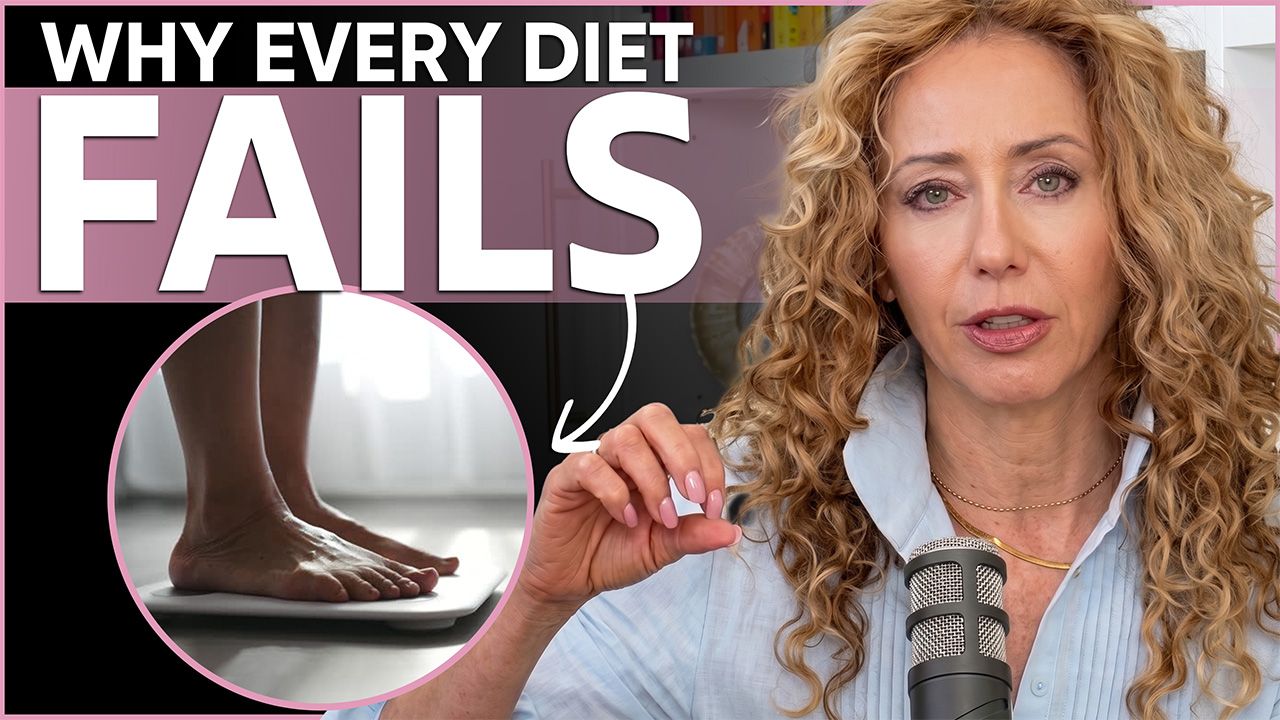
If you've been hanging out with me for a while, you'll know I recently did a "diet dogma" series where I called out popular fads of the diet industry. And the responses? Let's just say they've been passionate. Some of you said, "Finally, thank you!" Others were pretty fired up, and I get it. What I teach isn't typical, and that's exactly the point.
In this episode, I'm sharing the science behind what I call your body's love language. This isn't another meal plan or a set of food rules. It's about understanding the foundational truth your body has been trying to tell you all along: blood sugar stabilization is the root of everything. Your cravings, energy, mood, hormones, and your metabolic health all connect here.
I also walk you through the three non-negotiable questions you need to ask before starting any nutritional approach. These questions changed everything for my clients, and I believe they'll change things for you, too. Tune in, because understanding this is the first step to building a relationship with your body built on trust, not rules.

Conclusion:
Your body isn't broken. Once you understand the science of blood sugar and what your body's love language really is, you'll have something no diet ever gave you: hope grounded in truth.
In This Episode:
00:00 Introduction
02:40 Defining what a working diet means
12:20 The corset to crown mindset
14:43 Three questions to ask before starting a new diet
19:47 The science of blood sugar and metabolic health
23:00 How blood sugar spikes create disease
29:19 Balancing lifestyle and food instead of dieting
33:55 Next episode preview
Preorder Carrie’s upcoming book, From Corset to Crown!
Get immediate access to the ebook and other special bonuses at: https://www.carrielupoli.com/corsettocrown
Carrie’s Live Event in Nashville in October (2026): https://www.disruptivenutrition.com/liveevent2026
Listen to This Episode on Your Favorite Podcast Channel:
Follow and listen on Apple
Follow and listen on Spotify
Subscribe and watch on YouTube
Connect with Carrie Lupoli:
Other Related Episodes:
Looking for more tips to optimize your health? Listen to these episodes:
- Disrupting Everything You’ve Been Told About GLP-1s
- My Labs Say I’m 38 (But I’m 51) — 3 Habits That Reversed My Biological Age
Transcript:
[00:00:00] Carrie Lupoli: So I've spent the last few weeks in this podcast calling out directly the diet industry, specifically keto, fasting, calorie counting, GLP-1s, all of it. And the response? Well, some of you were like, "Oh my gosh, finally. Thank you." And then other people kinda got really uncomfortable. But here's the truth. If it was actually working, you wouldn't have to keep starting over, and you would actually let your kids do what you're doing.
[00:00:25] Carrie Lupoli: So today, I'm gonna ask you one simple question: What does it mean when something's working? Is it just, like, losing weight, or is it having peace with food, energy in your body, and something that you can actually do for a lifetime? Because those are two very different things. So in this episode, I'm gonna show you what your body actually needs.
[00:00:46] Carrie Lupoli: In fact, I'm gonna call it speaking your body's love language and why everything else you've been taught are missing the point. Well, welcome back, Diet Disruptors. And I will tell you [00:01:00] that if you have been hanging out with me for a little while, you know that I recently came off of a series around ditching the diet dogma, really just unveiling the truth behind why I believe the diet industry, the weight loss industry the pharmaceutical industry, the far- the food industry, all that, are not out for our best interest.
[00:01:24] Carrie Lupoli: But in particular, I cut through just the specifics and what I believe is, are the lies that the diet industry te- sells us and tells us when it comes to keto, fasting, uh, counting calories. I even unpacked the whole GLP-1 thing, and I got tons, I got tons of response. Some people were real mad at me, and other people were like, "Amen, thank you for this."
[00:01:53] Carrie Lupoli: Now, the people that were really mad at me, I get it, and I understand because the way that [00:02:00] I think about diets, the way that I think about weight loss, is not typical. The name of my book is called From Corset to Crown: Disrupting Everything We've Been Told about Weight Loss, Self-Worth, and Confidence, and it really truly is.
[00:02:16] Carrie Lupoli: The name of my private practice is called Disruptive Nutrition. I get that what we have been conditioned to learn and believe and understand feels like, uh, almost like we wanna defend ourselves if we have done keto for a while and we, quote-unquote, "think it's worked," or if we've done fasting for a while and we believe that it's worked.
[00:02:38] Carrie Lupoli: I, I get that. So here's the first thing I'm gonna say. If you're doing a nutritional approach that you believe is working for you, then I'm not here to tell you anything different. However, I know that we aren't real clear on what the definition of working is, and for 85% or more of [00:03:00] women, we have a disordered relationship with food and our bodies.
[00:03:05] Carrie Lupoli: We have been dieting or depriving ourselves for a very long time. We have a challenging relationship with food and our body, and with every diet that we go on, we continue to exasperate that because every single diet is about food, it is about rules, it is about a script, and it's not taking into consideration life, emotions, belief systems, behavioral science, none of that stuff.
[00:03:39] Carrie Lupoli: At the end of the day, l- I, I subscribe to a certain way of fueling our bodies, which I am going to unpack today, but if you decide you wanna not eat carbs again for the rest of your life because you wanna do keto, then go for it. The thing that I want for people is that they are [00:04:00] doing it for reasons that are truly around heart-driven purpose, that it's not because about what other people think about them, what they look like, or how their value is in their physical body.
[00:04:14] Carrie Lupoli: I believe that in order to be able to show the world our value, our physical body has to be the healthiest version of itself. I just think that we are playing with these words in a way that we need to rethink. The concept of something working cannot just be p- ascribed to weight loss. It just can't, because that then is diet dogma, diet mentality, restriction, deprivation, and I'll prove it to you.
[00:04:41] Carrie Lupoli: In this episode, I got so much feedback on those other series, in the, on that Diet Dogma series that I did, that I wanted to unpack for you what I truly believe is what your body wants you to do, is your body's love language. My head coach of my private practice said [00:05:00] that years ago. She's like, "Gosh, what we teach is helping people to speak their body's love language."
[00:05:05] Carrie Lupoli: And I truly believe that, and I know that because of- how long I've been doing this, and the sheer number of people that I have worked on with this. This is going to be a two-part series because I want to dig into the science of what I teach, and then I wanna dig into the application of what I teach when it comes to how we fuel our bodies and speaking our body's love language.
[00:05:29] Carrie Lupoli: And I can't do it all in one episode because you're just gonna be like, "Oh my gosh, I can't hear this anymore. It's gonna be too long." And so science today, and then application in the next episode for that. And what I know is that if the dieting, the, the restriction, if the simple, like, meal plan worked, we wouldn't be where we are in our current state.
[00:05:50] Carrie Lupoli: Childhood obesity is at an all-time high. We literally are seeing that a third of teenagers are pre-diabetic. We never saw [00:06:00] diabetes in children, ever. Ask a doctor that's been around for 40 years. They never saw that. So there's something going on. Now, now I know that our food and the processed food industry is a major massive problem.
[00:06:14] Carrie Lupoli: And I will tell you that I have been able to work with men, women, and children very successfully despite the processed food issues. We are not actually not just not educating, but we are not empowering people to understand how their bodies truly work. I just had a conversation with a doctor the other day, and he said, "We've-- we were never taught any of this stuff in medical school."
[00:06:37] Carrie Lupoli: Now, he's a guy that runs marathons, and he's a very healthy guy. It's working for him, but he has no idea how to translate that into a general population with whi- which-- with whi- whom he works. And in addition to our childhood issues, we know 93% of people in this country are metabolically unhealthy. We have a huge influx [00:07:00] in anxiety and depression, stress, and there are multiple factors that go into that.
[00:07:06] Carrie Lupoli: But what I know, and we're gonna get into this in the next episode, is that by implementing an approach that allows you to actually get deep into what you want and why you want it, and helps focus on not just the food, but all the other aspects of life Things start to fall into place. It's never ever, ever going to be about one thing.
[00:07:29] Carrie Lupoli: It's never going to be keto or, uh, exercise or drink more water. I want you to think about our health and our lifestyle like a puzzle, and there's different puzzle pieces, and there are simply some that don't fit at all. And there are some that fit in some people's lives and not other people's lives. For me, and the population of women that I really want to speak to and wrap my arms around, these diets like keto, intermittent fasting, calorie counting, macro counting, [00:08:00] anything that requires this script is not a puzzle piece that should be in your puzzle because it's holding us back and it's making us more obsessed and unhealthier.
[00:08:10] Carrie Lupoli: If they worked, if they gave us the peace and the confidence and the self-worth and the health, then we wouldn't have this many people sick, this many people struggling, this many people still dieting and chasing after this elusive number on a scale after 30, 40, 50 years, because that's what we're seeing.
[00:08:32] Carrie Lupoli: Bishop Desmond Tutu says this. He says, "There comes a point where we need to stop pulling people out of the river, and we have to go upstream and figure out why they are falling in." And every diet, every meal plan, every single one that I talked about is about just plucking people out and say, "Here, eat this.
[00:08:49] Carrie Lupoli: Don't eat that," or, "Here, follow these rules." And then when they can't follow them because life ends up happening and they haven't been given the tools to reprogram the [00:09:00] patterns that have been instilled in them... By the time we're 35, 95% of our identity is fully formed. The patterns, the behaviors, the belief systems, they're set, and it takes a certain knowledge and understanding and, uh, ki- I will say a technique to be able to start to undo those.
[00:09:25] Carrie Lupoli: Those are the things that got us to this place, and we have to figure out what's getting us out. So just pulling us up and thinking that we are just going to be able to do a meal plan and shift our entire lifestyle is not going to be the answer. Never. It doesn't... It's not a puzzle piece that fits into the whole puzzle.
[00:09:44] Carrie Lupoli: So many women will tell me that they want to lose weight because they want to feel confident. They want to, uh, just feel better in their own skin, and I, I get that at a physical level. But what we are really looking for, and I know this from the thousands of people [00:10:00] that I've worked for, is the peace that comes with knowing that what you're doing for your body and for your life is right, feeling like you are able to control your response, feeling that with, regardless of circumstances that happen, that we can be responsible and able to res- Respond instead of just react.
[00:10:23] Carrie Lupoli: The patterns that we've built in our lives have caused us to constantly react instead of respond. And so we can give a meal plan all day long, but if we don't actually work on our identity and understanding why the patterns-- Like, it, it's literally an unconscious pattern that happens where when we're stressed, when we're angry, when we're emotional, when we're feeling in some sort of level unbalanced, we go towards a certain reaction, and that is what we have trained ourselves to do.
[00:10:56] Carrie Lupoli: And it is time to go upstream and figure out [00:11:00] why we're falling in in the per- in the first place. And so the way that I teach is not just around food. It can't be just around food because I know this. When I first started teaching people the concepts around food in their bodies that I still teach to my clients today that are sound in science and absolutely work to be able to speak your body's love language, within one year, every single person that I coached fell off.
[00:11:27] Carrie Lupoli: It, it was insane to me. I was like, "How is this even happening?" And I realized I had been a behavior specialist for almost 20 years by then, and I wasn't putting forth the concepts of identity change, which is what really has to happen in order for behavior to change. But that being said, we know that how we are fueling our bodies matters.
[00:11:52] Carrie Lupoli: So I wanted to go through that whole foundational piece because these are parts of the puzzle that matter. There are physiological [00:12:00] responses to stress and anxiety in life, and then there are psychological responses, and a lot of the psychological ones are based on these patterns that have been established for years and years and years.
[00:12:11] Carrie Lupoli: But today, I wanna talk about the physiological need our body has and the alternative to all of those diets. Here's the thing. In my book, it's called From Corset to Crown because what I have seen in my practice is that we were all given this corset, a, a metaphorical one, right? One made of food rules and cultural conditioning, and we believed that smaller was better and that in order to have value, we had to look a certain way.
[00:12:37] Carrie Lupoli: Every one of us had this corset put on us when we were young. It is why we believe that weight loss is the answer, because it is part of the corset. And I remember the corset was put on me when I was maybe around six, seven, and there's a picture of me with my hair all blown out. My mom used to blow out my hair, and it would [00:13:00] hurt so much.
[00:13:00] Carrie Lupoli: I was just not-- Uh, curly hair was not pretty. It was not appropriate. My mom didn't know how to do it and just kept trying to blow it out, and she would say Beauty hurts, a- and you're just basically gonna have to suck it up. And that was the moment, I believe, that the corset started being put on me. And then there are all sorts of different types of things in our environment, in our home, in our belief systems that continue to affirm that what we look like matters, smaller is better, and we need to be depriving ourselves and punishing ourselves and being on a diet, constantly obsessing and thinking about food in our bodies.
[00:13:38] Carrie Lupoli: That has just been what we have been taught. By the time I see most women in their 40s, 50s, and 60s, they can't breathe anymore. They recognize that they've got this corset on, and they're just like, "Screw it," and they often-- they just wanna take off the corset. And we have not ever been taught that there is something that doesn't require the [00:14:00] corset but that still can keep us healthy, strong, and prospering.
[00:14:05] Carrie Lupoli: What we think is that when we take off the corset, we just let it all go. Because the only alternative to the corset is-- 'cause the corset equals dieting. That's all we've ever been taught, and we take the corset off, that means it's just, you just don't have any-- you don't do anything. And that's when we become more obese, m- sicker, and have insane hormonal imbalances because we have taken off the corset 'cause we can't breathe, and we don't know what to replace it with.
[00:14:31] Carrie Lupoli: We've just assumed for so long there is nothing else to replace it with. So today, I'm going to share with you the science behind your body's love language, and then in the next one I'm gonna do the application. So there are three principles that you always have to ask before you start any nutritional approach.
[00:14:47] Carrie Lupoli: This is why I'm so bullish against the diet industry, 'cause you cannot answer these three questions. And the way that I teach and what I am passionate about with my clients, it is the only approach that can [00:15:00] answer yes to all three of these questions. The first one is, is it based in science designed for your body to thrive?
[00:15:05] Carrie Lupoli: I always say diets are based in science, but they're not designed for your body to thrive. Name one thing that thrives in deficit. Oh, I got all sorts of hate on the calorie one, on the calorie podcast I did because they're like, "No, a deficit works. A deficit works." And I'm like, A, what's your definition of working?
[00:15:20] Carrie Lupoli: And B, it is about the right amount of food. But if we keep telling women deficit, deficit, deficit, all we think when we're not losing weight, because that's the measure of something working, that we just have to eat less, eat less, eat less, eat less. That is not an appropriate way for us to be thinking about food.
[00:15:37] Carrie Lupoli: We need to have the right amount of food, and our body can tell us that we have the right amount of food, and we don't need to have a calculator in our body like we are a checkbook, debits and credits, calories in versus calories out. It's not necessary. And I know the people that were really mad at me when I said that just don't know the other options.
[00:15:58] Carrie Lupoli: It's the only thing that they've [00:16:00] been taught Now, the second question you have to be able to say yes to is can you do it for the rest of your life? Your body wants a relationship with you just like any other relationship, and relationships are built in trust. Trust is, literally is only built with positive interactions consistently over time.
[00:16:18] Carrie Lupoli: Think about that with any relationship you've ever had. I've been married to my husband for 26 years, and we haven't been perfect. Diets require you to be perfect. It is about consistency. My husband doesn't drive in the driveway and say, "I wonder what version of Cary I'm gonna get today." Because if that was the case, we wouldn't still be married.
[00:16:38] Carrie Lupoli: We both have so much trust for each other because we have proven over the years that we didn't have to be perfect, we had to be consistent. And so diets make it impossible for us to be consistent. How m- it- it literally it's a phrase of off the wagon, on the wagon. We're on a diet or off a diet. That's the cultural conditioning that the diet dogma has convinced us is appropriate.
[00:16:59] Carrie Lupoli: [00:17:00] And we don't even realize that there's something else we can be doing that literally we can do for the rest of our lives and our body wants us to do. When our body can start trusting us again, it does so many incredible things to heal. And the third question to ask before you start any nutritional approach is would you let your kids do what you're doing?
[00:17:21] Carrie Lupoli: And this is where I get real, real bullish because what is the kid-friendly version of macro counting, of calorie counting, of keto, of intermittent fasting, of GLP-1? What's the kid version of it? I- I-- is there one? No. There shouldn't be one. Teaching kids how to count calories in a kid-friendly way is not appropriate.
[00:17:48] Carrie Lupoli: So why is it then that we believe that adults should do this? And if we have such a health epidemic here in our country, what should we be teaching our children? [00:18:00] I- if it's not calorie counting or keto or fasting or anything like that, what is it? Well, that's where there's a major disconnect. When I started teaching my kids about finances, we practice a lot of the Dave Ramsey principles, and he has a kid version of it.
[00:18:16] Carrie Lupoli: We actually gave our kids-- our kids earned tickets instead of dollars, and they actually would go shopping with their tickets, and they would give, save, spend, and it was a kid-friendly version to his adult version. There is no kid-friendly nutritional version other than eat your vegetables, other than have an apple.
[00:18:36] Carrie Lupoli: A- a- and it's not working, especially because what we have in our schools, what we have in, in what the kids like are all the things that are actually killing them. And so what is it that you're doing, and would you let a kid do it? And if the answer is no Then you shouldn't be doing it either. But again, we don't know [00:19:00] another way.
[00:19:00] Carrie Lupoli: We've never really been taught what it is that we should be doing to speak our body's love language. And if the only thing we know is dieting, and we're like, "Well, it's kinda miserable," or it's like, it's like upper level stuff we shouldn't teach to our kids, well, then how is it that we are ever going to be able to raise a generation of healthy people if we are doing it this way?
[00:19:25] Carrie Lupoli: W- we never will. And, and the thing is, we should've been taught this when we were kids. So let's dig into what it actually means to speak our body's love language that our kids can do as well. First of all, I want us to think about f- getting upstream, figuring out why people are falling in. At the end of the day, every-- just about every single symptom, and I could name a list of them for you, whether it's cravings or weight gain, stubborn weight loss, um, bloat, digestive issues, [00:20:00] inflammation, even UTIs, urinary tract infections, um, non-alcoholic fatty liver disease, high blood pressure, high cholesterol, uh, thyroid issues, autoimmune issues, um, anxiety, depression, acne.
[00:20:16] Carrie Lupoli: Uh, then moving into like when you talk about high cholesterol and high b- high blood pressure, dementia, Alzheimer's, heart disease, insulin resistance, pre-diabetes, diabetes. These are all symptoms, and there is a medication for every single one of them. And when a doctor tells you, you know, "You need to eat better," we just think we have to eat more vegetables, and a lotta times we think we have to eat less protein or go plant-based.
[00:20:42] Carrie Lupoli: Whatever it is, it becomes this rigid rule, and it becomes, again, the second question, can you do it forever? Stuff we never plan to do forever. We just think we're gonna do it for a little while until we can get things back under control and then go back to our old lifestyles. That's the diet mentality.
[00:20:57] Carrie Lupoli: That's what I'm fighting [00:21:00] against. You have any of those symptoms, I need to you to understand that there almo-- like, there is so much research around what the root cause of all of those symptoms are. It is a dysregulated blood sugar. Blood sugar is our core foundation of our body, and our body will balance its blood sugar in one of two ways: on its own or through our lifestyle.
[00:21:25] Carrie Lupoli: And here's what ends up happening. All day long, our body is adapting to the conditions that we put it in, and our blood sugar can get dysregulated because of a variety of reasons. And it's never just about food Although it exi- exasperates itself because we're not understanding how food can actually help or hurt.
[00:21:49] Carrie Lupoli: But this is why one meal plan will never work, a diet will never work because our blood sugar and our dysregulated tendencies today in, in our world [00:22:00] are caused by multiple factors. So let's talk about why blood sugar matters first, and then talk about what those factors are. First of all, our blood sugar can spike and it can crash, but our-- when our blood sugar is balanced, something in our body happens.
[00:22:14] Carrie Lupoli: It's called balance. Remember in, like, middle school we learned the word homeostasis? It's balance. When our body is balanced, everything is balanced, and it relies on blood sugar. We see this all the time, and you know this too. Um, think about a time like you're really hungry, like hangry, right? Everyth- like, you can't do anything until you get some food in your body.
[00:22:36] Carrie Lupoli: We call it hangry because you're so angry, and your body is literally sending out signals, "Hey, my blood sugar's really low." And so you crave chips or sugar or bread because your blood sugar's really low. And we think that it has to do with a lack of willpower or discipline, but it's really your body sending you signals that says, "Feed us.
[00:22:58] Carrie Lupoli: We need to balance our blood sugar." So our ba- [00:23:00] our body will balance its blood sugar on its own, and every time we spike our blood sugar, our body will release insulin to try to mitigate that spike. It's absolutely incredible that our body can do that. However, because of so many different factors, food, not understanding how to balance our blood sugar through food, but also, uh, processed food, environmental toxins, chronic stress.
[00:23:26] Carrie Lupoli: There are so many different factors, dysregulated sleep, that impact our blood sugar. I was wearing a continuous glucose monitor re- recently, and I was doing a talk, and I was speaking to a group of people about wellness and health, and, uh, there was somebody that was, like, wanting to fight me on the weight loss drugs.
[00:23:44] Carrie Lupoli: Like, she was, like, uh, like, all about the weight loss drugs, and I take a different stance, and she got real mad at me. Anyway, I was fine with it, but actually I kinda wasn't because I noticed on my continuous glucose monitor that that conversation kinda stressed [00:24:00] me out. Not because I didn't know the answers to it, but because I knew timing was going to be a, a problem if she continued, and my blood sugar spiked to almost 200.
[00:24:08] Carrie Lupoli: The average blood sugar should be somewhere between 70 and 140, averaging around 100, right? So my blood sugar spiked. It wasn't about food. It wasn't about exercise. It was simply about stress. And so one of the reasons why I get so, like, passionate about not just sitting on food as a thing is because there's so many other aspects in our life that, that, um, impact blood sugar Dr.
[00:24:34] Carrie Lupoli: Casey Means in her book Good Energy. Um, Mark Hyman writes about this a lot. There's, there's literally... You can Google all sorts of different diets and, and approaches, and there's always gonna be pros and cons. You go and Google blood sugar stabilization and look at the research behind it, you are not going to be able to find any conflicting data at how important blood sugar stability really truly is.
[00:24:55] Carrie Lupoli: So every time we spike our blood sugar, our body releases insulin, which is a hormone, [00:25:00] and the more and more and more it has to release insulin, it's like the more and more truly resistant we become to it. It's like if you've ever had a teenager and you're yelling at them to clean their room, "Clean your room.
[00:25:11] Carrie Lupoli: Clean your room. Clean your room." They just start to tune you out. That's what happens. The longer and longer and longer we have to release insulin to be able to balance our blood sugar, and our blood sugar spikes, like I said, for all those reasons. And then when our blood sugar crashes, then we have more problems, and our body's trying to actually balance its blood sugar by, by itself.
[00:25:33] Carrie Lupoli: And it has to go and pull from the most nutrient-dense part of our body, our muscles. And so our body is constantly trying to balance us when we are not giving conditions for really truly helping it. When we spike our blood sugar, all sorts of things happen. When we spike our blood sugar, it's like, i- like, I want you to think about it a little bit like lightning bolts that are happening in your body every time we spike our blood sugar.
[00:25:57] Carrie Lupoli: That can happen with too many carbs, too many [00:26:00] calories. So I'm not saying that carbs and calories don't matter. It's just that when we use the phrase deficit, when we have to track our food, when we have to actually subscribe to a meal plan, that's when we are literally turning this into an obsession versus a lifestyle.
[00:26:17] Carrie Lupoli: But when we have too many carbs, too many calories, when we have not enough sleep, all of those pieces, too much stress, and our body spikes its blood sugar, then glucose goes into our system. And we can s- handle a certain amount of glucose. But I want you to think about it like little tiny closets in our tiny home.
[00:26:35] Carrie Lupoli: It can't handle that much glucose at once, and so we store it in our liver and in our muscles. And when we have too much glucose, our body doesn't know what to do with it anymore. It's already full in our muscles and our liver, so now what? Well, our body produces fat cells to be able to put some of those little, that little extra in there, and it's amazing.
[00:26:54] Carrie Lupoli: It's a way of protecting us, but we don't like it 'cause we're gaining weight. In addition, when we [00:27:00] spike our blood sugar and release that extra glucose, our body goes through something called glycation, and glycation are like these little lightning bolts that start zapping our cells, and that's actually the problem.
[00:27:11] Carrie Lupoli: Cellular dysfunction is what's causing the metabolic disease. It's causing all of those symptoms. It's just your body's check engine light on saying, "Hey" Uh, something's going on and we ignore it or we medicate it, and we don't actually get to the root. We don't get to the upstream and figure out why they're falling in.
[00:27:29] Carrie Lupoli: And so when we have all these little lightning bolts zapping our cells, that's when we have oxidative stress and metabolic disease starts to set in. When our blood sugar gets really low, and if you've ever seen somebody with really low blood sugar, it's really hard to function, and our body has to go after nutrients in its muscles.
[00:27:49] Carrie Lupoli: We have higher cravings, more fatigue. This is where our mood swings can become really erratic because we are on this roller coaster. But when we can balance our blood sugar [00:28:00] through lifestyle, it's like helping our body a lot. I want you to think about it this way. I want you to think about, like, a single mom raising 10 kids on her own, okay?
[00:28:08] Carrie Lupoli: And she's just, like, exhausted, and if, like, one kid just spills water, you're like, "Oh my gosh. I, like... I can't handle it." That's, like, what's been happening when your body is exposed to processed foods, environmental toxins, chronic stress, lack of sleep, not understanding how to balance our blood sugar through food.
[00:28:27] Carrie Lupoli: And so dieting is actually one of the things that can cause our body to go on a blood sugar spike and, and because let's say when we're fasting, our blood sugar gets really low, and then we eat, and then we spike our blood sugar. We're doing all sorts of things that are impacting it. Now, keto, we won't spike our blood sugar really because we're not doing carbs, but then we're missing an entire macronutrient.
[00:28:47] Carrie Lupoli: There's only three macros, protein, fats, and carbs, and carbs give us energy. And I know people will say all day long, "Well, our body can go in ketosis, and we can have energy that way." That's fine, but what do you w- why do you [00:29:00] want it? Do you want a balance? First of all, carbs are its preferred source of energy.
[00:29:05] Carrie Lupoli: Second of all, there's so many nutrients in fruits and vegetables, which are carbohydrates. And third, would you let a kid not have any of those? And are you okay with not having carbs again for the rest of your life? To me, all of those are no... Like, no way. So I care about being balanced and healthy and ha- longevity and doing something I can do forever, not for a little bit of time, because my body wants that trust.
[00:29:30] Carrie Lupoli: And so when you think about the single mom with 10 kids, like, she's exhausted, and the amount of stress that we are under today releases more cortisol. And I know my glucose goes up when I'm stressed, and then our, our body has to release more insulin. And once one hormone is off, all hormones off, hormones are off.
[00:29:46] Carrie Lupoli: And so do you see this constant battle of keeping our body regulated? And it's impacting our psychological health and our physical health. And when we can actually learn how to balance our blood [00:30:00] sugar through food and lifestyle, which I'm gonna talk about in the next episode, then our body is not so exhausted, so tired.
[00:30:10] Carrie Lupoli: Every single time your body is on this rollercoaster, it's almost like we're poisoning it little by little, and it's just getting more and more knocked down. So let's go back to my single mom example. Let's say that she wasn't actually a single mom. He wasn't a-- her husband wasn't, like, this deadbeat guy.
[00:30:28] Carrie Lupoli: He was a soldier, and he was off at war, and now he's back home to help raise these 10 kids. He's like, "I am here. I am here to help." And suddenly now the single mom is like, "Oh my gosh, I can do this." She's rested. She has more capacity. She's getting support. And now if a kid, like, spills grape juice on the couch, she's just like, "That's okay.
[00:30:52] Carrie Lupoli: I can handle it," because the body is not so stressed. She is not so stressed because she's got a [00:31:00] partner that's helping. And when we can help our body understand how to regulate its blood sugar through some simple, sustainable, and satisfying ways, we can do it forever. We can be consistent. We can even teach our kids this, and it allows our body to thrive.
[00:31:18] Carrie Lupoli: In fact, the longer we keep our blood sugar stabilized, the more and more our body is in homeostasis, which means the more and more our body is rested. It's not aging as fast. Every time we g- have that extra glucose in our system, our body actually ages faster. I just had my blood work done, and I am 51 years old.
[00:31:43] Carrie Lupoli: Last year I had my blood work done, and my biological age was 43, and this year it is 38. I have been living this lifestyle for over 12 years, and it's like a fine wine. It gets better over time. Unlike a diet, any one of those diets that people were fighting me on, [00:32:00] "Oh, intermittent fasting works. Oh, keto works.
[00:32:02] Carrie Lupoli: Oh, calorie counting works. Oh, GLP-1 works," u- until you stop, your body's actually not thriving because you should be able to not have to be perfect, and your body doesn't just jump right back into its old ways. It doesn't just gain all the weight back right away because it's healing from the inside out, and those diets are proof that you are not healing if it literally gains back everything that you lost, not just physically, but also emotionally.
[00:32:32] Carrie Lupoli: If you haven't actually been taught how to undo the patterns on top of it all, then Nothing is truly going to matter. So it's gotta be this multi-pronged approach with multiple puzzle pieces, and it sounds hard, but it really isn't. The foundational piece first is understanding your body's love language, blood sugar stabilization, and that almost automatically, because your cravings are under control, your food noise is under control.
[00:32:58] Carrie Lupoli: Because the food noise is under [00:33:00] control, your stress gets better. It's incredible how many things get better when you are physically feeding your body in the way that it loves. And because it gets better over time, it's like you wanna go out and have, like, just a soul-filling meal? Great. Your body's like, "Don't you worry about it.
[00:33:19] Carrie Lupoli: We can handle it because we aren't as exhausted. You go have fun. We'll watch the kids." And so you can go have a great night out, not feel any guilt, and your bo- and you're not gonna gain fi- feel like you've gained five pounds because you cheated. Your body is now thriving. And just like my relationship with my husband for 26 years, it's not like we never had an argument, but we knew we weren't getting divorced over the argument because we were healthy and we were thriving because we were more often than not consistent.
[00:33:48] Carrie Lupoli: And that is what your body wants, that is what your body needs, and that's what focusing on blood sugar can give you. So how do we do that? That's why I said we have to divide this into two episodes. I'm [00:34:00] going to share with you the formula I teach my clients on how to balance your blood sugar through a lifestyle versus everything else that's out there.
[00:34:10] Carrie Lupoli: And that's what I mean when you replace the corset with the crown, and understanding your value and your purpose, and that your why is not about looking a certain way, but being a certain way for people. You show up very differently when you love yourself versus when you are frustrated with yourself.
[00:34:32] Carrie Lupoli: And I hope today g- got you to see that your body has just been responding to the different cues you've been giving it. And unbeknownst to you, because we've never been taught this, we don't understand what our body really needs. But now that you know, you can do. And it's like right away it's that level of hope and understanding that starts to build confidence before you even lose a single pound on the scale.[00:35:00]
[00:35:00] Carrie Lupoli: And also, throw away the scale. The scale is just a l- a, it, it is a, it is a power-hungry, power-thirsty just monster that consistently tells us we're not enough. And you know if you're losing weight or gaining weight. You don't need a scale to tell you that. Listening to your body is a way better way of understanding.
[00:35:21] Carrie Lupoli: Like, once you get to understand blood sugar and your body talking to you, and your energy and your cravings and your sleep all improve That's what, that's how you measure progress. All right, but that's a whole nother topic for another day. All right, stay tuned for our next episode where we're gonna dig into the how of blood sugar
[00:35:39] stabilization.