
The Truth About Seed Oils: What the Food Industry Won't Tell You - 276
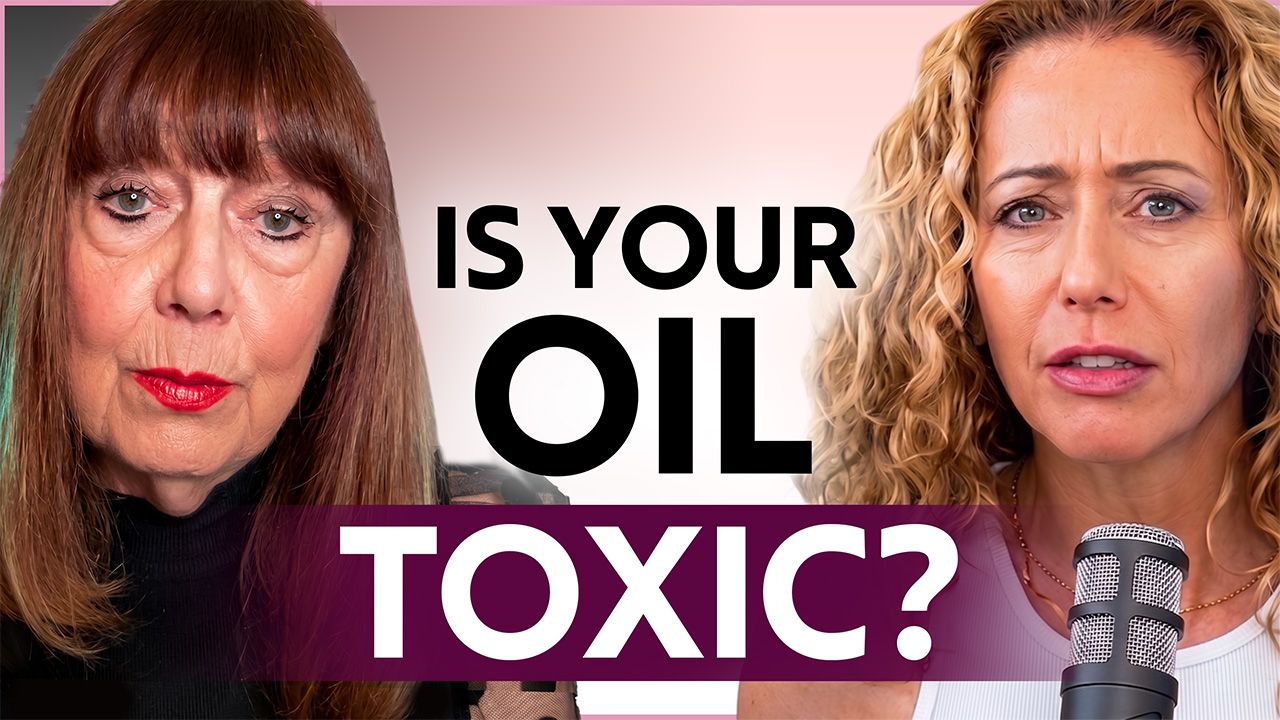
Did you know the oils marketed to us as "heart-healthy" for decades may actually be fueling inflammation, obesity, cancer, and even anxiety? In this episode, I sit down with one of the world's most respected nutrition experts to expose potential dangers in your pantry and what to do about them.
I'm joined by the incredible Cherie Calbom, bestselling author of over 36 books with more than 3.5 million copies sold, and known worldwide as "The Juice Lady." Her latest book, The Truth About Seed Oils, is the resource we all need right now, and I am so excited to share her wisdom with you.
We dig deep into the history of how seed oils infiltrated our food supply, why we were led to believe they were good for us, and what the science says about their connection to inflammation, heart disease, obesity, diabetes, and more. It is time to reclaim your health in a world that profits from your confusion!

Conclusion:
Seed oils are not just a food trend to be aware of but a public health issue hiding in plain sight. We owe it to ourselves and our families to take action. Start with one swap this week, keep learning, and remember: nothing on earth tastes as good as good health. You are worth the upgrade!
In This Episode:
00:00 Meet Cherie Calbom, The Juice Lady
05:22 How seed oils took over the food industry
10:43 Toxic seed oils to avoid and why
16:16 Imbalance of omega-6 to omega-3 ratios
19:25 Best oils to use and their smoke points
21:22 How to spot fake avocado oil
24:47 How seed oils damage the cell membrane
29:20 Easy seed oil swaps
33:37 Breaking the "bliss point" addiction
39:05 Teaching kids and Gen Z about healthy choices
Mentioned in the Episode
Cherie’s Book, The Truth About Seed Oils: https://juiceladycherie.com/the-truth-about-seed-oils/
Learn More About PFC Pals: https://www.instagram.com/pfcpals
Preorder Carrie’s upcoming book, From Corset to Crown!
Get immediate access to the ebook and other special bonuses at: https://www.carrielupoli.com/corsettocrown
Carrie’s Live Event in Nashville in October (2026): https://www.disruptivenutrition.com/liveevent2026
Listen to This Episode on Your Favorite Podcast Channel:
Follow and listen on Apple
Follow and listen on Spotify
Subscribe and watch on YouTube
Connect with Cherie Calbom:
Connect with Carrie Lupoli:
Other Related Episodes:
Looking for more tips to optimize your health? Listen to these episodes:
Transcript:
[00:00:00] Cherie Calbom: Look, wake up America, because this stuff is killing us. I call these ones the silent killers. So many young women are now on anti-anxiety drugs. Why is that? I won't say it's just seed oil, of course not, but that's one of the things that is a contributing factor to anxiety.
[00:00:17] Carrie Lupoli: We are hearing so much about seed oils.
[00:00:20] Carrie Lupoli: Don't eat seed oils. They're super bad for you. We've got to unpack this. So in this episode, I sit down with one of the most respected nutrition experts in the world. She has literally sold more than three and a half million books to expose the truth about seed oils, how they infiltrated our food system, how they got us to believe that they were actually heart healthy, and what the truth is about do they actually cause inflammation?
[00:00:49] Carrie Lupoli: Are they causing obesity? Are they causing all sorts of other issues? And then how do we know which seed oils are going to be able to support us, which are going to actually destroy our health? [00:01:00] Once you hear this episode, you're not going to be able to unsee the things that we see, because this isn't just about food.
[00:01:06] Carrie Lupoli: This is about awareness, about reclaiming your health and the actual truth in a world that profits from you being completely confused. So before you get to your next grocery run or your Instacart order, before you do your next drive-thru meal, you've got to listen to this episode. It's going to unlock so much information and keep you super clear on what your next step is.
[00:01:28] Carrie Lupoli: So listen to this conversation and then go do the things.
[00:01:35] Carrie Lupoli: Hey, Diet Disruptors. I am so excited to introduce you to Sherri Kalem, who is a celebrated worldwide super amazing and famous nutritionist. There's not a lot of them out there, but she's one of them. She's known as The Juice Lady. Sherri has literally... I mean, she has master's degrees in all sorts of things around [00:02:00] nutrition.
[00:02:00] Carrie Lupoli: She has a passion for transforming health, but she has written more than 36 books that have collectively sold more than 3.5 million copies. As a new author myself, I can't even imagine how that is done, but I am so excited to be able to not just talk to her about all things nutrition, but about on the side, how do you become an author of 36 books?
[00:02:23] Carrie Lupoli: Her global bestseller is Juicing for Life, and that has literally empowered two million readers to reclaim vitality. And in her latest work, which is what we're gonna talk about today, The Truth about Seed Oils, she exposes how those heart-healthy oils that we are told about, how they actually are making us sick, and how we can heal with real fats.
[00:02:46] Carrie Lupoli: She was actually George Foreman's nutritionist, and she sol- sold the grill with him. She has been advising the royal family of the UAE. Her influence spans continents and [00:03:00] cultures. We are so lucky to have her on here. Her passion for wellness is so deeply personal because after losing her mother to breast cancer at the age of six, I can't even imagine, she then decided to devote her whole life to empowering others to prevent disease, reclaim their health through nourishing and nourishing whole foods, and she's just so dynamo.
[00:03:22] Carrie Lupoli: I'm so excited for you guys to meet her. She's been on Fox News, CBS, ABC, A- NBC, CNN, CBN, TBN, and so many more, inspiring millions. She is absolutely incredible. So Sherri, thank you for joining us here at the Diet Disruptors podcast. We are honored to have you talk all about, I mean, you can talk about a lot of things, but today we are gonna talk about seed oils.
[00:03:44] Cherie Calbom: Oh, well, I love talking about seed oils 'cause America's starting to wake up about this subject. Thank you for having me on so we can discuss it.
[00:03:53] Carrie Lupoli: It's a really important subject, and I, and I love the book. It's super, it's super cute, but, uh, pretty and cute. And, and it's so [00:04:00] tiny. It's like, you guys, we can all read this book in, like, maybe a couple of sittings and be so knowledgeable.
[00:04:08] Carrie Lupoli: And I love, to me, in the age of Googling and ChatGPTing and all of that kind of stuff, to be able to get something this concise, but that's not fed by AI or just sort of like a quick Google search. It is literally decades of knowledge and expertise. Um, also some of the people that have endorsed your book are just mind-blowing to me.
[00:04:31] Carrie Lupoli: You've got Vani from True Vani. You've got Dr. Josh Axe. Like, you're the real deal, so we're-- I'm real excited.
[00:04:39] Cherie Calbom: Oh, well, it's such a pleasure to be here, and, and I hope to inspire your audience that by the time we're through today, they're gonna say, "No more seed oils in my diet. That's it. I'm done." And good- Yeah.
[00:04:50] Carrie Lupoli: And I always say, like, when you know, you can do. And to me, this is about really understanding and knowing. And then how do you make no-brainer swaps, right? [00:05:00] And not be bamboozled by... You know, I, I joke that I'm a conspiracy theorist now because I don't believe the diet industry, the weight loss industry, the pharmaceutical industry, the food industry are out for our best interests.
[00:05:13] Carrie Lupoli: They're out for their own, and I love this because we're gonna really talk about the truth. Plus, you have a bunch of recipes in here too, which is really cool. So let's talk about, uh, what... There's, there's been a lot now, and I think this is one of the pieces around social media that I can appreciate, is that so much more is we ca- get to be exposed to.
[00:05:36] Carrie Lupoli: That we can't... The food industry can't get away with selling us a bunch of BS because there's too many smart people like you out there helping us to know the actual truth. So can you help us understand What is a seed oil and what is not a seed oil? Right. And then how are those non-seed oils, how do they even make [00:06:00] their way into our lives in the way that they have?
[00:06:02] Carrie Lupoli: Oh. So let's start with what the difference is first.
[00:06:05] Cherie Calbom: Yeah, so seed oil was originally called vegetable oil. There are no vegetables in the, these oils, but they wanted to sell it to the American people who doesn't want vegetables, so let's call it vegetable oil. And it happened, um, big time around World War II when the tropical oils, primarily coconut oil, which is a good oil, always been a good oil and still is a good oil, uh, couldn't make it through the waters because of the war.
[00:06:32] Cherie Calbom: So the seed oil industry, which has been small before then, saw an opportunity and stepped up their production and, uh, with cute jingles and songs and telling you this is the modern new oil and, um, gave it a heart-healthy label about early 1950s. Why did they do that? Because suddenly heart disease, heart attack was on the rise.
[00:06:56] Cherie Calbom: It was on the rise because seed oil had entered the market in a [00:07:00] much larger scale, um, in the World War II era. And so now they wanna know what's causing this because Americans were afraid. People were dropping over dead and it's like what's going on? And everybody just about knows somebody who's fallen over from a heart attack.
[00:07:18] Cherie Calbom: And so they started looking at arteries and saying, "Wow Okay, there's fat and cholesterol in here, and calcium, and other garbage, you know? And, but what, what caused that? They weren't asking why is it mounding up in arteries. Well, it was irritated arteries. And one cardiologist that I quote in The Truth About Seed Oils said it was like scrubbing with a, a real stiff brist- bristle brush on your skin over and over and over again.
[00:07:45] Cherie Calbom: But your arteries are more fra- fragile than your hand. Well, what is it gonna do? Form a scab, of course. Cover it up, just like your, your skin does. It forms a scab. There's cholesterol- That's
[00:07:54] Carrie Lupoli: interesting. I often say our body, like, forms, like, a callus. Like, when we have a callus in our hand, and then [00:08:00] you don't feel all those, like, symptoms right away because it's like your body has formed this, like, callus because of it.
[00:08:07] Cherie Calbom: That is right. And so the body was doing what it was designed to do, protecting it. But the new el-- they called it the lipid hypothesis. Fat hypothesis was born. No more fat. Gosh, we got r- rid of that saturated fat and cholesterol. So suddenly, eggs, butter, cheese, beef, tallow, lard, all the things that people had used for probably centuries.
[00:08:31] Cherie Calbom: Uh, and of course, olive oil is in there. They didn't demean that, thankfully. But all the others they did. They're out. And what is in? Ah, well, we've got this modern, new, golden, clear, odorless, flavorless oil. We'll call it vegetable oil. Become the modern cook. Take this heart-healthy oil into your kitchen And you'll get better.
[00:08:55] Cherie Calbom: We'll prevent heart disease. Did we do it? No. It's still the number one [00:09:00] killer in America. Isn't
[00:09:01] Carrie Lupoli: it so interesting how marketing is actually the key to everything? Like, how it is marketed and then how much we just believe it. But what else are we supposed to do, right? Like, we are becoming more and more aware now that we have to own the information and really do our own digging, but for decades and decades and decades, we have really just believed.
[00:09:28] Carrie Lupoli: Now, the other thing that I think is really interesting, it's like we're human experiments. We-- people were getting fat, let's just be honest, right? They were gaining more and more weight. So we said, "Oh, if people are getting fat, we must have to reduce fat." And then everything went low fat, right? And then we see that people were getting more and more and more unhealthy, and it's almost like we do these experiments.
[00:09:51] Carrie Lupoli: And so we've had these, quote-unquote, "heart-healthy oils" that we were all just bamboozled by, and then we [00:10:00] see more and more of the problematic history or the problematic result of this history. And now it's like we're open to it. We've got to get better before too many people are experimented on with this kind of stuff.
[00:10:13] Cherie Calbom: Oh, we're, we're through with people experiments. This is ridiculous. And so, yes, we are voices, more, um, with, uh, loud megaphones crying out, saying, "Look, wake up, America, because this stuff is killing us." I call these ones the silent killers. It's not just heart disease, but cancer, diabetes, metabolic problems, obesity, uh, all linked in scientific studies, along with depression, anxiety, and aggression.
[00:10:39] Cherie Calbom: All scientific studies linking to seed oils causing these problems. Well, what are the seed oils? People are probably asking. Canola- Yeah ... it was once advertised as the h-heart-healthy oil. And then- Canola
[00:10:51] Carrie Lupoli: oil, right?
[00:10:52] Cherie Calbom: Yeah, canola. It's rapeseed.
[00:10:53] Carrie Lupoli: Yeah. I'm pulling up a part of your book here as... K-keep talking.
[00:10:57] Carrie Lupoli: Yeah. That I, that I highlighted here.
[00:10:59] Cherie Calbom: Yeah, [00:11:00] and then soy and sunflower, safflower, corn. Grapeseed oil. For a while, I even thought, get grapeseed oil, because I was told that that was heart healthy. No, no, it's not. And rice bran and cottonseed, those are the bad guys. But it's prob-probably mostly soy and canola that we're getting.
[00:11:21] Cherie Calbom: And restaurants, very few are using the good oils. You can get Soy, uh, Seed Oil Scout app for your phone and find out which restaurants are seed oil free. That is a really cool little app to have and a scanner that you can use- Yeah ... on any product.
[00:11:36] Carrie Lupoli: I love that, but the problem is it is really hard to then eat out.
[00:11:40] Carrie Lupoli: Because you really, it, it's, especially like I have clients all over the country and when you are in a more rural place, it is really hard to eat out and not have those. So you have a whole, on page four, you have this beautiful little, uh, box where it's like toxic seed oils and healthy seed oils. And this is what's [00:12:00] so confusing for people, right?
[00:12:02] Carrie Lupoli: 'Cause you just mentioned grapeseed oil. Now grapes, grape seed, like when you think about, uh, I, I've had this conversation with sunflower oil. You and I actually had talked about this because there are, if you actually do research on sunflower oil, you can find sunflower oil has a lot of in- anti-inflammatory opportunities.
[00:12:22] Carrie Lupoli: But we were talking more about, uh, like the, the way that it is manufactured and produced is where toxicity often comes in with many of these oils. Because when you see like peanut oil, grapeseed oil, sunflower oil, like in its like purest form, we're not talking about sunflowers being bad- No ... when they're sun, right?
[00:12:49] Carrie Lupoli: No. It is the way that we're producing it and manufacturing it. Am I right?
[00:12:52] Cherie Calbom: Oh, that is absolutely right. So it goes through, um, quite a process to get, uh, on the shelf to you. So high heat, [00:13:00] 500 degrees or more, degumming agents, um, hexane, all sorts of stuff in this process to get the oil rolled out to you. By the time it gets to you, it's very toxic.
[00:13:12] Carrie Lupoli: Mm-hmm. And when it's cheaper That's a sure sign, am I right?
[00:13:18] Cherie Calbom: That's, um, why restaurants use canola primarily or peanut or soy. It's a lot cheaper than tallow or avocado oil, which are really good for high heat cooking. But, uh, w- and then manufacturers. This is why it's ending up in store-bought products all the time.
[00:13:37] Cherie Calbom: Crackers, chips, salad dressings, mayo, on and on it goes. It's cheap, and so who doesn't want it? But it's so bad for us, so we've got to get this ship turned. And the more that we request good oils in everything, the more we'll get them. Uh, when you go through the health food store now, you'll see a lot of chips [00:14:00] with tallow or olive oil or, um, avocado oil.
[00:14:04] Carrie Lupoli: Yeah, and I think that this is why learning about this, talking about this, why I wanted you on our podcast, and I-- we need people buying the book and being educated. Because the more people that say, "No, I'm not doing this. I'm not putting this in my body," the more we then have the opportunity to make change.
[00:14:23] Carrie Lupoli: And I think that at the end of the day, again, this is my conspiracy theory kind of a thing, unless there is enough pressure to make a change, that is where it's all about the bottom line. If people are not gonna continue to buy it because we understand how it's poisoning us, they will be forced to make a change.
[00:14:42] Carrie Lupoli: They're not gonna do it because it's a better option. They're only gonna do it if it's the bottom line speaking and saying, you know, "If you don't change, you'll have zero revenue versus smaller revenue or like smaller profit margin."
[00:14:59] Cherie Calbom: Vote with your dollar. [00:15:00] That's what I always tell people. Vote with your dollars, and let's make a change everywhere we possibly can.
[00:15:06] Cherie Calbom: And no, I don't want to-- Back to eating out, I don't want to discourage people from thinking they can have no joy in their life and never eat out again or party again. But make a better choice, like don't get fried chicken or, you know, fish and chips. Watch your french fries, things that are deep-fried that are really saturated in these oils that not only are bad for you but heated again to a high temperature.
[00:15:30] Cherie Calbom: So you've got toxins coming into your body big time, and carcinogens, things like lipid peroxides, aldehydes. They're damaging your cells, and we do not want that. That is creating inflammation throughout our body. Inflammation is at the root of everything that ails us. You know? And from the brain right down to your toes, this is affecting you.
[00:15:55] Cherie Calbom: And why is it affecting mood? So many young women are now on [00:16:00] anti-anxiety drugs. Why is that? I won't say it's just seed oil, of course not, but that's one of the things that is a contributing factor to anxiety. So we have got to make a switch and start waking people up and turning things around. And on top of just the toxins, there's an imbalance of omega-6 to omega-3.
[00:16:21] Cherie Calbom: Um, talk about-
[00:16:22] Carrie Lupoli: Yeah, so talk about that because this is where it's like, to me, it's a no-brainer swap. It's not that oil is, is problematic. Of course, we need to have these fats to be able to help us actually reduce inflammation. And what we are seeing with these problematic seed oils is it's actually exasperating the inflammation.
[00:16:42] Carrie Lupoli: And there are certain-- Like we talk about supplements, you know, when we need them, but there are certain things we can get in food. Um, and we're not getting when we aren't focused or intentional around our seed oils. So omegas are one of them. So can you talk about what omegas are and the [00:17:00] difference between those, and what we're missing when we're not doing oils that are really serving our body?
[00:17:04] Cherie Calbom: The two important ones that we're talking about right now are omega-6 and omega-3, and we should have a ratio of about one to one to four to one in our system of omega-6 to omega-3s. We-
[00:17:17] Carrie Lupoli: Four to one. So four omega-6 to one omega-3
[00:17:22] Cherie Calbom: We have typically about a 15 to 1 imbalance or more. I was talking with somebody the other day who had his omega-6s tested and he was 21 to 1 and he's into health.
[00:17:35] Cherie Calbom: He said, "Oh my gosh, what a shock."
[00:17:38] Carrie Lupoli: What, what does it mean when it's that much higher com- your omega-6s are that much higher than your omega-3s?
[00:17:45] Cherie Calbom: Inflammation, and studies are proving that. So people that are still trying to fight for the polyunsaturated oils, these seed oils are also known as that, are saying, "But we need omega-6s in our diet."
[00:17:59] Cherie Calbom: Yeah, we [00:18:00] do. We do need them, but not in this huge, huge imbalance and also laden with toxic chemicals and byproducts. We don't need that. So what are the omega-3s? Well, not a lot of people eat a lot of them. Flaxseed, flaxseed oil, hemp seed and hemp seed oil, walnuts, walnut oil, walnut milk, um, fatty cold water fish like salmon.
[00:18:26] Cherie Calbom: But you know, those foods that I just named aren't ones an American would say, "Oh, yes, I eat quite a few of those." Some people probably don't eat much or any of those. And so we're way out of balance in the omega-6s.
[00:18:41] Carrie Lupoli: Well, even if you walk into the grocery store, you're not gonna see the flaxseed oil with the canola oil.
[00:18:48] Carrie Lupoli: You see the flaxseed oil actually in a totally different section of the store called the natural or the health food section. And if you don't go to that tiny little corner very often, you just grab whatever is [00:19:00] there.
[00:19:00] Cherie Calbom: Oh, absolutely. And the cold press, these are always cold press like hemp or, or, um, flaxseed oil.
[00:19:08] Cherie Calbom: They're not going to be in the cooking oils and you don't use them for cooking. You put in your smoothie or you tablespoon at night before you go to bed because you want your hair to shine and your nails to grow well and, but it's heart healthy. But we think about the externals a lot. But then we're shopping for the other oils and we need to just reject all of those and get only olive oil or coconut oil or avocado oil.
[00:19:34] Cherie Calbom: There are two nut oils. Those are the fruit oils. There are two nut oils that are good, and that is almond and macadamia nut oil. And then sesame oil is a good one. Get it only cold pressed. That is a good seed oil. And I do smoke point.
[00:19:49] Carrie Lupoli: So if it's cold pressed, does that mean we don't wanna cook with it?
[00:19:53] Cherie Calbom: You can cook with cold pressed oil, absolutely, but you wanna check the smoke point. So I've got a chart in my book, [00:20:00] uh, uh, on the smoke point of all of the good oils and, uh, what, what to do. So you don't want high heat for a lot of them. Avocado is very durable and, um, beef tallow Wallow is very durable.
[00:20:15] Cherie Calbom: You can have high heat for those. The rest you want to keep medium or low and it's great to have the chart on the smoke point.
[00:20:21] Carrie Lupoli: Yeah, I think that chart is really, really helpful. It's like a nice little cheat sheet and it also helps me figure out like I never buy salad dressing anymore because there's no reason to buy salad dressing when you can have an oil with some vinegar and add some e- extra herbs and spices and all sorts of stuff.
[00:20:37] Carrie Lupoli: You have the most amazing dressing in the world and that chart in your book allows us to be able to see what would make a really great like, you know, dressing for a salad, uh, even a marinade.
[00:20:48] Cherie Calbom: Right.
[00:20:48] Carrie Lupoli: Things like that. But you had mentioned flaxseed oil. We put flaxseed oil in our shake every day and it allows you to have like such a good oil that's serving your body.
[00:20:57] Carrie Lupoli: It's like taking your vitamins every single day [00:21:00] and it's just a part of our system now.
[00:21:02] Cherie Calbom: Oh, yes, and we need these heart healthy oils in our diet. So yes, I encourage you, put it in your morning shake or smoothie or, or just grab a tablespoon at night. I do before I go to bed.
[00:21:14] Carrie Lupoli: Yep.
[00:21:15] Cherie Calbom: And you're gonna notice
[00:21:16] Carrie Lupoli: the energy.
[00:21:16] Carrie Lupoli: And like that, that variety of different types of oils when you can mix it up is actually going to help even more. Can you talk to us about the container? There's a lot of like... So avocado oil I think is, is gaining a lot of traction these days, which I think is great. Um, and I just saw this whole thing about avocado oil, and this is where, this is where I think we always have to be careful is because people, manufacturers see the bandwagon and they jump on the bandwagon and then they will label their stuff to be misleading when it comes to You know, making these changes for us.
[00:21:55] Carrie Lupoli: So I, I have already seen this like, uh, kind of [00:22:00] trend towards, uh, using better oils, but I know sort of the backend of some of the producing and the manufacturing, and they're actually putting maybe a tiny little bit of avocado oil in, or the way that they're even producing avocado oil can be questionable in how much avocado is really in there compared to other things.
[00:22:19] Carrie Lupoli: So I think there's some of that I'd like to talk about as well as the containers because there's discussion around glass versus plastic and that kind of stuff as well.
[00:22:27] Cherie Calbom: Oh, wonderful to bring up all of it. Well, the container- So
[00:22:31] Carrie Lupoli: many things we can talk about. An entire episode on seed oils. Who would've thought?
[00:22:35] Cherie Calbom: I know. Well, the containers should be dark, and we see that with olive oil and avocado oil. It is a dark container. You don't have to worry so much with coconut. Um, it, it's a, a different type of oil. It isn't so fragile. And, um, you're so right. When it, uh, comes to boot-- I call it bootlegging oil, a little bit of avocado oil and then there's some bad [00:23:00] seed oil in there with it, and they don't always tell you that.
[00:23:03] Cherie Calbom: So we have to be wise shoppers and look things up, and you can get the Seed Oil Scout scanner and scan the oils. But be very careful and, and be a wise shopper, and that's what I'm trying to alert people to all the time to, um, be very, very careful. And when it comes to the seed oils that are in clear bottles, oh my goodness, they're so toxic anyway.
[00:23:28] Cherie Calbom: I guess they don't care. They're, they figured they, they've had it anyway, so. But oil is very, very fragile and, and it's susceptible to light. Um And then think about plastic bottles and microplastics. That is a big, big deal right now, and we've gotta get those out of our system too.
[00:23:47] Carrie Lupoli: It's like when it, we, we can look at a bottle of like, say, olive oil or avocado oil that's in glass.
[00:23:54] Carrie Lupoli: It's a dark bottle, and it will be much more expensive, and it's hard to make that [00:24:00] purchase. I say this about deodorant too because with deodorant that can be, you can get really, really cheap, uh, but it can literally, like what we're putting under our arms can be killing us. I say this about toothpaste. It can be like really cheap, but even the most expensive stuff, when you like pull it out per use, it's still minimal.
[00:24:23] Carrie Lupoli: It just feels like a lot because you're spending a lot of money on a nice bottle of olive oil or a nice bottle of avocado oil, but when you actually price point it out per time you use it, you realize you're not spending that much per use considering how much you're gaining. Would you agree?
[00:24:41] Cherie Calbom: Oh, I totally agree, and what you're gaining too is good health, and that is priceless.
[00:24:47] Cherie Calbom: So if we spend a few more pennies over here, but then we have our bar graph goes way up for health over here, what is that worth? And people who lose their health To get it back [00:25:00] is priceless. They will pay almost anything. So why not let's pay now a few cents more and do the right thing, and know we're preventing disease or we're healing disease.
[00:25:10] Cherie Calbom: And when we talk about healing disease, it starts at the cellular level, and these bad oils replace the good oils in the me- or good fats in the membrane of cells. That coats the cell. It's fat around that outer coating of the cell. And when the bad oils get in there, because there's nothing else that the body can use, now we've got inferior cells.
[00:25:33] Cherie Calbom: The cell membrane is weak. It's not strengthened like if we had the right fats in there, and that happens in the brain also, not just below the, you know, the neck. It's all over.
[00:25:47] Carrie Lupoli: Yeah, I think you bring up a really good point when we talk about cellular dysfunction. I think we think about our cells like when we learned in middle school.
[00:25:56] Carrie Lupoli: We're just a big clump of cells. Like, you know, like when we learn about [00:26:00] cells and how it makes up a human body. But I don't think we translate that from our health is only as good as our cells are. Wow. And this is such a massive, I, I think realization that we all have to make 'cause we look at stuff from the outside.
[00:26:16] Carrie Lupoli: We look at weight, and we look at kind of like maybe our skin. But what we don't realize is what's going on on the inside. When my clients wear a continuous glucose monitor, it's like the light bulb goes off when they see how their blood sugar is so dysregulated. But we don't have that per se with our cells on a daily basis, which is why this knowledge has to be so, I think, reiterated over and over and over again because you will feel it and see it in your blood work w- after it becomes a problem.
[00:26:50] Carrie Lupoli: And when we recognize that every time we're making choices, I always say food serves our body and food serves our soul, and we need both. We just have to serve our body more than we serve our soul. But when we're looking at some of [00:27:00] these oils, it's not serving our soul at all. No. So because we can do these no-brainer swaps that I know are a little bit more expensive, but the cost Of these other oils is a, a, what I am never willing to pay
[00:27:16] Cherie Calbom: No.
[00:27:17] Cherie Calbom: And, uh, they are very costly. Well, I wanna, uh, go to a couple of examples. I have one young woman, woman that I worked with who had migraine headaches for years, and got rid of seed oils. She just decided to get them all out of her diet as much as she could, and the headaches went away and never came back.
[00:27:35] Cherie Calbom: Wow, what is that worth? And I've had people with all sorts of other conditions, like trying to lose weight or diabetes, and getting the oils out, along with some other things. Sugar is another big bad guy that I always tell people to get out. But I've had people manage their diabetes, not need medication any longer.
[00:27:56] Cherie Calbom: Um, people that were just stumped at losing weight, [00:28:00] hitting a plateau, couldn't get past it All of a sudden got the sugars and the oils, the bad oils out, started losing weight. And, you know, metabolic issues, insulin resistance, um, hormone imbalance. High
[00:28:13] Carrie Lupoli: cholesterol, high blood pressure, uh, like even PCOS, non-alcoholic fatty liver disease.
[00:28:19] Carrie Lupoli: Like we're seeing such a rise in all of these things, including cancer, and there's a direct correlation in timing with how much these heart healthy oils have been marketed to us and the rise in all of these diseases.
[00:28:35] Cherie Calbom: Oh, that's so, so true. And if you look at bar graphs, you just see it. As we have increased and increased the oils along with the sugar in our diet, everything is moving up and at younger and younger ages.
[00:28:51] Cherie Calbom: Um, children, we- more of our children with diabetes, metabolic disorders, being diagnosed as obese or overweight. [00:29:00] This should never be. It never used to be. There was never a kid in school who had these conditions like we're seeing today. And so we, we've got to start with what we eat and what we... And plan.
[00:29:14] Cherie Calbom: We've gotta plan out, not just, you know, we've gotta clean out the pantry and plan for the future.
[00:29:21] Carrie Lupoli: Yeah. So that brings me actually to like actual practical steps. Because one of the reasons why, and I have my whole children's program, you, you know, you and I have talked about this, our PFC pals, because we know that we have to get kids making more empowered choices.
[00:29:37] Carrie Lupoli: And the bottom line is the majority of school lunches are breakfasts that are grab and go, uh, running out to the drive-through because kids have 100 different types of practices and stuff. All of those things are almost guaranteed to include the toxic seed oils. And so when I think about 1% [00:30:00] steps, 1% progress that people can make, even with a busy lifestyle, and you and I have both worked with thousands of people that despite the way the industry has pushed this on us, we still have been able to be successful with our clients.
[00:30:15] Carrie Lupoli: What are some of your 1%, uh, kind of strategies that will allow parents, that allow just about anybody to be able to say, "Okay, if I make this swap instead of this, what are, what can we do so that it doesn't feel too overwhelming-
[00:30:33] Cherie Calbom: Mm-hmm ...
[00:30:34] Carrie Lupoli: and we can still obviously enjoy life, but by, with also focusing on 1% improvement?
[00:30:42] Cherie Calbom: Exactly, and you can do it because it's, it's out there now for the taking. We're all gonna eat chips, I just know it, from time to time. Only buy chips either cooked in olive oil, avocado oil, or tallow. And get organic whenever you can. Um, get [00:31:00] salad dressings, like if you're going to buy them, that only have olive oil, not one of these other seed oils.
[00:31:06] Cherie Calbom: So there's the Bragg's, um, vinaigrette or sesame ginger. Paul Newman has one, Newman's Own, that it, it just has olive oil, not another seed oil.
[00:31:17] Carrie Lupoli: I've seen that, yep.
[00:31:18] Cherie Calbom: There's avocado mayonnaise now even at big box stores, you can get that. There are some crackers without seed oils. Get your little magnifying glass or get a scanner, scan it, you know, to see what's in those crackers.
[00:31:32] Cherie Calbom: But those are some basics right where we live. And then read labels whenever you can, 'cause maybe you'll have a choice of like there's this or this, but this doesn't have a seed oil. Okay, great, because I want this anyway, but I'm gonna get the one without the seed oil. And, um, any time that you can make your own dressing, like you said, oh, you're one step ahead, or your marinade where you use the basis of it.
[00:31:58] Cherie Calbom: It's so fast, it's [00:32:00] so easy. And make your own nut milk. I made nut milk in one minute last night, almond milk. No seed- Do you have the ca- that machine? Yes, the M1. It's won- the Nama M1. It's wonderful.
[00:32:12] Carrie Lupoli: Yes. I don't have that yet, and I keep spending money on almond milk. But I mean, I'm very, very careful with the type of almond milk I'm, you know, I'm buying.
[00:32:21] Carrie Lupoli: But like, uh, uh, so many of my clients are just like it's just so easy to actually make your own.
[00:32:26] Cherie Calbom: It is so easy. My husband was running, um, low on almond milk, and he said, "Can you, can you make some for breakfast for me?" 'Cause he puts it in his coffee. Absolutely. One cup of almonds, three cups of water, a pinch of sea salt, two teaspoons of vanilla.
[00:32:42] Cherie Calbom: I press go, one minute to make it, and we've got almond milk. And my husband the other day, I don't know why this was creamier than the last batch, but he was saying to me, "Wow, this just looks like a latte, like I just went to Starbucks." It was so creamy, and it was swirling around, and it was beautiful. And I [00:33:00] said, "So how does it taste?"
[00:33:01] Cherie Calbom: And he said, "As good or better than what I would get at Starbucks." Well, now we... You know, a lot of the almond milks and other nut milks, uh, and oat milk have seed oils in them.
[00:33:12] Carrie Lupoli: Yes.
[00:33:12] Cherie Calbom: So at least make sure you get one that doesn't. But you can make your own in a minute. One minute.
[00:33:17] Carrie Lupoli: You are at a coffee shop, I guarantee you it has added sugar and added seed oils.
[00:33:22] Carrie Lupoli: Mm-hmm. Mm-hmm. Because they're choosing the cheapest one that they can get, but they're calling it oat milk and almond milk and soy milk to try to make it sound like it's a healthier option. I'd rather have you just have the whole milk than have these other ones.
[00:33:36] Cherie Calbom: Me
[00:33:36] Carrie Lupoli: too. Um, a- but there's one thing that you were saying that I was thinking about, where I will hear people say, "But my kids won't eat the chips that are made with this.
[00:33:45] Carrie Lupoli: They only wanna have the Lay's potato chips." And my point is, again, the conspiracy theorist in me, is that they're purposely made... Just read, um, Fat, Sugar, Salt. The bliss point is an [00:34:00] actual scientific, scientifically determined measure of how much sugar, salt, and fat go into a product on top of all the other chemicals and all the other things to make it so it is addicting, so that you don't want other things.
[00:34:14] Carrie Lupoli: And if you just feed into that and have this belief, "Well, my kid just won't eat anything else," you can absolutely train your taste buds and your body to want the things that your body actually really does want. It just has this callus and this addiction, and it is, I think, our responsibility as adults to ensure that we do not raise kids that are addicted to drugs.
[00:34:37] Carrie Lupoli: Right. And I would argue that all of the stuff from these processed food companies, the, the biggest offenders are just literally drugging our kids.
[00:34:47] Cherie Calbom: Oh, absolutely. And there have been whistleblowers, um, chefs, scientists who said, "Yes, this corporation hired me exactly to get that bliss point, to get just enough of the sugar [00:35:00] and the salt and wh- and chemicals oftentimes to addict, uh, their buyers."
[00:35:05] Cherie Calbom: And we've got to get away from all of this junk. S- I love chips cooked in tallow. I think they're much more flavorful, or avocado oil, much more flavorful.
[00:35:16] Carrie Lupoli: Our taste buds are so messed up, though. Mm-hmm. Like, they're not actually accurate, you know what I mean? Mm-hmm. And I think that that's where then we have this belief system that comes in play that I, I don't like vegetables, I don't like green, I don't like anything other than Lays.
[00:35:31] Carrie Lupoli: But it really is you're kind of a victim of this brainwashing in a way that has been happening, and, uh, the biggest thing to me is what do you want for your life and for your body, right? Yeah. Like, we can't just sit back and go, "I just don't like it." Like, you gotta y- it has to be a priority that once you know, you can do.
[00:35:51] Carrie Lupoli: You can h- like, it was one thing when we didn't realize what was happening to us, but it's a whole other thing. Like, you mentioned plastics. It's like once I started learning [00:36:00] about... I know that polyester is plastic, but it didn't hit me for a long time before I realized my clothes are so full of plastic and I'm wearing them all day.
[00:36:08] Carrie Lupoli: I'm sweating in them. I'm working out in them. And once you know, you start to do differently.
[00:36:15] Cherie Calbom: Yes.
[00:36:15] Carrie Lupoli: And I think that's what's so important about your book and about your message. It is a clear, simple, and concise way to teach. And if you still don't wanna do anything about it after that, I guess that's your decision, but to me, this is about continuously upleveling our health, and these are no-brainer swaps that we can make.
[00:36:33] Cherie Calbom: So easy. I talk... I love you said upleveling our health because don't we all in some way wanna go to the next level? Yes. It's human nature. We want more energy. Yes. We wanna feel better. Yes. We don't wanna get sick. Um, and you want your family healthy. You don't want your kids sick all the time. So what is it gonna take?
[00:36:55] Cherie Calbom: Well, premium fuel. You know, if you have this great big gorgeous car with this [00:37:00] fabulous engine and you don't wanna put junk fuel in there 'cause you want it to run well- Yes ... we're like that. You're the Lamborghini or whatever it is, you know? Yes. You need premium fuel going in, and we- we are
[00:37:11] Carrie Lupoli: Well, I have my dog right here, right?
[00:37:14] Carrie Lupoli: And the minute we go to the doctor because he... like, he recently had an ear infection, for example. What is the first thing The doctor asks me when I bring my dog in.
[00:37:25] Cherie Calbom: Mm. Yeah. What's he-
[00:37:27] Carrie Lupoli: What he, what is he eating?
[00:37:29] Cherie Calbom: Yes.
[00:37:29] Carrie Lupoli: What is he eating? And i- it's like we are just, just... Like, how do we not recognize? W- like, just what you said, we'll do it with our car, we'll do it for our dogs, but we don't realize the impact that these foods are having on us.
[00:37:46] Carrie Lupoli: And, you know, one of the things I always say is I don't wanna villainize food because food has a lot of power over us. It makes us feel guilty. It makes us feel shameful. We have this really problematic relationship with food. But what I need people to [00:38:00] recognize is a lot of this food that we're talking about isn't actually food And so when I say that canola oil is like poison for your body, I am putting it in the category of bad because it's not really food.
[00:38:16] Cherie Calbom: It's
[00:38:16] Carrie Lupoli: not. It isn't something that we should be even contending with when it comes to our relationship with food. It should be off limits because we love ourselves too much to put poison in our bodies.
[00:38:26] Cherie Calbom: Exactly, and we have too many good choices now. Everybody can find olive oil at big box stores for better prices, and good ones, cold press or, I mean, extra virgin olive oil.
[00:38:37] Cherie Calbom: And we can find good snacks and good chips and good, you know- Exactly ... salad dressings, and on and on it goes. So we can find them. It's just making the right choice, the informed choice, and saying, "I'm worth it, and I'm going to the next level, and I'm not letting anything hold me back, and I'm gonna help my family to get there, too."
[00:38:57] Cherie Calbom: So, so my kids only want this. Well, [00:39:00] how about if we try something new, and I'm gonna make a really fun dip for them. Or how- Yep.
[00:39:05] Carrie Lupoli: And I'm gonna educate them because once kids actually know, I don't think we realize this, once they understand that there's a lot of stuff happening in your body when you put food inside of it, good or bad, problematic or helpful, they want to do the things that are gonna help them grow.
[00:39:20] Carrie Lupoli: They do. And we wanna instill that. They will make choices that are better when they understand why. They just don't want to when they like something and they're told no, and there's no real reason behind it.
[00:39:30] Cherie Calbom: Yes, give them the reason. And you know, speaking of kids, well, young people, um, Gen Zs are really becoming aware.
[00:39:36] Cherie Calbom: Yes. This topic of seed oils is very hot, very trendy on like TikTok and Instagram. They're waking up. They want better choices. They've seen what's happened to people that have gone before them, their parents and grandparents, and they're saying, and I've had conversations with them, "I don't wanna be like that.
[00:39:53] Cherie Calbom: I, I don't-- the drugs didn't help them. They got worse. You know, they just spent their money and got worse, and I don't [00:40:00] wanna be like that. So what's the answer for me? I mean, what is a natural..." I get this question all the time, "What's a natural thing I can do for this?" Exactly. Because they have issues, too.
[00:40:08] Cherie Calbom: They have things, you know, not major, but usually, but little things, and they wanna work on it naturally. And I think younger and younger kids will be the same way. Like let's take- It's they're educated ... a different approach, approach.
[00:40:19] Carrie Lupoli: Yeah. This is why my program's going into schools all across the country because it's so important.
[00:40:23] Carrie Lupoli: But the, the last thing I'll say is sort of this- Wherever you are in your journey, I don't wanna overwhelm people where it's like, like, you know, it makes it feel like such a big shift. Because I remember when I first went on my health journey about 12 years ago, I was like, how can I still have Dunkin' Donuts and keep my blood sugar balanced?
[00:40:44] Carrie Lupoli: Like, I knew blood sugar was really matter, mattered. How can I eat Dunkin' Donuts and still have my blood sugar balanced? And fine, that's where I was in my journey. But now 12 years later, without judgment to others who go to D- Dunkin' Donuts, I just would never choose Dunkin' [00:41:00] Donuts for myself anymore, ever.
[00:41:02] Carrie Lupoli: It's just not an option for me. It just becomes like, no, I'm not doing that. And everybody gets to decide what their next level is, but that's why this is... I'm not saying you can never have a french fry from a restaurant again. Don't you know I will have a fry every once in a while when I have one in my presence, but I'm not driving through the drive-through ordering a large fry and, and eating it.
[00:41:25] Carrie Lupoli: Like, it just isn't part of who I am because I know now how detrimental it will be to the one life container I've been given the responsibility of taking care of, and I don't wanna shirk that responsibility.
[00:41:40] Cherie Calbom: Oh, I love that you said that, and I'm with you. My husband orders french fry... I mean, he gets whatever and french fries come with it, and I will always have one, two, or three.
[00:41:50] Cherie Calbom: Of course. Are hard to resist. But, you know, the more- And
[00:41:53] Carrie Lupoli: also I don't have to, right? 'Cause I do, I serve my body way more than I serve my soul, and a few french fries are gonna be fine. [00:42:00]
[00:42:00] Cherie Calbom: Then what will kill you. You know, if you... You're, you're right. It's a little bit here and there, but it's what we do every day that makes a huge difference in our health.
[00:42:09] Cherie Calbom: But there are more and more restaurants that are going for beef tallow. Steak 'n Shake.
[00:42:14] Carrie Lupoli: I was just gonna say, I just saw a Steak 'n Shake, a big billboard that was like beef tallow.
[00:42:19] Cherie Calbom: Yes. All their fries cooked in beef tallow. And there, I think Popeyes is another one. Um, I don't know them all, but I think there are five or six different, um, chains of restaurants that have gone for beef tallow.
[00:42:32] Cherie Calbom: But what if a whole bunch of us wake up and ask for it? I had a conversation with one of the top-tier fast food restaurants all across the US and, um, I was talking with the guy who's in charge of ordering the oil and saying, "What if, and couldn't we do this, and how about avocado oil?" Well, they order vats of oil two years in advance.
[00:42:56] Cherie Calbom: They've got a lot of sourcing issues. But you know what I said to him? [00:43:00] "We're gonna come to a tipping place somewhere where the majority of the people want better oil, better fat for their fries. And for everything else, your, your, your chicken tenders or whatever you're making and, and any other fried things in the restaurant, they're going to want and demand something better.
[00:43:23] Cherie Calbom: So is it now the time to start planning ahead and saying, "Let's prepare. What are we gonna do?" Because there will be a day when there'll be I don't know, they're just a few top, uh, fast food chains, but one of them is gonna go for it and say, "I'm gonna grab that market." Well,
[00:43:40] Carrie Lupoli: 100%.
[00:43:41] Cherie Calbom: Mm-hmm. It is- I'll go over there.
[00:43:43] Carrie Lupoli: Exactly. Exactly. And I think us as informed consumers get to, like you said, vote with our wallet and make decisions that, um, will then inform their choices. So like we can be a victim or we can say, this is how I'm going to choose [00:44:00] to have the solution and I just demand more from my body and for my family.
[00:44:04] Carrie Lupoli: So The Truth About Seed Oils, it has 50 recipes in it as well, and it's like so tiny. You can take this in your purse and like read it like when you're, you know, sitting and waiting for your oil to be changed and get so much information about it. But what I love about it, and I love that you did this in hardcover because I feel like this is like a, this has to sit in our kitchens because there's like so many, like take it grocery shopping or on Instacart with you.
[00:44:28] Carrie Lupoli: And then bec- it's just like, it's charts and references and all sorts of really great things. So thank you for writing this book. It was one that we all needed to have. Sherrie, tell everybody where they can find you and where they can get themselves a copy.
[00:44:43] Cherie Calbom: So come to, uh, juiceladyinfo, I-N-F-O, .com, my website.
[00:44:48] Cherie Calbom: Uh, sign up. I'd love to stay in touch with you and, and send you my newsletter twice a week. Uh, the book is available on Amazon. You can go right there if you wanna order it, or you can order from my [00:45:00] website and get there. And follow me on Instagram @juiceladysherrie, C-H-E-R-R-I-E. I've got reels every day.
[00:45:07] Cherie Calbom: Most days now I'm doing two reels a day and- Yeah.
[00:45:10] Carrie Lupoli: You, you are like just killing it with your social. Uh, so much value and information and so I'm excited for people to be able to connect with you in those ways and learn from you every single day. You're just such a giver. You just wanna, I mean, let's be honest, 36 books is crazy town.
[00:45:29] Carrie Lupoli: Only somebody that cares as much as you do about people would do that many books. Well- It's just amazing. Uh, we'll put all of your info in the show notes so everybody can get that. Make sure you go follow Sherrie on Instagram and get her book. It's gonna be a really great resource. Subscribe, like this episode, and comment and let us know what you're learning, what you're realizing, and the 1% kinda next step that you're committing to, to just up-level a little bit [00:46:00] around this topic every day.
[00:46:01] Carrie Lupoli: Sherrie, thank you so much for being here. You're incredible.
[00:46:04] Cherie Calbom: Thank you. It was a wonderful show. And remember this little maxim, uh- Yeah ... nothing on earth tastes as good as good health. Oh, I love that so much.
[00:46:16] Carrie Lupoli: Thank you. Thank you.