
The Toxic Chemicals in Tampons Every Woman Needs to Know About - 279
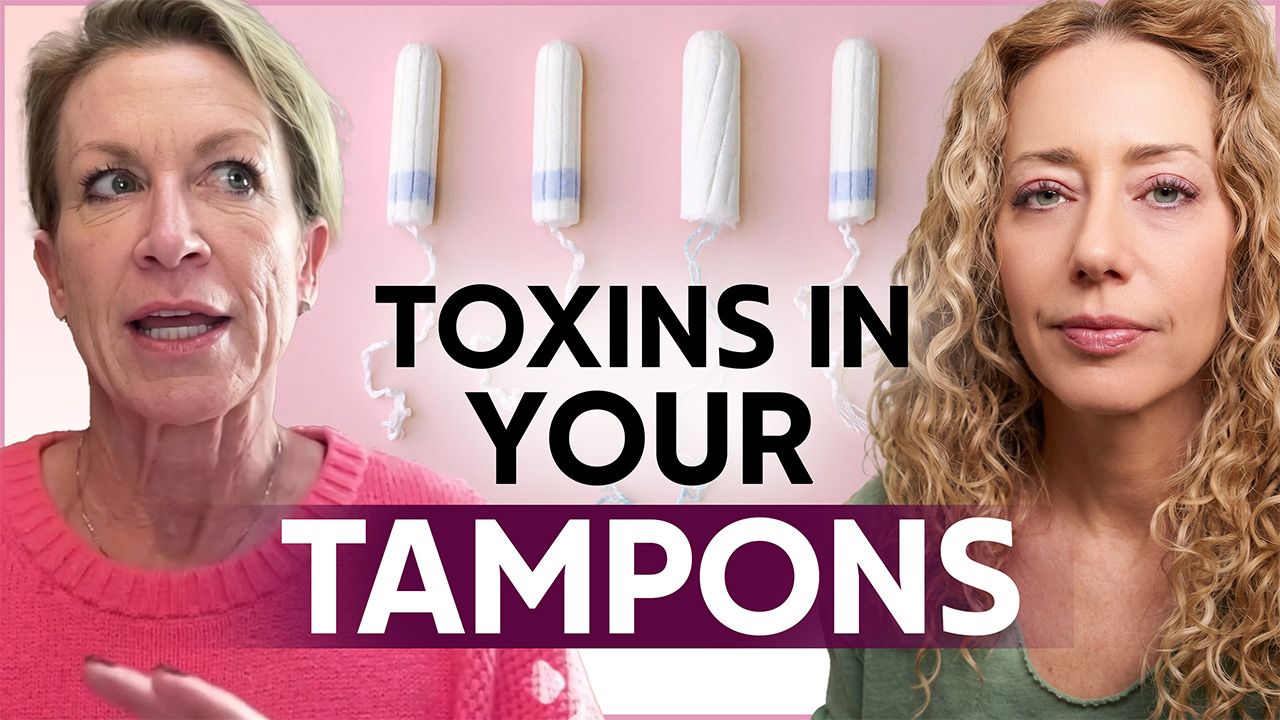
You work hard to eat clean, move your body, and support your health, but have you ever thought about what's in your tampons, pads, or period panties? In this episode, I sit down with Jennifer Eden to discuss this health topic that most women never think to question, yet it could be affecting so much, from period pain to hormone health.
Jennifer shares how her debilitating endometriosis pain led her to discover that chemicals in conventional period products were making her condition worse. And when she switched to purely certified organic cotton, her symptoms subsided after just a few months.
We dig into the ingredient list of most period products available on store shelves, and why even products labeled "organic" may not be as safe as you'd expect. Jennifer breaks down exactly what certifications to look for (GOTS and ICEA) and what "organically grown" versus "certified organic" really means.

Conclusion:
This is one of those episodes that makes you realize you can be doing everything right with food and lifestyle, and still have a blind spot that's working against you. The good news? This is one of the easiest swaps you can make. No guilt. Just data, and now you have it. Make the switch today!
In This Episode:
00:00 Meet Jennifer Eden
02:17 Hidden chemicals in period products
04:13 Jennifer’s endometriosis breakthrough
07:35 Looking beyond food awareness
10:18 How period products got worse
12:08 The organic label trap
16:25 Real results from using organic products
18:15 Why Tampon Tribe’s manufacturing stays in Europe
21:44 Tampon Tribe’s non-silicone menstrual cup
24:00 Tampon Tribe's product line and where to buy the products
Mentioned in the Episode
Tampon Tribe Organic Period Products: https://tampontribe.com/
Preorder Carrie’s upcoming book, From Corset to Crown!
Get immediate access to the ebook and other special bonuses at: https://www.carrielupoli.com/corsettocrown
Carrie’s Live Event in Nashville in October (2026): https://www.disruptivenutrition.com/liveevent2026
Listen to This Episode on Your Favorite Podcast Channel:
Follow and listen on Apple
Follow and listen on Spotify
Subscribe and watch on YouTube
Connect with Jennifer Eden:
Connect with Carrie Lupoli:
Other Related Episodes:
Looking for more tips to optimize your health? Listen to these episodes:
- The Truth About Seed Oils: What the Food Industry Won't Tell You
- Disrupting Everything You’ve Been Told About GLP-1s
Transcript:
[00:00:00] Jennifer Eden: So I switched to this organic brand. Never had period pain ever again. We think so much about what we put in our body in terms of food and sleep and movement and exercise, but we often neglect a lot of these everyday items, including your period products, that can have a massive impact on your health. I
[00:00:24] Carrie Lupoli: wonder if that's true about our tampons and about our period products.
[00:00:28] Carrie Lupoli: Yeah. Do you
[00:00:29] Jennifer Eden: think it's gotten worse over the years? Why are there chemicals in my tampons? They have super absorbents. They make you bleed more. The pain that they give you, 'cause you're putting a chemical inside your body in one of the most porous, sensitive areas of your body.
[00:00:47] Carrie Lupoli: Well, hey, Diet Disruptors. Keri here and another episode with a guest, and this, this guest, I mean, I am... I saw Jennifer on stage, and the [00:01:00] minute I heard her talk, I reached out to her on Instagram and said, "I need you on my podcast." And so we have a lot to talk about today, especially in the series that I've been doing around supplements, but not supplements, the supplemental sixth plate that we have to keep spinning, and this is a topic you probably have not thought that much about.
[00:01:20] Carrie Lupoli: Tampons, pads, personal hygiene, feminine hygiene products. Jennifer Eden is the co-founder of Tampon Tribe, and I can't wait for her to tell you exactly why this matters so much. So Jennifer, welcome. I'm so glad to have you here. I can't wait for you to share how all, all this information that every single woman needs to know.
[00:01:47] Jennifer Eden: Yeah. Thank you. It's great to be here, a- and you're totally right. You know, we think so much about what we put in our body in terms of food and, and like you said, the pillars such as sleep [00:02:00] and movement and exercise, but we often neglect a lot of these everyday items, including your period products, that can have a massive impact on your health and your ability to thrive, you know, as a human being.
[00:02:17] Carrie Lupoli: It makes so much sense. So I have to tell you, my grandfather owned a plastic factory and he made all of us kids work in it when we were younger, and he was actually approached by Tampax to produce the plastics for tampons, and he... I remember talking to him about it, and he said, "I- I just don't feel comfortable about it."
[00:02:36] Carrie Lupoli: There were no regulations for him in terms of, like, cleanliness, and he was nervous about his liability to produce something that was going inside a woman's body that wasn't clean, and it was the first time I ever really thought about that. But don't you know, Jenn, I was like, but surely, surely that's not what's happening.
[00:02:56] Carrie Lupoli: Surely they, like, sanitize and [00:03:00] make sure anything we're putting in there is, is, like, clean. And you're here to say, ah, no. Not so much.
[00:03:09] Jennifer Eden: Well, and when it comes to the plastics, there's a couple of, you know, parts of the, the period products that have plastic in it. So when you're looking at- An applicator, for example, that's one part of a plastic, you know, that we see all the time.
[00:03:22] Jennifer Eden: There's the back of the pads that we have next to our body. There's the wraps. Like, we can go on and on, but it's also the materials.
[00:03:27] Carrie Lupoli: Yeah.
[00:03:28] Jennifer Eden: Right? So there are man-made materials in most tampons, are only man-made materials. What are they bleached with? What are they sanitized with? Well, it's even worse. Oh, no.
[00:03:40] Jennifer Eden: So they're sanitized and bleached with chlorine and with titanium dioxide-
[00:03:44] Carrie Lupoli: Ugh ...
[00:03:45] Jennifer Eden: uh, with aluminum. Like, it is nuts. So I have a challenge. Like, when you are looking at pads, let's go with pads. Yeah. Get the bag of pads or the box of pads off your shelf, or when you're next in the grocery store, [00:04:00] read the ingredients.
[00:04:00] Jennifer Eden: You will be mind-blown. Or jump onto Amazon and have a look at the ingredients that are in it. There is plastic and man-made materials and chemicals everywhere, and we never think about it.
[00:04:11] Carrie Lupoli: We never think about it. What made you start to think about it? Because, like, you're, you're a woman like the rest of us.
[00:04:18] Carrie Lupoli: Like, something happened. What happened that made you realize this for the rest of us?
[00:04:22] Jennifer Eden: Right. Yeah, something pretty major happened. I have, um, endometriosis and, and every month since, you know, I guess I was 13 years old, I've had this really debilitating period pain. Mm-hmm. Like a lot of people have, you know?
[00:04:36] Jennifer Eden: Like, stab- feel like you're getting stabbed in the guts, like bending- I have that.
[00:04:40] Carrie Lupoli: My daughter's
[00:04:41] Jennifer Eden: had it. Yeah, crawling to the kitchen. My mom. Yeah, crawling to the kitchen, like, having some food to eat a tablet to just exist, and what are we told? "Well, that's just normal."
[00:04:49] Carrie Lupoli: Yes.
[00:04:49] Jennifer Eden: And you know, it was about seven or eight years ago, just before we started Tampon Tribe, and the reason why we started it, I thought, "There has to be a better way to live," [00:05:00] you know?
[00:05:00] Jennifer Eden: There has to be a different way to getting through these periods. And so I started researching, and then discovered these purely certified organic cotton tampons out of Europe.
[00:05:13] Carrie Lupoli: Okay.
[00:05:14] Jennifer Eden: And a bit of research came up, and like period pain can be impacted by chemicals. And I'm like you, like, what are you talking about?
[00:05:20] Jennifer Eden: Chemicals? Why are there chemicals in my tampons? So I switch to this organic brand, and then my period pain just stopped. I, you know, for someone who goes- Oh my
[00:05:29] Carrie Lupoli: gosh ...
[00:05:29] Jennifer Eden: right. And I thought that's gotta be a coincidence. There is no way. Like, it, it- you're mind-blown that it could be that simple. Yeah. I'm like there is no way this is possible, but I went just go with it.
[00:05:39] Jennifer Eden: Tried it out for a couple of months. About four months later, I remember I, I got my period. The pain was back. I'm like, "Oh, see? No, no, no. It was, it was a coincidence." And then I recalled I was traveling the month before. I bought store-bought tampons off the shelf and used them. My next month period was awful, [00:06:00] went back to organic.
[00:06:01] Jennifer Eden: Never had period pain ever again, which once again is mind-blowing.
[00:06:07] Carrie Lupoli: Wow. And so- That's such an experiment, huh?
[00:06:10] Jennifer Eden: Wow. A- and it was... And you're just like, how is this possible? A- as you dive down the rabbit hole, you see how it's very possible.
[00:06:18] Carrie Lupoli: Yeah.
[00:06:19] Jennifer Eden: You see every one of those chemicals in these products, even ones that call themselves organic, and that's a n- that's the next jump, you know, of the conversation, can really be impacting our bodies.
[00:06:30] Jennifer Eden: They have super absorbency. They make you bleed more. They, pain that they give you, 'cause you're putting a chemical inside your body in one of the most porous, sensitive areas of your body. So for me, I was like, wait. And at the time, myself and my business partner, we were in Los Angeles, where we're based now, and, um, we were finishing one business venture, looking at another, and at the same time we were c- walking down Venice Beach, and we saw all these plastic tampon applicators, [00:07:00] which is a bit gross, right?
[00:07:01] Carrie Lupoli: Yeah, I was gonna say, just randomly on Venice Beach.
[00:07:04] Jennifer Eden: You do. Well, that's Venice Beach.
[00:07:06] Carrie Lupoli: Okay. Okay.
[00:07:07] Jennifer Eden: And there's a lot of trash. Um- And then we thought, "Wait." And it kind of all was a serendipitous moment. Like, I'd been experimenting with this in my body. We were talking about what we were doing next for a business, and then we were like, "Wait, what if we could create these tampons that were plastic-free, that save the environment," something I'm very passionate about, and my co-founder as well, "and have totally organic, certified organic products?"
[00:07:32] Jennifer Eden: Tampon Tribe was born from there.
[00:07:33] Carrie Lupoli: Oh my gosh. I mean, we have been studying this a lot. In my private practice with my client base, we have been talking so much around, you know, about our whole philosophy. My philosophy is that I don't want people to be, um, feel like they have such guilt around food, you know?
[00:07:50] Carrie Lupoli: Because I, I always say I don't, food doesn't, it's, I don't wanna look at food as good or bad- Sure ... or healthy or unhealthy, because when we eat something bad, we feel bad about ourselves. We feel guilty. [00:08:00] Instead, I say food serves our body and food serves our soul. We need both, but if it's not doing either one of those things, we've really gotta talk about why we're doing it.
[00:08:08] Carrie Lupoli: And it's just got us down this whole conversation. We've read Good Energy by Casey Means. We've read Outlive by Dr. Peter Attia, and it's like m- there's something else going on. Yes, like, the, the food piece, food that serves our body, so many times we don't even realize what is going on in the environment- Mm-hmm
[00:08:27] Carrie Lupoli: that's not serving our body, that's contributing to the obesity epidemic, the, the m- the metabolic health issues that we're having. Food is a piece of the puzzle, and that's why this was so important to me, because we could be eating all clean, whole, unprocessed foods and doing things like this in our bodies, not even realizing that it's contributing to our health issues.
[00:08:50] Jennifer Eden: Yeah, 100%, and I totally agree with you on not having a bad or a, a good or a guilt. Mm-hmm. But it's being aware, and then you can make the choice, and I [00:09:00] think that's the biggest thing is just being aware, like we do with food, what we're putting in our body.
[00:09:06] Carrie Lupoli: Mm-hmm. And
[00:09:07] Jennifer Eden: when it comes to a tampon, a pad, even period underwear with, you know, forever c- uh, chemicals in them, with, with PFAS, you know, which can get into our bloodstream as more and more reports are showing from fabrics, um, deciding then on the environmental skew of it, you know, in terms of reusables.
[00:09:25] Jennifer Eden: But, uh, I think it's just a s- first step-
[00:09:29] Carrie Lupoli: Yeah ...
[00:09:29] Jennifer Eden: is to be aware, you know? And we look at, as you said, all the epidemics that are surrounding us, and then you look at infertility, and that's gone through the roof.
[00:09:39] Carrie Lupoli: Through the
[00:09:39] Jennifer Eden: roof. You know? So-
[00:09:41] Carrie Lupoli: And as a woman who went through infertility, this is so interesting to me- Mm
[00:09:44] Carrie Lupoli: 'cause I, I, I have a, I have a child born with IVF and an adopted child, and I, um, my periods were absolutely horrible, um, just my whole, you know, uh, my whole history. And it's interesting that both my [00:10:00] kids are having that now, and I was one of the only ones in my friend group that was going through infertility.
[00:10:04] Carrie Lupoli: But it's still, it's like It's everywhere now. Everywhere now. And like the mac and cheese we ate when we were kids is not the same mac and cheese that we're eating now. And so I wonder if that's true about our tampons and about our period products. Yeah. Do you think it's gotten worse over the years, or do you think it's always been this bad?
[00:10:24] Jennifer Eden: I think it's a combination of two things. I think once upon a time it was simple. You know, you had the, the Tampax and the pads, which I would imagine were probably made with cotton.
[00:10:35] Carrie Lupoli: Yeah.
[00:10:36] Jennifer Eden: You know, that's what it would've started off. It was cloth originally, right? Yeah. So we had... And actually now we're going back to cloth.
[00:10:41] Jennifer Eden: We sell reusable pads. They're really popular. So it was the cloth- Oh ... and then, um, cotton, and then of course you get people that want to improve a product or- Yeah ... for whatever reason. They want to make it cheaper.
[00:10:53] Carrie Lupoli: Mm-hmm.
[00:10:54] Jennifer Eden: So what can cotton be replaced with? Nylon, synthetic, rayon, man-made materials. [00:11:00] Um, how do we make it whiter?
[00:11:02] Jennifer Eden: We put bleach in it. We put titanium dioxide. How do we make it- To
[00:11:05] Carrie Lupoli: give the illusion of fresh. Yeah. We see that in supplements. When we started our supplement line, we wanted a white pill, and we realized any white pills have all sorts of chemicals in it to make it white even though it looks clean. It's crazy.
[00:11:20] Jennifer Eden: Right. And there are little ways around that. You know- Yeah ... you can use very safe hydrogen peroxide, which is body safe, you know- Yeah ... to, to do that as well. It's a bit more expensive. There's nothing wrong. So there you've got the costs that factor in, right? And then you have people that put wax on the string.
[00:11:34] Jennifer Eden: We don't need wax near your body. No. Um, and they put glue. So we are a vegan line as well, so we don't use any glues. We use like a, a biopolymer out of Germany. We, like I say, don't have plastics anywhere near that part of your body that needs to breathe. So the pad backings are all plant-based, all certified organic cotton, um, tampons as well.
[00:11:55] Jennifer Eden: And then you have a lot of greenwashing and organic washing on this [00:12:00] space which is, I'm sure you have it in supplements too. It's a whole other thing. You know? Yeah. People put the word organic on the box.
[00:12:07] Carrie Lupoli: All right. So that's a... So I was at the grocery store yesterday, and I was like, I was going for, looking for something else, and I'm like, "I'm gonna go down the tampon aisle."
[00:12:15] Carrie Lupoli: I- Yeah. Full, full disclosure, haven't needed tampons in a while. I've been through menopause for a, a, a few years now. But I was like, "I'm gonna go walk down the aisle." And there's n- there's now this, you know, cleaner, like, organic looking like label on some of the boxes now, and I was like, "Ooh, I can't wait to ask Jennifer about this."
[00:12:37] Carrie Lupoli: Because you can get stuff in the grocery ster- store that looks like it's pure, clean, and organic. Mm. Talk to me about that.
[00:12:47] Jennifer Eden: Yep, and it's a better for you product.
[00:12:50] Carrie Lupoli: Sure.
[00:12:50] Jennifer Eden: But it's not a best for you product.
[00:12:52] Carrie Lupoli: Mm-hmm. And I feel like at the end of the day, this is so important. Like, this is going into [00:13:00] our body.
[00:13:01] Carrie Lupoli: Hmm. It's like the difference of saying, you know, like, am I gonna go organic in my berries or am I gonna go, you know, we'll just call it wi- wild grown. That's not really a thing, but like, you know, it... There's a, there's a lot of in between in a lot of the things that we're talking about, but it's so much about marketing, and that's why I love what you're doing.
[00:13:20] Carrie Lupoli: Small business, woman who cares about other women, and has seen the impact in her own lives. When we're looking at these big corp- corporate companies that are trying to market to us, that's not what they're in for, right?
[00:13:31] Jennifer Eden: Right. A- and I mean, with the ones that you see on the shelves, look closely at it.
[00:13:37] Jennifer Eden: Mm-hmm. So a lot of people say organically grown. That's just like your wild grown that you just said. Of course it's grown organic. The word organic means a lot of things.
[00:13:45] Carrie Lupoli: Yep.
[00:13:45] Jennifer Eden: You wanna look for certified organic, and you wanna look at the certifications. Yes. If they're not on the box, get on the website.
[00:13:53] Jennifer Eden: If they're not on the website, it is not certified organic cotton. It is so difficult to get [00:14:00] a highly certified, 100% certified organic cotton, not an organic cotton top or a string or... The whole product. And without that, these certifying companies actually won't award the certification.
[00:14:15] Carrie Lupoli: Ah.
[00:14:15] Jennifer Eden: Like, they're strict.
[00:14:18] Jennifer Eden: So if you don't see the little label, whether it's on the box or on the website, sure, an element-
[00:14:25] Carrie Lupoli: Yeah ...
[00:14:26] Jennifer Eden: might be organic. It may not, who knows? But it might be. Let's give everyone the benefit of the doubt. However, when someone says, "We only use a little bit of titanium dioxide," or, "We only put a little-" I
[00:14:36] Carrie Lupoli: feel like that's a surgeon operating with a little bit of dirt on a scalpel.
[00:14:40] Jennifer Eden: Right. Like- Yeah ...
[00:14:43] Carrie Lupoli: that's not gonna work.
[00:14:44] Jennifer Eden: No. So it's a carcinogen. It's banned in most of the world. It, it- Oh my gosh ... awful. Yeah. Or,
[00:14:49] Carrie Lupoli: um,
[00:14:50] Jennifer Eden: aluminant, as you say. I ha- I have a hard time with that word. Aluminium, I'll say it how- ... you do it. Uh, why-
[00:14:55] Carrie Lupoli: You can say it the way you say it.
[00:14:57] Jennifer Eden: Thank you. Oh, I'll take it. Uh, you know, [00:15:00] why is that in a pad and a tampon?
[00:15:01] Jennifer Eden: Like, it also is not necessary. Not necessary. And I think what gets me quite a lot is that these products in their purest form, when we're using a GOTS and an ICEA certified organic cotton, which is the top of the organic cotton certifications you can get, there are some midway ones that are partly there, but they're a little different again.
[00:15:21] Jennifer Eden: Um, so like I say, that's... How far down the rabbit hole do you wanna go, you know?
[00:15:24] Carrie Lupoli: No, I, I get it. Education is great. You know, I, I, I, I'm, I, I love my, a glass of wine. You're, you live in California, so you're in wine world over there. But I, um, e- even when you see organic wine, the only wine I drink is certified clean crafted, and there's a very specific certification that almost nobody has.
[00:15:41] Carrie Lupoli: It's like 99% of wine is, uh, 99.9% of wine is not... Even if they say organic grapes, they don't have to follow a certain process afterwards, or they can use organic pesticides. I mean, the, the name is very, it's very broad. Um, they can add tons of added [00:16:00] sugar and they don't have to tell you about it. So, like, there's so much out there that we need to be educated on, and so the rabbit hole could go for a long time.
[00:16:08] Carrie Lupoli: But I think it's just a matter of recognizing that, you know, there's, there's a lot of gray area, which is why when we have conversations like this, we can educate on not just what to look for, but who, who to trust. And I think it's- See ... women helping women that I think is so important. Um, okay. So a question that I have though, or I think something that's really important is just when your period is completely shifted because you had changed what you were doing, it just tells me what must be happening with the amount of true hormonal imbalances, health issues, that could be this no-brainer swap for so many of us before going down the rabbit hole of medications.
[00:16:53] Carrie Lupoli: Because never once did my doctor or my daughter's doctors ever suggest that this could be [00:17:00] something we could try.
[00:17:01] Jennifer Eden: Yep. I don't know why. A hun- I agree with you 100%. And it's not just my journey. We have thousands and thousands of women who report this back, you know? And you can see it on our Facebook, on our Instagram, and they're unsolicited, which- Yeah
[00:17:16] Jennifer Eden: I'm just so happy that we can help in that way. And people- Yeah ... with really heavy periods or really clotted periods will say, "Oh my goodness. When I switched to purely organic- By month two, my period had shortened. By month three, the clots had got less. I have no pain. Now, we're not saying this is the be-all and end-all for everyone.
[00:17:38] Carrie Lupoli: Wait, but why not- It's absolutely- ... try this first?
[00:17:40] Jennifer Eden: But try it. That's what I, like, I've spoken to so many people who have resorted to medication, to surgery. Oh. Now, maybe you will still have to do the medication and the surgery. I have- Right ... not, no medical device. But why not switch for a couple of months?
[00:17:56] Jennifer Eden: And so I
[00:17:57] Carrie Lupoli: said- Two of my girls ended up, the, the first thing the doctor [00:18:00] said was, "Oh, well, we need to put you on the pill."
[00:18:01] Jennifer Eden: Yes.
[00:18:03] Carrie Lupoli: And I'm like, "No." But I didn't have any other answers for them really, other than food. And when, you know, you have teenage girls, and there's only so much they're gonna really focus on when it comes to that.
[00:18:13] Carrie Lupoli: Right. This, it's just mind-blowing. It's amazing. Okay. Here's, here's the, the next piece of this. Mm. You found these tampons in Europe. Mm. And you are now working, you are making these tampons in the US, and I'm gonna take a shot in the dark here, and I kinda know the answer 'cause, you know, I've been stalking you a lot.
[00:18:32] Carrie Lupoli: But- You have to source your products not from the US. Am I right?
[00:18:37] Jennifer Eden: Correct. Correct And- We actually, the products are manufactured in Europe ...
[00:18:41] Carrie Lupoli: and that is so telling to me around the fact that, uh, if you have to import everything, then anything that's grown in the US, like you... I mean, if you could do it in the US, you would, because it would be cheaper, right?
[00:18:56] Carrie Lupoli: But you, you can't. So what does that say about everything else that we're, [00:19:00] that we're choosing, and as much as, you know, we'd love to be able to have that in the US, it's just not available? Is it like, nobody's practicing that? Is that's what's happening?
[00:19:10] Jennifer Eden: Yeah, I mean, these, this is coming down to regenerative farming now.
[00:19:14] Jennifer Eden: Yeah. You know, it's a whole other conversation. Yeah. Um, when it comes to that, because in order to be certified as we are, which is GOTS and ICEA, the l- the soil that everything is grown in would have to, I think, lie fallow for several years because of the, the chemicals that are already in the soil.
[00:19:33] Carrie Lupoli: Yeah.
[00:19:33] Carrie Lupoli: That
[00:19:34] Jennifer Eden: is- The ICEA ensures that everything from the microorganisms and the chemicals and i- the whole biodiversity of the soil itself that the cotton is grown in has to meet their standards. Then the cotton all the way from growth, like you said, through picking, through manufacturing, and the GOTS and [00:20:00] ICEA also ensures ethical certifications.
[00:20:03] Carrie Lupoli: Mm.
[00:20:04] Jennifer Eden: Produce the whole way through, transport the whole way through. So i- it's an entire production chain to get that certification.
[00:20:14] Carrie Lupoli: I don't even know how you started figuring this out, because it's just not done here.
[00:20:19] Jennifer Eden: No. And I thought it couldn't be done. It was funny, because when I sat, um, down with Gab, my business partner, we're like, "I don't know if we can do this and do plastic-free."
[00:20:28] Jennifer Eden: That's the other thing. You know, we don't have any, uh, plastic at all, so we have, as I say, all plant-ba- not even plant-based plastic, 'cause that's still plastic. It's just without a couple of things. We, you know, we use a, a very fine cardboard applicator wrapped in paper. The pads are wrapped in a biodegradable potato starch film.
[00:20:45] Jennifer Eden: We thought we were dreaming. Like, this can't exist because wouldn't it already exist? Right. Why hasn't someone done this, you know? Um, but we were fortunate to work with a manufacturer, now, now several manufacturers who do, who have seen that need, uh, and that [00:21:00] work with us on the, on the product line across all of our products.
[00:21:03] Jennifer Eden: And that's where we're quite different, too. So we don't have a compromise, and that's who we are. You know, we don't believe in compromise when it comes to somebody's health for us. You know, I think everyone make the best choice for their body, but for where we are, um, so bringing the... If we could manufacture in the US, that would be amazing.
[00:21:23] Jennifer Eden: We'd need to grow the cotton. If not, we'd have to import the cotton, and then you'd need a manufacturing facility- Yeah ... that is totally clean, you know? And, and not just clean. It's like having peanuts in a, in a factory. You know, it's that one dot of a peanut, five years later it's still, is not peanut free.
[00:21:39] Carrie Lupoli: Right, right, right, right.
[00:21:40] Jennifer Eden: It's the same for these certifications.
[00:21:41] Carrie Lupoli: Yeah. Yeah. No, that's so fascinating to me. So you also have, though, a product that's a menstrual cup, which I admittedly never used because that just sort of wasn't a thing when I was a teenager. But that's not plastic either?
[00:21:55] Jennifer Eden: Ours is not. So there are different materials you can make a menstrual cup from.
[00:21:59] Jennifer Eden: [00:22:00] Wow. Um, majority of companies will use silicone.
[00:22:02] Carrie Lupoli: That's what I thought, right.
[00:22:03] Jennifer Eden: Yeah. Right. So- Silicone you can't recycle. It doesn't break down. So as I said, our business is that we use plant-based materials.
[00:22:12] Carrie Lupoli: Yeah, and I'm also just feeling like, what, like, how is that made? Like, what else is it... Like, I can't imagine putting that inside my body, you know?
[00:22:22] Jennifer Eden: Ah, it's great.
[00:22:24] Carrie Lupoli: No, I mean a silicone one.
[00:22:25] Jennifer Eden: Oh, silicone,
[00:22:26] Carrie Lupoli: no.
[00:22:26] Jennifer Eden: Yeah. So silicone is a harder material. Okay.
[00:22:29] Carrie Lupoli: Okay.
[00:22:29] Jennifer Eden: But people use it. It's still, it's still, uh, it's still not awful when it comes to the environment. I mean, when it comes to re- you, you know, s- using something every month versus a reusable- Yeah,
[00:22:38] Carrie Lupoli: right, right, right, right
[00:22:39] Carrie Lupoli: you
[00:22:39] Jennifer Eden: are stepping
[00:22:39] Carrie Lupoli: up. But I just think about putting that in my body. Yeah, that's
[00:22:43] Jennifer Eden: a choice- You know? ... isn't it? Yeah.
[00:22:44] Carrie Lupoli: Golly. So the m- Yeah, so the menstrual cup eludes me a little bit, but I, I mean, for each, its o- to each his own. I'm glad you have a solution for the people that want that.
[00:22:52] Jennifer Eden: I love it. I've gotta tell you, I was exactly the same, and then all my friends started using it, and I was like, "Oh, I'm gonna have to try this."[00:23:00]
[00:23:00] Jennifer Eden: It's fantastic. So we make ours with, it's a rubber. It's called, it's actually called a medical grade TPE, which is a thermoplastic elastic p- elastopolymer, but it's not plastic. It's just a name. Okay.
[00:23:11] Carrie Lupoli: Okay,
[00:23:11] Jennifer Eden: gotcha. So it's actually made from a rubber, a rubber material, naturally from the trees, and it breaks down, so you can recycle.
[00:23:19] Jennifer Eden: Um, so that's an important choice. It's not-
[00:23:20] Carrie Lupoli: You are such a disruptor. The name of my private practice is Disruptive Nutrition, and I appreciate so much women that are fellow disruptors to disrupt the industry that they're so passionate about, and this is just so synergistic with what I do and the health and wellness industry in general.
[00:23:39] Carrie Lupoli: And gosh, so many people need to know this, but now you're making me think. You're making me think about toilet paper. You're making me think about diapers. Mm-hmm. All of that. Yeah. Are, are you expanding? I feel like I need you in all, in all of my life. Ah.
[00:23:51] Jennifer Eden: I, I don't think we'll go that far. We love- All
[00:23:54] Carrie Lupoli: right
[00:23:55] Jennifer Eden: the business with a, with a narrow focus and do something really well. We are adding more products to our product line, so. Oh,
[00:23:59] Carrie Lupoli: great.
[00:23:59] Jennifer Eden: Um, [00:24:00] we also have reusable pads, all made out of organic cotton, no plastics as well, and they're getting more popular, and of course, period underwear. Yeah. So we make ours from, once again, certified organic cotton, um, or a modal bamboo, um, all PFAs-certified, f- free of PFAs, so that's really important.
[00:24:17] Jennifer Eden: Uh, we're about to launch our teen and tween line soon, and we've just done tween pads, which is really, really cool, so- Oh, I- ... smaller body don't have to wear these massive diaper pads- Yes ... you littler. Uh, all organic cotton again too, so you s- gotta be, we hope to be mindful of when someone starts their period journey, which can be as young, 8, 9, or 10 these days.
[00:24:42] Jennifer Eden: Mm-hmm. And that's all
[00:24:43] Carrie Lupoli: of our- It's a whole nother conversation
[00:24:47] Jennifer Eden: So period underwear, and people, actually period underwear is great. It's also great for a little bit of incontinence, you know? Pee leaks and laughing and all
[00:24:52] Carrie Lupoli: this- Yeah. Yeah, yeah, yeah, yeah. No, for sure. I got you on that one.
[00:24:56] Jennifer Eden: Yeah. Uh- So that's great.
[00:24:57] Jennifer Eden: We use a terry, you know, a, a terry cotton, um, [00:25:00] absorbency so locks in all the fluid, and you just wanna be looking for something that, that doesn't have the chemicals, doesn't have a super absorbent. And that's the thing with tampons and pads too. So many reports that these chemicals not only disrupt your endocrine system, but cause you to bleed more and use more product.
[00:25:18] Carrie Lupoli: Well, that's- Yeah ... really interesting, right? Because, like, even with the food industry, it's like it, it makes you more addicted to the food, and then you keep having it and having it, and it's just interesting that if it makes you bleed more and you need more product, I, I'm just saying. Yeah. Like, I'm just, I'm just saying.
[00:25:34] Carrie Lupoli: I'm just connecting some dots. Throw
[00:25:35] Jennifer Eden: it out there. Mm-hmm. Throw it out there. Yeah, and, and we have people that reach out to me and say, "Oh my gosh, I normally use 36 ultra tampons." I'm like, "What? That is a lot." Now, there are some people that do bleed very heavily.
[00:25:46] Carrie Lupoli: Yeah. Yeah, yeah.
[00:25:47] Jennifer Eden: That's an anomaly, and it happens.
[00:25:49] Jennifer Eden: For the majority of people, they can drop down to a totally certified organic super plus without any chemicals in it and get by with about six, 12 to 16 a month. [00:26:00]
[00:26:00] Carrie Lupoli: And so that's actually really interesting because when I, when I was actually b- before this conversation, when I was looking through everything, I'm like, oh gosh, I would need...
[00:26:08] Carrie Lupoli: 'Cause let, let's be honest. It's more expensive to buy your products than it is on the shelf, and I thought, okay, let me do a little math of what I would use, right? And I still did the math, and I'm like, it's still worth it. I, I mean, it's still worth it. It's worth it. Right? But now what you're saying is, like, I was doing math on how many tampons I would go through in a day.
[00:26:25] Carrie Lupoli: Yeah. And to your point, why not try this first to ensure... So sure, maybe you'll still have a really heavy period, but now you have more data to be able to rule out the things that actually could be causing it and not put your body through unnecessary treatments that could've been dealt with with something as simple as this swap.
[00:26:45] Carrie Lupoli: I mean, the cost of not using this product to me is way, way higher. Yeah. And at, at the end of the day, it's like, uh, such an amazing part of being a woman, uh, about our reproductive system and everything that we [00:27:00] have. Like- Like, invest in it to, to, to treat your body right. But it's still, I, I mean, doing the math, it's still not crazy.
[00:27:09] Carrie Lupoli: Y- we, we are spending more money at Starbucks, for sure, than we spend on-
[00:27:12] Jennifer Eden: I just, I actually just did a little, a little comment about that. I mean, it's so true. Like $10 a month. We- so that, for us, is delivered with taxes, everything. It's actually not that much more expensive than what's on the shelves these days.
[00:27:24] Jennifer Eden: Yeah. Yeah. Um- Yeah. And when you look at... Yeah, I mean, I live in LA, so, you know, a smoothie's a, what, a $15, and acai bowl's 22. Like, you know, it's nothing. Nothing. Um, but even if you don't, even if you don't. So we, we wanted to make sure that we would include, you know, shipping to everywhere in the US, because a lot of people don't have access to what we have here in LA.
[00:27:46] Jennifer Eden: And actually, that was one of the reasons when I started looking for these products, I'm like, "I'm in Los Angeles, and I can't find these products on the shelves." So-
[00:27:55] Carrie Lupoli: And if, if you can't, nobody can.
[00:27:56] Jennifer Eden: Right. And this is where you've got a, an Erewhon and a Whole Food, [00:28:00] every other shop, you know? Yeah. And now it's a little different.
[00:28:02] Jennifer Eden: There are more brands out there that are semi-organic. And an interesting shift, too, worth mentioning, is we're getting more and more inquiry now from big box stores- Interesting ... from more ma- more mainstream shops who are realizing their customers are demanding more, uh, and they're wanting authenticity, which is fantastic for us.
[00:28:24] Jennifer Eden: Mm. But it was a bit of an awakening. There was a big report that came out in July, uh, about the toxins in tampons, and people just fell off their chairs. As they should. I did, too. Like, what? Yeah. Everything we've trusted our whole lives, what? So, uh-
[00:28:39] Carrie Lupoli: Shocking. It's shocking, and it's also that surprising. Like, how have we not, like, thought about this, right?
[00:28:45] Carrie Lupoli: I know.
[00:28:45] Jennifer Eden: How did we miss it? I don't know.
[00:28:46] Carrie Lupoli: Oh.
[00:28:47] Jennifer Eden: I'm with you.
[00:28:48] Carrie Lupoli: But you know what? I always say, "No guilt, just data." Yes. We can go back and, like, look at it and say, "Okay, now I..." When you know, you can do. And I think that's what you're doing, you're opening our eyes, and now you have to do better [00:29:00] when you know better.
[00:29:00] Carrie Lupoli: You just, y- it's, you have to. Like, I don't think I can, I could ever just go and buy off the shelf again knowing what I know now. Mm. You know? You just can't. It's
[00:29:11] Jennifer Eden: like anything. Right. You know, it's like any of the products that we're using, like y- whether it's a, a food, a, um, a farm- I
[00:29:17] Carrie Lupoli: can't drink wine unless it's certified clean crafted.
[00:29:19] Carrie Lupoli: Right. I just can't do it.
[00:29:21] Jennifer Eden: And then, but then if you do, you know. Oh. And that, I think, knowledge. And you'll feel it in your body, too, but then you also make the choice. And I think- Yeah ... with everything, that's what it comes down to, right? Yeah. It's having the knowledge to make an informed decision. Exactly.
[00:29:34] Jennifer Eden: And then whatever decision you make, be, be at peace with that. There's no problem. Yeah. And we understand it's not every product is for every body, right? You, you might have to experiment a bit. Um, but just I think taking that first step of going, "Huh- Light bulb. Look, and then looking at your products you have, or when you're in the supermarket or the grocery store the next time taking a look and going, "
[00:29:58] Carrie Lupoli: Wow."
[00:29:58] Carrie Lupoli: Yeah.
[00:29:59] Jennifer Eden: Because I did. I, [00:30:00] I was shocked. The, the teen and tween pads out there, oh, my goodness, the chemicals in those.
[00:30:07] Carrie Lupoli: It, it's no wonder when you really start to think about it, and so if we can make... I, I call these things the no-brainer swaps, right? And, like, really think about what are we, what are we giving up really by making this swap, and what are we gaining?
[00:30:22] Carrie Lupoli: No-brainer swap.
[00:30:23] Jennifer Eden: Yeah.
[00:30:23] Carrie Lupoli: So this to me is a no-brainer swap, which is why I had to have you on here to be able to make sure everybody knows about this. So where can people find you? How can people buy all their tampons and pads and menstrual cups and all the things?
[00:30:36] Jennifer Eden: Sure, great. Very easy to find us. You can jump on our website, tampontribe.com.
[00:30:43] Jennifer Eden: Uh, you can also find us on social media @tampontribe. Um, we just got- Yeah,
[00:30:48] Carrie Lupoli: your Instagram is fabulous. It's, it's, it... entertaining and educational, and everybody needs to make sure that they go and follow that.
[00:30:56] Jennifer Eden: Thank you. TikTok is also a good one. Oh, yeah. TikTok's great [00:31:00] for... I find TikTok for knowledge-sharing across the whole gamut- Yeah
[00:31:06] Jennifer Eden: of products- Yeah ... is amazing for us because you really have people going, "Wait, I demand more." You know? "I demand some authenticity here in everything." So, you know, we speak a lot there and, and welcome, you know, the, the questions that come through there. Uh, so yeah, find us at tampontribe.com to go direct, on Amazon, at socials.
[00:31:26] Jennifer Eden: If you ever have any questions, you can reach out to me, um, on one of our Instagram channels or-
[00:31:31] Carrie Lupoli: Yeah, and you reply. Like I said, I saw you on stage. I, right there, I was like, "I, hi, I love you. I wanna get my products." You were like, literally right, minutes later, you're like, "Okay, let's do it." Yeah. And so I appreciate that so much.
[00:31:43] Carrie Lupoli: I love women-owned businesses who are supporting other women in this world of health and wellness that is so, just complicated and confusing, and we're just trying to make it simple, sustainable, satisfying so that we can all just live our purpose while loving [00:32:00] on our bodies. And thank you for being a part of that solution.
[00:32:03] Jennifer Eden: My pleasure. Great.
[00:32:05] Carrie Lupoli: My absolute pleasure. Great to be here today and, and hopefully we touch base again in the future. Sounds good. Thanks.