
I Flew to Utah for Stem Cell Therapy — What Happened Next Changed How I Think About Aging - 282
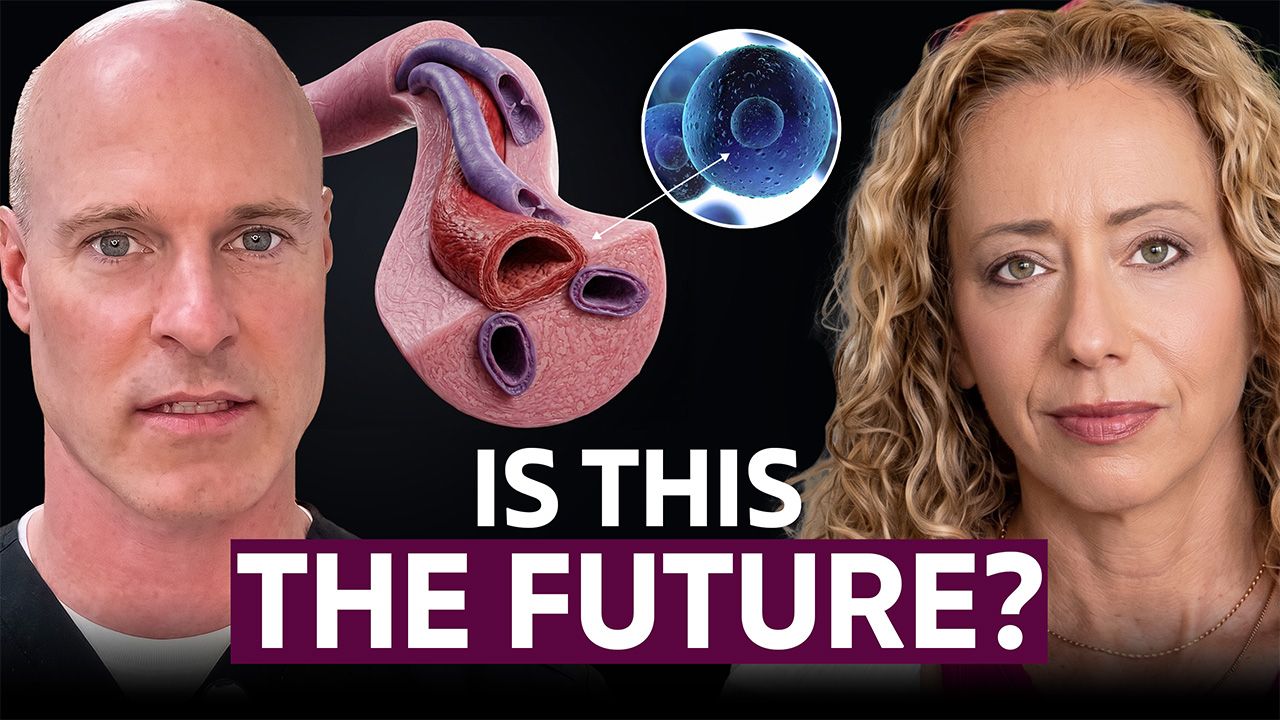
What if the pain you’ve been told to “just live with” isn’t actually permanent? What if your body can still regenerate, repair, and rebuild when given the right support? That's exactly what we're talking about today.
I’m hosting Dr. John Dame, medical director at ReClinic in Utah, to explore the world of regenerative medicine and how stem cell therapy is changing the way we think about chronic pain, joint degeneration, and aging. I also share my experience flying out to Utah and receiving treatment for my hips, an experience that has genuinely changed how my body feels and functions.
We break down what umbilical cord-derived stem cells actually are, how they work in the body, and why they are considered more potent than traditional stem cell sources. We also explore alternative therapies like peptides (including BPC-157) and how they can support healing when regenerative therapies may not be accessible or necessary.

Conclusion:
Aging doesn’t have to mean decline, and pain doesn’t always have to mean surgery or long-term medication. When we begin to explore regenerative options, we open the door to real healing, not just symptom management. I encourage you to stay curious, ask better questions, and advocate for your own health journey.
In This Episode:
00:00 Meet Dr. John Dame
03:24 Carrie’s hip pain and decision to go to Utah
05:26 What is stem cell therapy, and is it FDA-approved?
09:39 Umbilical cord stem cells vs adult stem cells
11:45 Why regenerative medicine treatments are available in Utah
15:11 Treatment journey and deciding how to use stem cells
18:52 Why steroid injections may accelerate joint decline
20:24 Whole-body benefits of IV stem cells
24:13 Health benefits of practicing gratitude
27:57 How BPC-157 peptide works
Preorder Carrie’s upcoming book, From Corset to Crown!
Get immediate access to the ebook and other special bonuses at: https://www.carrielupoli.com/corsettocrown
Carrie’s Live Event in Nashville in October (2026): https://www.disruptivenutrition.com/liveevent2026
Listen to This Episode on Your Favorite Podcast Channel:
Follow and listen on Apple
Follow and listen on Spotify
Subscribe and watch on YouTube
Connect with Dr. John Dame:
Connect with Carrie Lupoli:
Other Related Episodes:
Looking for more tips to optimize your health? Listen to these episodes:
- Elderberry's Surprising Role in Brain Health and Longevity
- The Toxic Chemicals in Tampons Every Woman Needs to Know About
Transcript:
[00:00:00] Dr. John Dame: A joint that has received three or more steroid injections is doomed to fail, meaning you're eventually going to need surgery regardless. And with progressive steroid injections, the relief from that inflammation and degeneration also reaches a limiting benefit. And so every opportunity I get, I try to grab people and say, "Look, let's do a regenerative.
[00:00:19] Dr. John Dame: Let's boost what you have, not squash it. Let's calm that inflammation with natural means, with these growth factors that help calm inflammation, and let's fluff up what you've got to give you five, 10 more years with this joint."
[00:00:31] Carrie Lupoli: What if the pain that you've been told you just have to live with, the aching hips, the worn-down joints, the body that's declining faster than it should, what if that wasn't actually inevitable?
[00:00:39] Carrie Lupoli: What if you were never told about a therapy that could actually regenerate what's breaking down, not mask it, not manage it, not put a Band-Aid on it, but heal it? My guest today is Dr. John Dame, medical director at the ReClinic in Utah, and this isn't just some guest that I'm bringing in. I actually flew to Utah.
[00:00:55] Carrie Lupoli: I worked with Dr. Dame. I did this therapy, and I am a different person because of [00:01:00] it. Nobody is actually telling you that there are treatments being suppressed, not because they're unsafe, but because of who profits when you stay in pain. That's the corset in your healthcare system. Today, we are ripping that off.
[00:01:12] Carrie Lupoli: We're talking umbilical cord stem cell therapy, peptides, longevity, and why making decisions from the crown means refusing to accept this is just what happens when we get old.
[00:01:28] Carrie Lupoli: Well, hey there, my crown straighteners. Welcome to another episode. I am really excited about how we are going to marry the medical stuff we're gonna talk about today with our body, along with our beliefs in the crown that we all need to be standing in. So Dr. John Dame is one of my doctors, and he's the medical director at the ReClinic in Utah.
[00:01:51] Carrie Lupoli: I actually flew out to Utah to work with him, and I said to him, "I need to have you on my podcast." He is just this [00:02:00] incredible wealth of knowledge in the medical field that you're not told about because, you know, the corset, because they want us to learn certain things and believe certain things. And when I met Dr.
[00:02:12] Carrie Lupoli: John, I was like, it was a, a, a breath of fresh air, thinking outside of the box, thinking differently. He is really all about sustainable health, hormone health, longevity, all the things that we know we need to be able to actually make decisions from the crown instead of the corset. So he also does this work, and this is what we're gonna talk about today, using umbilical cord derived stem cell therapies, and that's actually the therapy that I got when I was working with him.
[00:02:40] Carrie Lupoli: And I haven't really talked about it at all because I wanted to wait and see how I felt, to be honest with you, but also, I was waiting for Dr. John to come on our show and that we could talk together about not just my experience, but the whole science of stem cell therapies. So welcome to the show. I'm so happy to have you here.[00:03:00]
[00:03:00] Dr. John Dame: Thank you. I'm so glad to be here. Um, and I'm also very grateful that you, uh, have opened up this platform for us to share what so many people don't understand fully, um, or know is an option for them. So, um, it's, it's a wonderful opportunity. Thank
[00:03:14] Carrie Lupoli: you. We hear the word stem cell, I think we've heard that for a really long time, and then forget, like, the concept of umbilical cord stem cells.
[00:03:22] Carrie Lupoli: But we're gonna dig into what that means, but I gotta tell you how I learned about you. So I was with one of my good friends, Dan Miller, who's been on our show multiple times. He and I did TEDx together in South Africa. And we were at an event together, and I was, like, hobbling. And he goes, "What's wrong with you?"
[00:03:40] Carrie Lupoli: And I'm like, "My hips hurt so much." And I had had hip problems since I was young, but I was just really struggling. And he's like, "If you have any amount of money, you should not have pain." That was his whole thing. Yeah. And I'm like, "What?" And he's like, "There, there's no reason why you have pain right now. I will get you set up."
[00:03:58] Carrie Lupoli: And that's when he started [00:04:00] talking about stem cell therapy to me and introduced me to you. Yeah. And I had two lateral tears in each of my hips, and I was really struggling. I mean, I was going in a downward decline in the gym. I mean, I don't-- I work out. I, I strength train. I take care of myself. But it was almost like nothing I was doing was keeping this, I don't know, this- this from happening to me.
[00:04:26] Dr. John Dame: Yeah.
[00:04:26] Carrie Lupoli: And so you and I had a call, and then I flew to Utah, and you, you're really a proponent of this stem cell therapy, which I was a little scared of, to be honest with you. Yeah. So tell us what it is, and I will tell you now, it's been wo- I was there a few months ago, and I am a different person now. So we're gonna talk about why, why it worked as well.
[00:04:47] Dr. John Dame: So, uh, just to speak to your experience, um, so many of us, so many people just go, "Well, this is what getting old feels like, and this is, this is what I, this is just what I get to, this is the cross I get to bear 'cause I [00:05:00] did cheer in college," or, "I did this type of exercise," right? You know- That was me. I was a cheerleader in college
[00:05:05] Dr. John Dame: "I'm an avid runner," exactly. I'm, I'm an avid- Yeah ... runner, um, and you know, and this is just the price I pay at this age. And we just kind of accept it when, a- as Dan pointed out, you don't have to accept it. Um, and so to speak to what the treatment is, um, you j- y- as you mentioned, stem cells have been, you know, in the news and as something that had been the buzzword, you know, for probably a couple decades now.
[00:05:28] Dr. John Dame: And over that course of time they've been this, like, promise of change and, and healing all problems, and then it was, well, me providing these therapies without quality, you know, uh, product. And then it's really- A little bit like the
[00:05:42] Carrie Lupoli: Wild, Wild West.
[00:05:44] Dr. John Dame: Totally the Wild West. And, and what's happened in certain places, like in Utah, um, our state legislature's passed a law allowing us to provide non-FDA approved treatments, which stem cells are, and that's important for your listeners to know and important for our patients to understand.
[00:05:58] Dr. John Dame: And basically what that means is [00:06:00] that it hasn't been approved by these large studies to, uh, either prove efficacy and/or safety. There's plenty of information out there regarding safety, uh, when you're using the right product, but it's not FDA approved. Um, and so what that has done is-
[00:06:13] Carrie Lupoli: But can we just, can we just, like, enter into Carrie the conspiracy theorist for one second?
[00:06:18] Carrie Lupoli: Sure. Because
[00:06:22] Carrie Lupoli: Even if it's FDA approved, there's a lot of stuff that's FDA approved that I would never put in my body or do. Yeah. No. So I think we use it as a standard. Yeah. And again, it opens up to Wild, Wild West, but that standard to me is a little shaky. Would you agree? Uh,
[00:06:36] Dr. John Dame: it, it's highly motivated by pharmaceutical industry- Yep
[00:06:40] Dr. John Dame: and biomedical company money, um, that- There you go ... determines what people can and can't access. Yeah. And so, um, we're, we're grateful to be able to, uh, provide this service outside of that umbrella. Mm-hmm. Um, but it's important that we disclose that that umbrella isn't covering us. Yeah. Um, but to speak to- Which can feel a
[00:06:58] Carrie Lupoli: little scary, especially if you do [00:07:00] research, to your point.
[00:07:01] Carrie Lupoli: It's like, "Oh, this is highly unregulated. It's the Wild, Wild West" Yeah ... which is why I wanted to bring you on- Mm-hmm ... because you are not Wild, Wild West.
[00:07:10] Dr. John Dame: No. And, and what I
[00:07:12] Carrie Lupoli: would say is- And you are a really good person for us to learn from.
[00:07:14] Dr. John Dame: Yes, and what I would say is, um, w- by unregulated, that is really a, a, probably a, a, a misnomer.
[00:07:21] Dr. John Dame: Um, the labs that we use, the tissue donation programs to obtain these cells, all of them are certified labs. They are, you know, using, uh, foundational science, um, that's well-documented and using best technique and best practices. And we as a clinic here in the United States don't align with any group that we feel at all is, you know, shaky or shady in how they obtain and/or provide the product that we use.
[00:07:45] Dr. John Dame: So it's way less Wild West, though we are in the West. Ah. And so- In Utah, physically. In Utah, exactly. And so to speak to what stem cells are and what they do, the umbilical cord-derived mesenchymal stem cells, or MSCs as they're often referred to in, in the [00:08:00] parlance, they act as cell signalers to parts of your body that have forgotten that they're supposed to regenerate.
[00:08:07] Dr. John Dame: So for example, in a hip joint, when something tears and it starts to wear down and there's inflammation, a lot of that wear down is because the chondrocytes, the cells in that joint, and the capsule cells aren't producing the lubrication and/or the fluffiness of those cells to provide the buffer that you need for comfort and, and, and lack of pain.
[00:08:29] Dr. John Dame: Um, so putting the stem cells in that space wakes up those chondrocytes and wakes up those capsular cells, those synovial cells, to produce the fluid that they're supposed to and to fluff up, and then you take a big, you know, multi-year step back in any progressive degeneration of that joint. So you essentially add life to a joint that was on its, you know, decline.
[00:08:52] Dr. John Dame: And-
[00:08:52] Carrie Lupoli: I feel like it's a little bit like a cheerleader coming and be like, "Come on, guys. Wake up." To
[00:08:56] Dr. John Dame: come back to... "You can do this." Exactly. Exactly. Lots of... And, and for a [00:09:00] long time we wished that stem cells would go in and become the chondrocytes, that they would become the joint cells, and that we could put them other places in the body and they would become those cells.
[00:09:09] Dr. John Dame: But really what their magic is is to come in with these growth factors, um, and these growth factors wake up the tissue and, and induce this healing process and reduce inflammation. And so it's, it's, um, it's a cascade of things that the, the stem cells do to help where they're placed. Um, the thing, another thing to point out is these umbilical cord derived stem cells are essentially zero days old.
[00:09:36] Dr. John Dame: Um, they're obtained from birth tissue. They're, they're isolated in culture, and then they're utilized, so they're very, very young. You and I have stem cells that I'm not even gonna mention how old they are, um, but they're, they're not the same as these umbilical cord derived, you know, zero-day-old stem cells.
[00:09:54] Dr. John Dame: Their potency and effect is, is remarkable.
[00:09:56] Carrie Lupoli: That's interesting, because there's other states that do stem cells. [00:10:00]
[00:10:00] Dr. John Dame: Yes.
[00:10:00] Carrie Lupoli: But they're doing stem cells from your own stem cells. Am I right?
[00:10:05] Dr. John Dame: Yes. There's a few places in the body where there's a higher concentration of stem cells, and in our fat stores and in our bone marrow are two places that they can be harvested from Um, those are widely available throughout the United States.
[00:10:18] Dr. John Dame: There's clinics that do this. My reservation with that, uh, method of treatment, if it's all you've got, great. I mean, that's, that's, you know, use it. But the first is those stem cells are exactly as old as you are and have the same... Why weren't they doing their job to start with anyway? So do you think, you know, moving them around is gonna make a big difference?
[00:10:37] Dr. John Dame: And it does to a certain extent, but they are older. And then the second is, as you isolate those stem cells from your own tissues, it's coming with a lot of junk, um, that you don't need. Uh, isolated from the fat stores, it's coming with lobulated fat globules that you don't need injected in your knee, that you don't need injected other places in your body, and so it comes with baggage.
[00:10:59] Dr. John Dame: Uh, and [00:11:00] so for those two reasons, I'm not a h- not a big fan. Plus the injury site, you know, when you harvest these from your bone marrow, a bone marrow donation, I've done it twice in my life for, uh, academic reasons, is not a painless procedure. And to, you know, liposuction under local anesthesia is also not a, a fun procedure.
[00:11:18] Dr. John Dame: So there's kinda three strikes against it, and I just, you know, n- not a fan.
[00:11:23] Carrie Lupoli: If you're gonna go that route and have to endure that, it should be, like, extra special good. E-
[00:11:29] Dr. John Dame: exactly. You know? There should be some way to ensure that your stem cells are younger than you are somehow. Yeah.
[00:11:34] Carrie Lupoli: Yeah, yeah.
[00:11:34] Dr. John Dame: But that's unfortunately not the
[00:11:35] Carrie Lupoli: case.
[00:11:35] Carrie Lupoli: So, I, I mean, this is why I went to Utah. Well, first of all, Dan told me to, so that was- Yeah. ... n- number reason, reason number one. But when I learned about umbilical cord stem cells, like they come from a, a donor zero days old, I, it was really en- enthralling to me because it made so much sense. Why is it that Utah's, like, the only place that you can really do [00:12:00] that?
[00:12:00] Dr. John Dame: As I mentioned earlier, the state law that allows us to provide these therapies outside of FDA approval, um, and I think, uh, to answer the bigger conspiracy question, I think it has a lot to do with, um, uh, regulation at the state level and who influences who makes decisions at the state level.
[00:12:19] Carrie Lupoli: I'm glad you said that because to me, it's really important to know that this isn't because it's less safe.
[00:12:26] Dr. John Dame: Yeah.
[00:12:27] Carrie Lupoli: Right? And, like, you're doing something-- This is where it's just like, uh, we... Again, I always talk about the corset and the crown. The corset is this cultural conditioning and the ways that we've been kind of taught to believe, and we don't even question it anymore. Yeah. But when we really start to question, well, why is it the way that it is, you start to, like, like, I don't know, just sort of unravel a, an onion that- Yeah
[00:12:47] Carrie Lupoli: allows you to start to see truth, and once you see it, you can't unsee it. And it really has allowed me to tap into even more of my belief systems around the fact that, like, [00:13:00] we are the best advocate and n- uh, person to make decisions for ourselves, and we can't just, the they say thing- Mm-hmm ... we have to start to question.
[00:13:12] Dr. John Dame: I'm really fortunate to have come into medicine in an era where it was not so paternalistic, where the doctor was telling the patient, "This is what you can do. This is how you're gonna do it. Here's the script. Don't tell me anymore. Just leave and do what I say," and, and really is much more of a shared decision-making model.
[00:13:29] Dr. John Dame: Okay. Yeah. And so 100% of what you're advocating for is I'm the patient or you're the patient, you know what you need. Ask the questions to find the answers, and doctors are just advisors. We are not, you know, the end-all be-all, I'd like to think I was, but I'm not, of, of information and wisdom. We are advisors.
[00:13:47] Dr. John Dame: I love that. And so for some, for some providers, unfortunately, some of us have only been trained a certain way, and we don't know anything different. I was on a call earlier this morning with a, um, a provider who [00:14:00] admittedly said, "Look, I got into regenerative medicine after going through the pain management and pain, you know, treatment route and realizing we need something better than what we've been doing for patients," and, uh, and finding it that way.
[00:14:14] Dr. John Dame: And so all of us kind of migrate into this field of stem cells and regeneration from different angles, realizing there's, there's things we weren't taught in medical school, and there's a reason why we weren't. And it's, you know, a little conspiracy, you know, um, mixed in there, but, uh, grateful that we found it to, to be able to help patients.
[00:14:31] Carrie Lupoli: I think conspiracy theory is such a, a negative word, but I don't even know why anymore because I just think it's about, uh, advocating and researching and doing your... Like, n- not relying on other people to make decisions or to make truth for you, and that's where I think it's just around our own self-leadership.
[00:14:49] Dr. John Dame: Yeah,
[00:14:49] Carrie Lupoli: for sure. And that's what the crown is really all about, right? Yeah. Leading ourself, and, um, I don't think that should be necessarily, um, thought of as a conspiracy because- No ... uh, it should be advocated [00:15:00] for in terms of what e- all each of us do. All right, let's get into the logistics of, like, what I went through.
[00:15:05] Carrie Lupoli: So, so l- let's just give a little bit of a, um, background. I go to the clinic. I go with- Yes ... Peter, my husband, right? Yes. And the two of us are there, and I have hip pain issues. Um, I have, uh, an elbow, a golfer's elbow, and, uh, it's also, uh our 51st birthdays. Yeah. And it's so funny, we joke that, like, we were sitting in your, in your clinic laughing about how we were celebrating our 51st birthdays, which is so different than how we celebrated, like, our 30th birthdays.
[00:15:37] Carrie Lupoli: For sure. We were not in, like, the healthiest space. Yeah. Right? Yeah. Uh, it was definitely more of, um, party mode versus the party that we were in at your clinic. So when we went in, we were really looking at me trying to manage the pain that I was in. But, a- and so we're gonna talk about that, and then we also talked about stem cell IVs that Peter [00:16:00] ended up doing, and I did, like, whole body IVs.
[00:16:03] Carrie Lupoli: And then I made a decision not to do the stem cells for my elbow, and so I, I wanna walk through all of these decision-making processes, because I think I went through a, a s- a, a whole s- kind of roll in our, in my heart and my head about what I was gonna say yes to and what I was gonna say no to based on, um, m- my current level of where I was, right?
[00:16:24] Dr. John Dame: Sure.
[00:16:24] Carrie Lupoli: So, uh, my two hips, right?
[00:16:27] Dr. John Dame: Yeah.
[00:16:27] Carrie Lupoli: At first, one hip seemed worse than the other, but then I got an MRI, and I had lateral tears in both of them, and I had weakness in both of them. And I mean, no lie, we know that doing stem cells, doing this is going to cost money, and my insurance doesn't pay for it. Right.
[00:16:42] Carrie Lupoli: So I had to make some decisions, but also when I went to my doctor here, he was like, "You're probably gonna need surgery." And I was like, "Really?" And it was just sort of the road that we went down, and I'm like, the cost of not doing this felt much higher to me than the cost of doing this. [00:17:00] Yeah. Because I felt like this was actually gonna heal me as opposed to I don't know what, right?
[00:17:06] Carrie Lupoli: Like-
[00:17:07] Dr. John Dame: Yeah ...
[00:17:07] Carrie Lupoli: do something that maybe wasn't gonna do something for me. Alter
[00:17:09] Dr. John Dame: your anatomy, yeah.
[00:17:10] Carrie Lupoli: Yeah. Yeah. Yeah. Yeah. Just because insurance would pay for it.
[00:17:14] Dr. John Dame: Right.
[00:17:14] Carrie Lupoli: So we decided to do two hips, and you get a deal when you do two. But what did I do? What did I say yes to?
[00:17:23] Dr. John Dame: Yeah. So, um, y- what you said yes to was introducing, um, regenerative treatment to those, uh, to those hip joints.
[00:17:34] Dr. John Dame: Um, the instability that your hip suffers as a result of those lateral tears of the labrum, um, creates an odd rub, um, and that odd rub wears the cartilage down and results in inflammation- Mm-hmm ... which then leads to degeneration, which leads to more instability, which, I mean, it's this progressive cycle.
[00:17:53] Carrie Lupoli: Yep.
[00:17:53] Dr. John Dame: And yes, y- the standard orthopedic surgeon, orthodox approach is There's [00:18:00] a bone, there's a joint, there's a problem, let's, let's do our thing to fix it Mm-hmm And the fix for most is some type of surgical intervention. Um, and I think you'll find some orthopedists that have migrated into the realm of, of regenerative medicine realizing, gosh, everything doesn't need to be replacement and surgery Mm-hmm Because that has its own risks and complications.
[00:18:22] Dr. John Dame: And, and it was your-
[00:18:24] Carrie Lupoli: Well, it's, it's like, it's like what I say about medication. Medication does not, does not c- reverse-
[00:18:29] Dr. John Dame: Yeah ...
[00:18:29] Carrie Lupoli: disease. It can tame it- Yeah ... but it- Right ... it doesn't actually heal it, right? Yeah. It's not healing, and that's not healing, it's kind of putting in that Band-Aid, if you will.
[00:18:41] Dr. John Dame: Yeah. And a, a common treatment used for hips or for knees or for shoulders are steroid injections.
[00:18:48] Dr. John Dame: Mm-hmm. And that's what I was taught in medical school as is the solution for an- Yeah ... arthritic joint that yet doesn't need surgery.
[00:18:54] Carrie Lupoli: The problem- Yeah, he suggested that, but I'm allergic to steroids. Yeah. And I didn't really wanna do
[00:18:59] Dr. John Dame: that. Well, good for [00:19:00] you, because to be honest, steroids go in and they squash the inflammation, but they also squash everything else, and a joint that has received three or more steroid injections is doomed to fail, meaning you're eventually going to need surgery regardless.
[00:19:14] Dr. John Dame: And with progressive steroid injections, the relief from that inflammation and gen- degeneration also r- r- reaches a, you know- Right ... limiting benefit. Yep. Every opportunity I get, I try to grab people and say, "Look, let's do a regenerative, let's boost what you have, not squash it. Let's calm that inflammation with natural means, with these growth factors that help calm inflammation, and let's fluff up what you've got to give you five, 10 more years with this joint that, yes, likely has degeneration and will have issues, but let's buy a decade.
[00:19:44] Dr. John Dame: Let's buy, you know, let's buy time, um, and function," right? And s-
[00:19:49] Carrie Lupoli: I mean, I am functioning. Like, there were exercises I couldn't do. I couldn't do single leg squats at all anymore- Yeah ... and I used to be really good at them. Yeah. And I can do them again. And I remember, I was at the gym just recently with my husband and [00:20:00] I'm like, "Look at me!"
[00:20:02] Dr. John Dame: Yeah. "
[00:20:02] Carrie Lupoli: I'm doing it."
[00:20:04] Dr. John Dame: And e- and exactly, and that, that restoring of function and that extending of, of health span is really what regenerative medicine is all about. And to pivot to what you mentioned earlier about the IV stem cells, you know, the IV stem cells, um, release growth factors that benefit every organ system in your body.
[00:20:25] Dr. John Dame: Um, those, those stem cells, their job before we harvested them was to grow a human in nine months, to clean up all the debris and mess, and to make a human grow healthy for nine months, and then we sequester them and bring them and put them into patients, and there they go about to do the same thing that they were doing in a, you know, a newborn baby to help it come along those nine months.
[00:20:48] Dr. John Dame: Um, but they do it in your body, and so kidney function is improved, insulin resistance decreases or resolves. Um, cardiovascular function, neurologic function, all of those things over time improve, [00:21:00] some of them more quickly than others. And so much like you and your husband did, I for my own birthday gave myself a double dose of IV stem cells, not really expecting to notice a miraculous change in how I feel, but knowing that I am pushing that biologic clock backwards and holding it back with these, with the benefit of these stem cells' function.
[00:21:20] Carrie Lupoli: Yeah, that was what we were really like... I, I was really focused on that. So I had my blood work done. I, I don't know if I've told you this, but when I was 40, my biological age was 43. I wasn't in the healthiest place. I was older than I was, right?
[00:21:35] Dr. John Dame: Yeah.
[00:21:35] Carrie Lupoli: When I turned 50, my biolog- biological age came out at 43.
[00:21:39] Carrie Lupoli: That's amazing. So when you think about I aged 10 years and then actually though came back th- but last year it was 38
[00:21:46] Dr. John Dame: Wow
[00:21:47] Carrie Lupoli: So now I've been... Now I'm like, "How am I gonna continue to go on this path?" Because longevity to me has replaced 100% the idea that I have to weigh a [00:22:00] certain amount in order to be a certain amount.
[00:22:03] Carrie Lupoli: Yeah Like, weight, the weight on the scale has always been a measure of success, but now it's like, how can I live my life as long as possible with a health span and a life span that matches? Yes. And- Exactly ... with everything we have going on in our world right now with the amount of stress, and toxins, and disease, and all of these pieces, there has to be something that we're doing a little differently if we really truly wanna get something different.
[00:22:30] Dr. John Dame: For sure. I mean, I, and I, as you mentioned, the pillars of stress reduction, adequate sleep, healthy nutrition, and regular exercise, doing those four things alone helps so much with that. But again, when you have the hip issue, when you are just, again, wanting to take back a bit more, this is a wonderful adjunct to that to improve- Ah
[00:22:50] Dr. John Dame: that health span.
[00:22:51] Carrie Lupoli: I, I just could- I can't speak to it enough because of what a game changer it's been for me. I'm doing everything right. I teach it. I live it, right? But I was still being [00:23:00] debilitated in a way that was going to keep me from actually living into my 80s and 90s in the way that I plan to.
[00:23:07] Carrie Lupoli: And one thing that I think is interesting, now that I can work out again in a way that is where I wanna be, as a woman especially, with my bone density and being able to lift heavy weights again, and be able to do this stuff, I'm actually working to build healthy bones, stronger bones, which is gonna keep me alive longer, too.
[00:23:27] Carrie Lupoli: So i-it- 100% ... it's got this ripple effect when I'm actually feeling so much better in my hips, not just in the kind of like, "I feel better" thing, but it's actually I can do more, and therefore it, it gives me even more benefit.
[00:23:42] Dr. John Dame: 100%. And that, that imbalance that you had before that is now in balance makes all the difference.
[00:23:49] Dr. John Dame: Yeah. And I think finding those, um, areas in our life where, okay, this is out of balance, and fixing it, whether it's a health concern or a life setup concern, or whatever it might be, um, is [00:24:00] key to that improving of your, of your health span, for sure.
[00:24:03] Carrie Lupoli: And so let's talk a little bit about health in a very, in a bit of a different way.
[00:24:06] Carrie Lupoli: Sure. I know you're a man of faith. I'm a woman of faith, and I, I, I talk all the time about morning time is such an important time for us to reset and realign our intentions and our actions, and really feeling gratitude. And gratitude scientifically has been proven to be able to do all sorts of things for our health.
[00:24:22] Carrie Lupoli: Yeah. But one thing I didn't realize, I guess, until after I really felt better, I always say one of the things I want, especially women that I work with, to do is to show gratitude for your body, because they've been frustrated with it for so long. The amount of gratitude I feel right now of feeling better- It, it changes the way that I show up.
[00:24:43] Carrie Lupoli: It changes the way that I interact, and I appreciate the workouts, right? Because when you can't, or when it's, when it's painful or when it's hard in the way that it shouldn't be, you then show up in a different way because you can now. 100%, yeah. And it, it's a [00:25:00] whole nother way of, of looking at what you do and the benefits of what you do for people.
[00:25:04] Dr. John Dame: There's a quote, uh, from Bruce Lee, and I'm gonna totally botch it, so I'll just paraphrase it. Got it. He essentially said Don't talk negatively about yourself or your body, 'cause your body doesn't know, you know, whether you're being sarcastic or joking or not. And so that gratitude, being like, "I'm grateful for this organism that I have," actually creates increased positivity, which creates better health.
[00:25:27] Dr. John Dame: Um, you know, people joke, like talking to plants makes them healthier. Yeah. Talking to your body makes them healthier. Oh, I love that. A- and ex- especially in a positive way, right? Mm-hmm. And none of us, none of us meet that corset ideal, right? Where the world tells you, you know, you need to have hair or you need to have whatever, uh, to be handsome or to be this or to be, you know, beautiful.
[00:25:47] Dr. John Dame: Um, but if you can embrace, you know, the, the positives that are within you, they just amplify as you express gratitude for them. And, um- Yeah ... you know, a- and take positive action. I mean, half of you [00:26:00] feeling better is the fact that you took ownership of a problem- Yes ... and showed up for yourself to get it taken care of.
[00:26:05] Dr. John Dame: Yes. As opposed to saying, "I'm just gonna languish in this. I'm just gonna deal with it as it is." You know, you took ownership of the problem, and then sought a solution, and here you are.
[00:26:15] Carrie Lupoli: And I made some decisions. Like I, I invested in myself. We flew out there. We did those things. But, uh, it, it really does...
[00:26:24] Carrie Lupoli: Like, so many people want a helicopter at the top of the mountain, but it, the, the pursuit and the path that we take to get there step by step is actually where the success and the view is. It's not from the top. It's from the journey up. And this was a really big decision that we made to do this. And then, and my husband literally thought he was, like just gonna be there to support me, and I'm like, "I think you should do these stem cells, too."
[00:26:47] Carrie Lupoli: So he didn't do it in his joint in the way that I did for my hips, but like you said, we did the IVs, and that's where we were sitting there, both of us in our own IV, and I ha- we have a picture of it, saying, "What a different way for us to celebrate our [00:27:00] birthdays than we ever had." A
[00:27:01] Dr. John Dame: different type of cocktail.
[00:27:02] Carrie Lupoli: A different type of cocktail. And as a result, too, we're not really, really big drinkers, but, like, we didn't drink for, like, I don't know, six weeks or so afterwards, which was just a whole nother opportunity for us to practice the discipline of declining and show up for ourselves in a very different way.
[00:27:20] Carrie Lupoli: So I was just, like I, all of the benefits that I got from working with you and from, like committing to doing this was just, like it, there were so many different pieces of the puzzle that came together in terms of health that I wasn't expecting. So I, I- Yeah ... wanted to make sure you knew that, because I think this, this whole process of yours is actually bigger than just I w- I'm feeling better in my joints.
[00:27:46] Carrie Lupoli: Yeah. Um, but let's go to my elbow, because I decided not to do the stem cells in my elbow. I decided, I was like, "Okay, I think this is good," and we decided instead I would do a peptide to see- Yes ... if [00:28:00] I could manage some of the pain in my elbow. So we did BCP 157. I've been-
[00:28:05] Dr. John Dame: Yeah ...
[00:28:05] Carrie Lupoli: doing that for a little over a month now.
[00:28:07] Carrie Lupoli: The peptide thing is a big thing. And so- It is a big thing Like, I had just made the decision because I wasn't sure. I'm like, "Is this really gonna work for me? Is this not gonna work for me?" So I'm gonna tell you, next year when I come back, we're doing the elbow. Okay. But, uh, let's talk about why we discussed BPC-157.
[00:28:28] Carrie Lupoli: For p- people that don't know, maybe you can explain a little bit of what that is, as another option for me in this-
[00:28:34] Dr. John Dame: Yeah ...
[00:28:34] Carrie Lupoli: kind of decision.
[00:28:36] Dr. John Dame: Yeah, so BPC-157 has really come on board in the last probably year, year and a half-
[00:28:41] Carrie Lupoli: Yeah ...
[00:28:41] Dr. John Dame: as a really popular peptide for people dealing with musculoskeletal injuries, whether they're joint issues or whether it's tendonitis or whether, you know, um, it's just soreness after exercise and workout.
[00:28:53] Dr. John Dame: Um, and this history behind BPC-157 is really fascinating. Uh, scientists isolated the proteins from [00:29:00] the stomach to say, "Why doesn't the stomach digest itself?" And we know it has a mucosal lining and mucus that protects the, the lining of the stomach, but it also has a peptide produced in the wall of the stomach that helps regenerate it quickly after it gets injured in the digestive process.
[00:29:16] Dr. John Dame: And
[00:29:18] Carrie Lupoli: sci- Oh, interesting. I did not know
[00:29:18] Dr. John Dame: that. Yeah, yeah. And so scientists isolated this peptide, um, and f- found through animal studies and then human, uh, you know, research studies that, hey, this reduces joint pain. This helps with increased blood flow to the joints where healing is needed. Um, and hey, could this be a help or solution for people dealing with musculoskeletal injuries?
[00:29:41] Dr. John Dame: Um, and so we've been using it in our clinic for about a year now, and, um, the stories I would tell you are phenomenal. And is it the answer for everyone? I would say categorically you can't say every, uh, one fix is the same fix for everyone. Um, but we had a soccer player from Canada who came down [00:30:00] who, uh, was dealing with a chronic ankle issue.
[00:30:03] Dr. John Dame: She'd rolled her ankle and, um, was not at her peak performance, and we got her on some, uh, BPC-157 after she came to our state, established care with us as a patient, and was able to provide- Yeah ... uh, the peptide for her. Yeah. Um, and I talked to her at our follow-up visit. We talk to our patients about five to six weeks after their treatments are initiated, and she said, "I am on my A-game.
[00:30:25] Dr. John Dame: My ankle has never felt so much be- so better." And she'd been dealing with this for months leading up to the time that she came to see us.
[00:30:32] Carrie Lupoli: Now, would sh- was she a candidate for stem cell?
[00:30:35] Dr. John Dame: She certainly was, but pocketbook-wise- Yeah ... could not as a, you know, mid-30s- Yeah ... plays soccer and works a fun job on the side- Yeah, yeah
[00:30:44] Dr. John Dame: um, couldn't afford it. Um, and so this was our, like, next best alternative. Um, and for lots of patients- Yeah ... where they can't... So I, I, I was talking to one patient, and they're like, "Well, what, what's the difference here?" And I'm like, "Well, you know, um, think about you wanting to make chocolate [00:31:00] chip cookies."
[00:31:01] Dr. John Dame: You know? Okay. BPC-157 is the chocolate chips. The stem cells is the whole bakery. And so if you want the whole bakery solution to make as many chocolate chip cookies as you need- Mm-hmm ... then let's go for it. If you want an ingredient that's gonna help in the process of making those chocolate chip cookies, you know, the, the peptides are a good option.
[00:31:19] Dr. John Dame: Um, and they're also much less expensive than buying the whole bakery.
[00:31:23] Carrie Lupoli: Yeah, yeah, yeah. Yeah. And, and you do have to, like, inject yourself every day- You
[00:31:27] Dr. John Dame: do, yeah ... for a while. Some people aren't keen on that, and some people are. Nope. So yeah.
[00:31:30] Carrie Lupoli: Yep. As someone who went through IVF, I was like, I just brought me right back to- Yeah
[00:31:34] Carrie Lupoli: you know, a couple decades ago. But so I've been taking it, and it's so funny because for the first three weeks or so I said to Peter, I'm like, "I don't think this is doing anything for me." And then, and, and the biggest thing I notice is when I'm doing chin-ups, like I have such sharp pain that I can't, I can't do chin-ups.
[00:31:50] Carrie Lupoli: And just last week, I haven't even told you this, but, um, I can do chin-ups again, and I feel so much better. There's still some dull pain there, and so I don't... Like, [00:32:00] I'm gonna give it some time, obviously, and I'm gonna... I'm ending my treatment soon, um, for this kind of round. But that's why I'm gonna, we're gonna, we're gonna talk next year about whether or not- Sure
[00:32:09] Carrie Lupoli: I'm gonna go for stem cells or not. But it really has been interesting also in my recovery. Like, we've, I've, I've noticed a difference in my recovery after really hard workouts.
[00:32:20] Dr. John Dame: Exactly. And, and we have a host of patients that use it for gym recovery. They are less sore. They get back to their next, you know, exercise less sore, more fit, and less likely to those micro injuries that can start adding up over time, these fatigue injuries.
[00:32:36] Dr. John Dame: Um, and so it's a, it's a great resource for that. Um, and, and to speak to your experience, three months, when I talk with patients, if you're noticing something in about a month mark of, of improvement, that's a really good sign. But these healing processes, even the stem cell treatments- Yeah ... you know, most people don't leave and in a week go, "I feel amazing."
[00:32:56] Dr. John Dame: It's like two to four weeks, and people are like, "Okay, [00:33:00] now I'm starting to feel something different." And even out to six months to notice full benefit from it. Um, so- Yeah, the first time
[00:33:06] Carrie Lupoli: I talked to you after my stem cells was maybe at six weeks or so afterwards. Mm-hmm. Mm-hmm. And it was during that week where we had the conversation, I was like, "I'm starting to feel it."
[00:33:14] Carrie Lupoli: Yeah. Like, "I'm starting
[00:33:15] Dr. John Dame: to feel better now." Yeah. And that's right on schedule,
[00:33:17] Carrie Lupoli: so. Yeah. Yeah.
[00:33:18] Dr. John Dame: Yeah.
[00:33:18] Carrie Lupoli: And so
[00:33:18] Dr. John Dame: that was, that was helpful. We, we're a society of quick fixes, and that's- Yes ... also part of the problem. Mm-hmm. We want the solution now. We want the- Uh-huh ... fix now, as opposed to, as you mentioned, the journey is really how you gain the benefit.
[00:33:30] Dr. John Dame: Same thing with these stem cells. They are doing their journey to get you there.
[00:33:34] Carrie Lupoli: Yes. I mean, I love that because at the end of the day, it's just a journey of self-discovery. Becoming the healthiest version of ourselves is really about knowing ourselves and that self-leadership. So I love everything that you do and stand for.
[00:33:48] Carrie Lupoli: You guys do so much more than even just this at your clinic, and I, I wanted to bring you on because I, I need people to see that there are such qualified [00:34:00] individuals. And you know what? Like, we made a vacation out of the Utah trip. We went skiing. We visited the clinic. It was just such a great vacation in so many ways.
[00:34:10] Carrie Lupoli: And so I think we don't often think about, you know, a holiday in the way that it could be around true health. And so let everybody know, where can they find more information about you, about your clinic, and about this whole process of stem cells? 'Cause I know you have a whole lot of stuff on your site.
[00:34:28] Dr. John Dame: So you can Google search ReClinic Utah, and, and we'll be the first hit that pops up. You can also type in stem cells Utah, and we'll probably be one of the first hits. Um, and our website has a lot of information about the services that we offer. Um, and again, as you mentioned, there's kind of a whole host of things, and the regenerative medicine is, is a piece of that, um, that are available.
[00:34:49] Dr. John Dame: And, um, again, with, uh, patients coming from all over the United States, and actually international, I can actually say we've got international uh, patients that we treat, um-
[00:34:59] Carrie Lupoli: Well, it makes sense- [00:35:00]
[00:35:00] Dr. John Dame: Yeah ...
[00:35:00] Carrie Lupoli: with what you guys do and how kind of rare it is.
[00:35:03] Dr. John Dame: And, and there are clinics, um, in other countries, and, and again, what I would o- say that we offer is, uh, a, an American, US approach to healthcare quality and, you know, quality product.
[00:35:17] Dr. John Dame: Um, you know, I've, uh, we've had multiple patients come to us and say, "Now, do you source your X, Y, or Z from China, or do you get 'em from wherever?" And I'm like, "No, I get them from California from this place, and for our stem cells, they actually come from a, a local company here in Utah that, um, works with the tissue donation."
[00:35:33] Dr. John Dame: So, um, yeah. So the website is a great place to start. Yeah,
[00:35:37] Carrie Lupoli: that's
[00:35:37] Dr. John Dame: great. Um, you can also text through the website and communicate with one of our staff members who can answer questions and set up a consult. Um, as, as you did, we had a good phone, you know, telehealth video chat, um, which led to a visit in person and, and a review of your health history, and then treatment, which was certainly indicated.
[00:35:57] Carrie Lupoli: Yeah, I mean, it was, it was so great. If you go and you [00:36:00] do your stem cells, they'll even, like, put you up in a hotel for you to be able to do it, so it's really amazing. It's white glove. It's just, it's beautiful. Um, and I would say, like, you know, the, when, when we're talking about cost, the other thing that I wanna say is it's not like you have to be Rockefeller to be able to do it.
[00:36:15] Carrie Lupoli: We are not the Rockefellers. It's just reprioritizing some of the stuff we were spending money on and saying that this mattered, um, and this was important. So I don't want people to think you're spending tens of thousands of dollars on one stem cell, um, treatment because it, it's not, and it's something that you can absolutely reprioritize.
[00:36:35] Carrie Lupoli: Um, but also, like, there's so many different other options, too, and it just, uh, it's, it's worth a phone call with them to be able to talk through the service. And the, I don't know, the care that you guys give is just really incredible, and I just love the quality, knowing that the quality is there. So you can't compromise on that ever.
[00:36:52] Dr. John Dame: Yeah, for sure. Thank you. So
[00:36:54] Carrie Lupoli: thank you so much for being here, for sharing your knowledge. We're gonna put all of your information [00:37:00] on our show notes. Perfect. And I, I'd love for you guys to comment. Let us know what you're learning, what you're taking away, what questions you have, and then, uh, we can check out your comments and go from there.
[00:37:11] Carrie Lupoli: Dr. John, thank you so much for being a guest.
[00:37:13] Dr. John Dame: Wonderful. Thank you so much. It's been great to be here.