
Should You Follow the New Food Pyramid? A Nutritionist Explains - 260
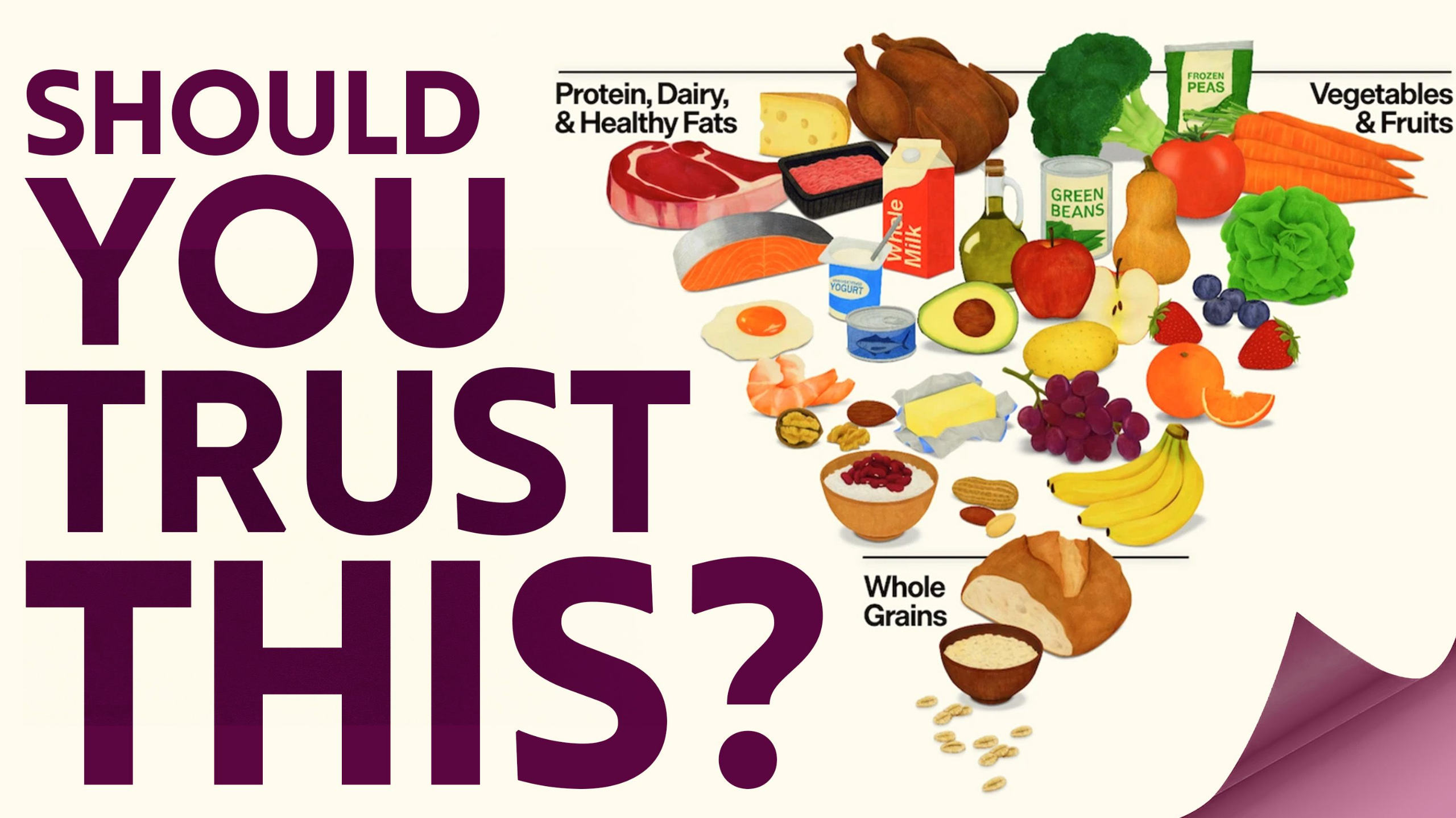
The new food pyramid is getting a lot of attention, and with all the hype, it’s clear there’s more to it than just a graphic. In today’s episode, I’m exposing the truth behind these guidelines, why they changed, what’s missing, and how to approach health choices free from bias or confusion.
I’ll explore why it’s important to view this new pyramid through a lens of clarity rather than emotion, and how understanding your body, behavior, and beliefs is crucial to achieving real health rather than just following rules.
I’m also offering my personal perspective on the pyramid’s strengths and weaknesses, and a new, balanced outlook on nutrition to help you serve your body and soul well.

Conclusion:
The new food pyramid may be controversial, but it offers a clearer path to understanding how to nourish your body with whole foods. Real health goes beyond guidelines, though. You need to understand yourself and your needs. Start focusing on what serves your body, and make intentional choices that align with your goals.
In This Episode:
00:00 Introduction: The food pyramid controversy
07:14 Historical context and evolution of the food pyramid
13:01 The purpose of the food pyramid guidelines
16:07 Addressing the pushback against this new food pyramid
18:22 Building a healthy relationship with food
27:00 Conclusion and sustainable dietary guidelines
Join the waiting list for Carrie’s upcoming book, From Corset to Crown!
Sign up here: https://www.carrielupoli.com/corsettocrown
Listen to This Episode on Your Favorite Podcast Channel:
Follow and listen on Apple
Follow and listen on Spotify
Subscribe and watch on YouTube
Connect with Carrie Lupoli:
Other Related Episodes:
Looking for more tips to optimize your health? Listen to these episodes:
- Overcome Wellness Overwhelm: How to Build Health Habits That Stick
- 7 Health and Wellness Products I Can’t Live Without
Transcript:
[00:00:00] Carrie Lupoli: The food pyramid is getting a lot of attention right now, and that should actually tell us something. 'cause we've never seen this much hype about government regulations when it comes to food, and that alone should tell us something because the moment we've been hearing the new food pyramid out there, people don't just think about food, they're thinking about politics, they're thinking about trust, control, all this stuff.
[00:00:24] Carrie Lupoli: So I'm excited to actually dig into an episode that's not about defending a graphic, a government agency, or telling you what to eat. It's about offering a whole new perspective on why the food pyramid changed, why people feel so strongly about it, their bias that might be actually impacting what it actually says.
[00:00:43] Carrie Lupoli: Why it matters. And if your goal is real health, not just following rules, because here's what I see every day, we've taken nutrition advice and turned it into an identity issue. And when that happens, we stop thinking critically and start reacting emotionally. Today, I'm gonna slow that down. I wanna talk about the new [00:01:00] food pyramid, what it actually reflects, where it gets things right, where it still falls short, and why no diagram will ever replace.
[00:01:07] Carrie Lupoli: Understanding your body, your behavior, your beliefs. This isn't about sides, it's about clarity. And so if you've ever felt confused, if you're feeling skeptical, frustrated, or even triggered by nutrition guidance and this new food pyramid, I'm gonna give you a whole new perspective on this whole new pyramid.
[00:01:28] Carrie Lupoli: Well, hey there, diet disruptors at. I have been getting a lot of questions about this new food pyramid, and I think that this is such a complicated and amazing issue to tackle, and I'm going to, I'm just, you know, I feel like sometimes I'm your friend that's just gonna tell you what you need to hear, not necessarily what you wanna hear.
[00:01:46] Carrie Lupoli: And that's, that's what I'm gonna do here. I have been watching so many dieticians, nutritionists, influencers, talk about the food pyramid, and it's so interesting to me because as someone that [00:02:00] literally, you will never, never, never ever see me talk about politics or anything like that. I have no desire to go on any side of the aisle, don't.
[00:02:11] Carrie Lupoli: Like, I don't trust anybody to be very honest with you. And I am just gonna keep living my life. Uh, and I find it so interesting that, uh, the political piece that's in this, and I'm a behavior specialist, so I like love to sit back and observe behaviors. What people don't understand is that there's always bias in everything that we talk about.
[00:02:36] Carrie Lupoli: Always, always. And this is one of the reasons why I say self-awareness is so important because self-awareness allows us to recognize bias. It allows us to take a step back and be like, okay, is the truth that I am stating that I very much believe is true, really true? Or is it truthiness based [00:03:00] on my bias, based on my perspective?
[00:03:02] Carrie Lupoli: And I have seen a lot of bias and perspective leaning. Uh, opinions, uh, about this food pyramid? I'm gonna tap into some of the history behind it because I don't think everybody knows, and I think because it's all in the news. I think it's because, because part of this has to do with the Trump administration.
[00:03:21] Carrie Lupoli: People like stand up and now comment on it. And we haven't been doing that really up until this point, let's be honest. And so I, I again, find it really interesting at how much, uh, media is behind the new food pyramid because we've never seen this before. Uh, and so I wanna dig into a little bit of the history again because I don.
[00:03:45] Carrie Lupoli: Really think we know it. The interesting dichotomy between how we responded to the guidelines before and how we're responding to now. And then let's just get into the guidelines and kind of [00:04:00] what they say and do they matter? Do they not matter? Let's let, I'm gonna give you my opinion on it. So, uh, I mean, the name of my podcast is Diet Disruptors because I am trying to disrupt everything that the diet and weight loss industry has us believing, has us believed and has become part of our culture.
[00:04:21] Carrie Lupoli: And we have to have to pull away from it. It's a diet and weight loss industries that I very much believe, um, in addition to so many other industries that have kind of a, a horse in this race, uh, that have led to. The way we do things around here, no matter what episode I'm doing, I just think we all have to recognize that the diet and weight loss industries, the pharmaceutical industries, um, even a lot of the farming industry are processed food industry.
[00:04:50] Carrie Lupoli: They don't want, our best interest is not in their best interest because if we did what we should be [00:05:00] doing to truly be the healthiest versions of ourselves, they would be out of business. They certainly wouldn't be the multi, multi, multi-billion dollar industry growing at such a rapid pace that they are with such a failure rate now.
[00:05:15] Carrie Lupoli: Okay, I get it. Pharmaceutical industry, I a hundred percent. I will never say like modern medicine isnt amazing, especially when it comes to certain types of medic medication, but we are heavily reliant on prescription drugs in this country. And the whole concept of diet disrupting is literally disrupting all of these norms that have been set for decades that we have just come to believe.
[00:05:41] Carrie Lupoli: And I think we're starting to wake up in, in so many ways. We're starting to see things a little, clearly. We can't unsee some of the things we're seeing, things are not adding up. And this new food pyramid, I think is a really good moment for us to sit back and be like, hold up. What have we been saying up [00:06:00] until now?
[00:06:01] Carrie Lupoli: Like we're talking, like we have to actually put it down on paper to be like eating whole clean unprocessed foods matters. Like we have to put it down on paper that says protein is important. It's a huge deviation from what we were saying before. No. Uh. Every single iteration of this food pyramid thing.
[00:06:29] Carrie Lupoli: Um, it, it is also a pyramid scheme. It's so interesting that we use the word pyramid and then we have this like connotation of pyramid scheme because it is a pyramid scheme because different industries benefit depending on where you are on that pyramid. Back when we had the old pyramid, dairy was prioritized.
[00:06:50] Carrie Lupoli: And why do you think that is? I mean, the whole gut melt campaign is all about dairy farming and bringing that to a whole nother level, right? [00:07:00] So what we focus on grows. And so let's not be, uh, kidding ourselves that there is a new focus in certain areas of this food pyramid that's going to help other industries.
[00:07:13] Carrie Lupoli: Yes, yes, yes, yes. But let's take a step back, for example. So the original food pyramid, uh, came about back in like 1992, and I've heard a lot of dieticians say, well, we don't use that anymore. We don't use that anymore because we did rip. I don't, I don't know if I wanna use the word replace it, but we did add an addendum to it called MyPlate in 2020.
[00:07:36] Carrie Lupoli: And so this is why people don't truly, really, uh, knowledgeable about the whole history of it, because we didn't really go from the food pyramid to the new pyramid. There was some stuff in the middle that got a little bit better. But again, we are seeing today, I think because of the whole influx of media, because of the political connection that this has, that people are taking notice.
[00:07:58] Carrie Lupoli: But I think it's so [00:08:00] interesting. I think a lot of people didn't even know that we had something in between the two pure. The 1992 Food pyramid emphasized grains at the base. Did you guys see the, um, south Park episode? I wanna say this was 20, 30 years ago, where, um, I've never watched South Park, but I remember seeing this and it's starting to come up a a lot again, where.
[00:08:21] Carrie Lupoli: One of the characters in South Park is like, um, was like warning, warning, like the pyramid is upside down. And he flipped it upside down and it became better. And it was really interesting 'cause that's, it's not what we've done now, but I just think it's so interesting that that was a 30 years ago thing.
[00:08:39] Carrie Lupoli: In 92, we had this whole pyramid carb heavy diet. We had a total fear of fat. I mean, if you were I, I'm 50, right? Like if you were a kid, almost 51, if you're a kid of the eighties and nineties, you know it was fat free. Fat free, fat free, heavy carbs, right? I remember eating bagels because they were low fat.[00:09:00]
[00:09:00] Carrie Lupoli: We had very little discussion of protein, of protein, quality of metabolic health, and. I mean, I just know that our health journey, our own individual health journeys are an evolution. We should continue to evolve and get deeper and deeper and deeper in. In my private practice, we talked to our clients about being, um, like, where are you ready, willing, and able to start.
[00:09:22] Carrie Lupoli: Well, back in the nineties we started in a place that just wasn't where it needed to be. But with so much more information and knowledge, we do know more. But I also will say like. It's not, um, a big secret that, uh, carb heavy diets are going to impact our health because we've known about blood sugar for a really, really, really long time.
[00:09:49] Carrie Lupoli: But. Again, we had this balance of um, a lack of a lack of evolution of knowledge, right? And industries that [00:10:00] needed to profit often off of certain communication, uh, foundational. Strategies. And so, um, we, we, we got it wrong. Like no doubt it was 2011 that USDA, um, introduced MyPlate up to 2020, just before 2020.
[00:10:21] Carrie Lupoli: It was sort of like accepted, like that's where it is. Once 2020 started, it was like a, a real, uh, an effort of, of. True awareness started getting louder. I would say that it wasn't that it was the first time people were bringing it up, but it was like the messaging was getting louder. And I always say like, social media can be such a hindrance, such a distraction, so problematic.
[00:10:43] Carrie Lupoli: But it also gets to be the dissenting voice. So think about it like up until. Social media really was big. There was no dissenting voice. We, it was one way communication. It was like, do this, do this. And we were like, okay, okay. They must know better. [00:11:00] So we do this and as a society, we got sicker and fatter.
[00:11:04] Carrie Lupoli: That's what we did. I am 100% against focusing on weight loss a hundred percent. Even though I said we got sicker and fatter. Getting obese, gaining weight is a symptom of our health. And as we started getting sicker and sicker and sicker and more obese, which are the two are the same. Obesity is sickness, metabolic disease, all of the symptoms that we have.
[00:11:28] Carrie Lupoli: Hormonal, hormonal imbalances, fatigue, lack of energy, weight gain. Um, and then we move into high cholesterol, high blood pressure, pre-diabetes, insulin resistant diabetes, stroke, cancer, dementia. All of that is metabolic disease. All of it. And it was like we had this slow roll of metabolic disease, even though we had these quote unquote.
[00:11:53] Carrie Lupoli: Guidelines. Well, this is why guidelines matter because. What you focus on grows. [00:12:00] And while a lot of people are saying the new guidelines are they really gonna matter, it it, it lays a foundation for communication and for expectation. So I do think that it matters without a doubt. Now I think what's super important when we moved from the pyramid.
[00:12:17] Carrie Lupoli: To my plate. We never got rid of the pyramid. And so I'm hearing dieticians be like, well, we never, we aren't using the pyramid anyway. And I'm like, well, we actually are. A friend of mine just sent me a picture of a bag of bread with the food pyramid on it. We are still using it. It is in schools. All over the country, we are still using it.
[00:12:37] Carrie Lupoli: When we moved in from the pyramid to my, my, my, my plate, some things still existed in there, like minimizing processed foods. Um, there's still some guidelines around how much sugar added sugar would be appropriate. And now the new guidelines are really saying, uh, processed foods are not part of the pyramid.
[00:12:58] Carrie Lupoli: Now this is what, [00:13:00] um. As somebody that will always say I, I don't look at food as good or bad or healthier. Unhealthy food serves our body, and food serves our soul, and we need both. The job of these documents should not be to teach us how to have truly this balanced lifestyle. A better relationship with food in our body has to come internally.
[00:13:19] Carrie Lupoli: It does have to come into understanding why we do what we do, what we want, why we want it. The job of these documents is to show us how do you serve your body? Then when you decide to serve your soul, that should look different for everyone. What serves your soul will not serve my soul. So saying I should eat a certain amount of processed food, almost gives permission to say processed, ultra processed food.
[00:13:41] Carrie Lupoli: I mean, like if I took a banana and smooshed it up, that's processed, right? Ultra processed food, which is killing us here in the us and it's filled with all sorts of, not even food, not food, it's just, it's, it's with chemicals and, and it, it, it's not food. So. We really shouldn't [00:14:00] be using these new guidelines to kind of grant, um, I don't know, clemency over the.
[00:14:07] Carrie Lupoli: Uh, permission to say, okay, this much processed food, this much alcohol, this much sugar, because at the end of the day, those are all going to not serve your body. How much of them is going to, uh, derail you and how much is gonna be safe? It's like there's so many layers of that because somebody's health is not measured just in what they put in their body.
[00:14:35] Carrie Lupoli: It also is measured in how well you absorb your gut health, how much you move your body, your toxins that you bring in, your mindsets, your community, the relationship that you have with food in your body, your health in other areas with relationships and finances and, and. So many things. So, uh, also, like I haven't, I don't really eat ultra processed food.
[00:14:56] Carrie Lupoli: Like I couldn't tell you the last time I had a Dorito, and it's not because I don't. [00:15:00] Feel like I can, I just simply don't want it. So I, I don't think that the guidelines should have to put forward the extra soul serving opportunities we have to make those decisions for ourselves. So some of the pushback in the new pyramid that I'm seeing is like there's nowhere on there telling you about how much alcohol, how much sugar, processed foods, because I think that the job of this document is to outline for us.
[00:15:28] Carrie Lupoli: What is, what does it mean to serve your body? Truly? What does it mean to serve your body with food, with exercise, it's going to look different in reality, in terms of a balanced life for everyone. So I, I really believe that the food pyramid has given permission, um, to us, to, uh. Kind of have this like a little bit of processed food is okay, or we have dairy at the top of this.
[00:15:56] Carrie Lupoli: Like it's just not their [00:16:00] job to tell us truly how to live a lifestyle. That's gotta be something that's up to us. Uh, I've heard pushback and again, I can, I didn't just tell, it feels like I can just tell people's political, um. Leaning which way people lean because, uh, it's so interesting the language that I'm hearing and the amount of criticism that a document, a new document is being given when up until now nobody has said boo.
[00:16:31] Carrie Lupoli: Really, people don't even know what the old pyramid is, what the, the guidelines were, what the new guidelines were before this, what they said, what they were promoting. Like, no, but now we do. So it just, it's telling me something around that. And then the critical piece is killing me because. The amount of garbage that has been taught to doctors, to nutritionists, to dieticians, to our kids, to the [00:17:00] average American is what we should be up in arms about.
[00:17:03] Carrie Lupoli: These new guidelines are actually telling people what nutritionists that really understand food and blood sugar have been saying for decades. I have literally said, ignore the food pyramid. Ignore the food pyramid. Ignore the food pyramid. That is not okay. That has been complacency on our part. Just be like, ignore it, ignore it, ignore it.
[00:17:23] Carrie Lupoli: And then when we get something that is honestly so much better, we're gonna. Be super critical of all the aspects of it. I just think we're missing the mark on the communication on what the, the message really is. Uh, the new food pyramid prioritizes proteins and whole food. Vegetables, and I heard one dietician get really.
[00:17:46] Carrie Lupoli: Frustrated because she said the nuts are not as big as the proteins and the dense carbs are not something to fear like grains and things like that. Why are they smaller on the pyramid? And I'm like, because they're gonna spike your blood sugar. [00:18:00] They're gonna. Like, it's not about food being good or bad, it's just literal science.
[00:18:05] Carrie Lupoli: If you eat more dense carbs than you do, uh, lighter nutrient absorbing carbs, you're gonna spike your blood sugar and you're gonna cause metabolic dysfunction. The whole point of it is like this great visual honestly, that talks about the balance, right? And, um, I am all about a healthy relationship with food in your body.
[00:18:27] Carrie Lupoli: As well as understanding how food simply works in your body. We cannot like the fact that bread is gonna spike our blood sugar. We cannot like it. It's also true. So now what do we do with that? We've got to decide what we want and why we want it. I eat bread. I had a, I had a Reuben last night. I had a Turkey reen and I decided because it was intentional, I wanted to, it was sort of like, the way that I look at it is about like I decided to have like a [00:19:00] yellow light meal.
[00:19:00] Carrie Lupoli: Like, I think a green light meal is like I'm totally serving my body. I'm making that intention to serve my body. A red light meal means I'm serving my soul. No guilt. I am just going to eat what I feel like eating. And yellow light means I'm, I'm sort of in between. So last night they had a Turkey Reuben on the menu and I'm like, I am going to have this Turkey reen.
[00:19:19] Carrie Lupoli: I knew that if I had eaten both sides slices or both of the Turkey, Ruben, I was gonna feel like garbage. I opted for a salad instead of a um, french fries. I ate half of the sandwich and I spiked my blood sugar. I did. It wasn't terrible at all. It was way better than it would've been if I had gone all out on a red light meal, but my body can handle it because I'm healthy and the fact is that spike my blood sugar, it, it, there's no emotion behind it.
[00:19:49] Carrie Lupoli: Now I could allow that blood sugar spike to get me emotional, to get me stressed out to f uh, like inhibit my relationship with food in my body. But I've [00:20:00] done a lot of work, and this is what I do with my client to understand food. The longer, the more we serve our body instead of serving our soul, like we just serve our soul more than we serve our body.
[00:20:09] Carrie Lupoli: We eat when we are hungry and we eat until satisfied, and we do consistent measures towards those ideas versus inconsistent that we don't show up one day and then be like, screw it. And I'm eating everything in sight the next day, every single day for a year. That we, we treat our body and the relationship with our body like any other relationship.
[00:20:30] Carrie Lupoli: And what these guidelines are doing is giving us like, this is the north star of like the ideal kind of relationship with your body and food. Are you going to be perfect all the time? No. And are there some guidelines around like, yeah, if I ate nuts all day every day, then I would not be balanced. It just, I wouldn't.
[00:20:53] Carrie Lupoli: So I see the new guidelines as a visual representation of how our body simply. [00:21:00] Likes to be treated and the more we can treat our body the way that it likes, the more it's going to handle us when we do something that it doesn't really like our, think about it like any other relationship. My husband and I have been married 25 years, and we certainly have not been perfect.
[00:21:18] Carrie Lupoli: However, we have shown up in a certain way for each other more often than not. So when we do get into an argument and we got into an argument last week. We are not headed for divorce. We deal with it. We do. So when you are in a healthy relationship with your body, you are living in a healthy way where you're doing, saying, thinking and believing what the healthiest version of you does When you get into a little bit of a spat with your body, and maybe you don't treat it as well as you could, your body's like, it's cool.
[00:21:52] Carrie Lupoli: We got this. But when we do that more often than serving our body, it's when it becomes a problem. So I've [00:22:00] heard dieticians talk about the idea that like, this isn't, this is, um, not giving us the language to be able to improve our relationship with food in our body. That's not what its job is. The job is to give us a, give us a North star.
[00:22:15] Carrie Lupoli: Our job is to decide on that continuum. Where do we wanna land? More often than not, and I will not, I choose to not give up the opportunities to serve my soul. Ben Johnson, who never wants to die, would never, never, never eat a french fry. That's totally gets to be his choice. If, if we looked at this like on a continuum, he's probably on one end of it, and I'm probably like on the same side of him, but I am not far as far down as him.
[00:22:46] Carrie Lupoli: Right. And then there's people that are on the other side of the, of the continuum that are like, do not give me a green vegetable. I cannot, I cannot eat a single green vegetable, nor will I ever, right. I will eat McDonald's for the rest of my life. But when now that we have guidelines [00:23:00] that tell us, because before those guidelines would tell us, yeah, having something at McDonald's is okay.
[00:23:06] Carrie Lupoli: And it's not that it's not okay, but it's not ideal. So this is ideal. It's like, I joke, I'm like, listen. I will never, like, I'm a Christian, so believe in Jesus, and I will never be like Jesus. I will never get there. But I'm going to keep attempting to uplevel myself so I can get closer and closer and closer, and I think that's the job of this.
[00:23:28] Carrie Lupoli: It's like not to. Tell us, make it, tell us you have to do this. It's not the job of this document or this foundation to say, if you don't do this, you are bad. It's the job of the foundation to say like, this is a north star. This is like, we wanna continuously evolve to get to this place where all of the previous guidelines never did that before.
[00:23:48] Carrie Lupoli: And we were okay with low expectations for ourselves. And I just think that that's not okay. When I was an educator, I used to work with, uh, teachers all around the country to [00:24:00] support their classrooms and to improve, uh, schools. Uh, and I always say, listen, high expectations are super important in love and for the right reasons, not based on shame or guilt.
[00:24:12] Carrie Lupoli: And more than likely, if we have higher expectations for our kids, they're going to do more than if we had lower expectations. So if our expectation is here. And a kid gets here, okay, that's, that's fine. But if our edu, if our expectation was here, no one's getting here, or very, very few, they're going here.
[00:24:34] Carrie Lupoli: So by having higher expectations for ourselves, we're going to do more for ourselves. And the whole reason is so that we can become the healthiest versions of ourselves so that we can serve our purpose. That's what this is all about. So I, I just think we have to recognize anybody that's critical of this or like, putting on the scrutiny.
[00:24:55] Carrie Lupoli: Where were you back in 92, back in [00:25:00] 2011 when these guidelines came out that were less than perfect in 92. I get it. Maybe we didn't know as much by the time two, 2011 came in. I think we all saw this as an improvement, but we, I, I was not teaching that. We were still like, no, this still isn't what we would do.
[00:25:16] Carrie Lupoli: This is why I started PFC pals Nutritional Literacy for Kids, and it aligned so much more now with the new Health Pyramid. And that's what we need to be thinking about. Now, like I said, I think that there's other interest in each one of these things, but again, I am just going to focus on what I can control and what I know and what I know is that this is so much better.
[00:25:38] Carrie Lupoli: So if you are sitting in a bias and saying it's still not perfect, that's still this, that and the other thing, I, I love it. Have high expectations. And recognize that we are, no matter what you say like or how you feel, uh, about the administration that puts us out. It is a zillion times better and [00:26:00] actually really.
[00:26:01] Carrie Lupoli: Pretty good if we are looking at it from the perspective of this is ideal, it really is, but it doesn't represent a true lifestyle. Like I like my wine and. Why I drink wine has to be considered. There are no guidelines for wine or alcohol. It's literally like, try to drink less than you are now. And I think that is actually probably pretty good advice, right?
[00:26:30] Carrie Lupoli: Constantly trying to uplevel yourself, especially if you're using alcohol as a way to soothe your problems, as a way to disengage from life, as a way to numb one glass or 10 glasses isn't gonna be healthy. They ca putting the guidelines to that doesn't make sense. I approve. And like the idea of these are the guidelines for how to serve your body.
[00:26:54] Carrie Lupoli: We're not gonna put in the guidelines for how to serve your soul. 'cause that is up to you. All right. [00:27:00] So this to me is, uh. An important topic to discuss. I hope that it's given you, I don't know, a little bit more clarity on the, um, what's in it, why it matters. Also though, like why it doesn't matter. Like you gotta know what we need to do.
[00:27:18] Carrie Lupoli: It's simple. Uh, I mean, we call it PFC for a reason. Protein, fat, and carb. If you eat a protein, fat and carb and you eat when you're hungry. And you eat until satisfied. You're usually eating about every three hours. Your blood sugar is going to be freaking fabulous. You're not gonna have cravings, you're not gonna have food noise.
[00:27:38] Carrie Lupoli: You're gonna be able to do it. It's just incredible. And if you look at what you're choosing for protein, fats, and carbs based on that new food pyramid, life will be pretty good. I promise. Not knowing what to do and doing it are two different things. And that's why what I do matters so much because I could tell you how to eat all day [00:28:00] long.
[00:28:00] Carrie Lupoli: You still won't do it if you don't actually get into the belief systems and behavioral science of our actions because our thoughts and our beliefs, dictator actions. So continue to listen, subscribe so we can get into those things 'cause that's what's really gonna make the change. See you next time.