
Part 1: The One Thing That Explains Why You're Always Exhausted - 285
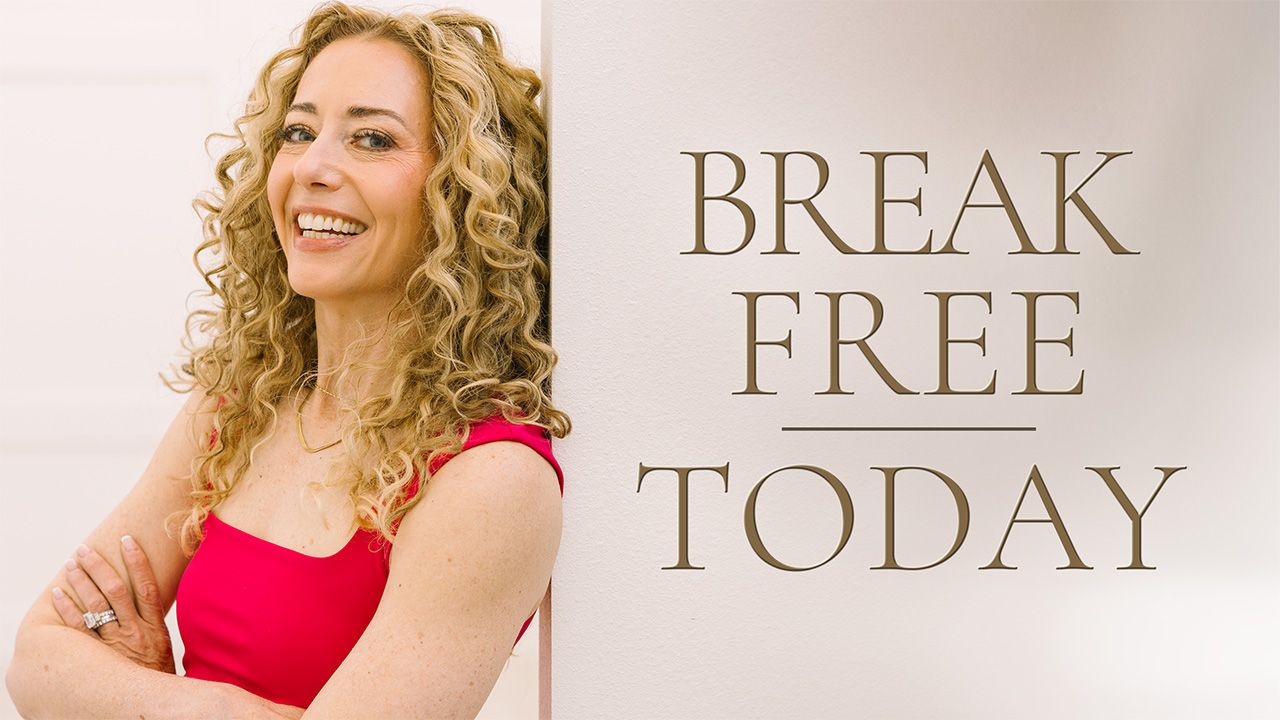
Have you ever felt like you're doing everything for everyone else, yet still feel you're not enough? In this episode, I'm doing a deep dive on the "corset" concept—that invisible conditioning that keeps so many women trapped in people-pleasing, perfectionism, and self-sacrifice, which leaves them perpetually drained.
After years of helping women transform their health through nutrition and behavior change, I realized that food was usually the doorway to a much deeper issue.
So today, I explain what I call the corset: the beliefs we've carried since childhood that tell us we have to earn our worth by looking a certain way, performing perfectly, putting everyone else first, and proving ourselves. I'll share personal stories, client experiences, and the framework that inspired my bestselling book, From Corset to Crown.
This episode is the foundation of a three-part series that will help you recognize the conditioning that's been shaping your decisions, so you can begin making choices from your authentic self instead.

Conclusion:
Freedom doesn't begin with another diet or another attempt to become more acceptable. It begins with recognizing flawed beliefs that have shaped your life for years. My challenge to you is simple: identify the first time your "corset" was put on you and how it influences your decisions today.
In This Episode:
00:00 Introduction: the moment I learned I wasn’t enough
01:47 Why health struggles go deeper than food
03:08 What you can expect from the three-part series
04:55 How the corset creates perfectionism and people-pleasing
16:33 Making choices from the corset vs. the crown
21:12 Pressure isn’t purpose: awareness is the first step to freedom
Pre-Order Carrie’s Book, From Corset to Crown!
Get your copy of "From Corset to Crown" and a ton of awesome bonuses to make the learning really stick at: https://www.carrielupoli.com/corsettocrown
Carrie’s From Corset to Crown Live Event in Nashville on October 2-4, 2026:
The ultimate girls' trip is on! Get your tickets here (special group rate for 2 or more!) https://www.disruptivenutrition.com/liveevent2026
Listen to This Episode on Your Favorite Podcast Channel:
Follow and listen on Apple
Follow and listen on Spotify
Subscribe and watch on YouTube
Connect with Carrie Lupoli:
Other Related Episodes:
Looking for more tips to optimize your health? Listen to these episodes:
- From Corset to Crown: Why I’ve Changed Everything After Six Years
- How to Raise a Confident Daughter Who Knows Her Self-Worth
Transcript:
[00:00:00] Carrie Lupoli: So when I was seven years old, my mom was brushing my curly hair, like brushing it, and it hurt. I said, "Mom, it hurts." And she was like, "Beauty hurts, baby, but we gotta do it." That was the first moment I understood who I am isn't quite enough. I have to adjust, I have to change, I have to earn my place. Sound familiar?
[00:00:18] Carrie Lupoli: Here's what I know after working with tens of thousands of women: by the time most of us hit our 40s and 50s, we're exhausted, and not because we've done nothing. It's because we've done everything, or tried to, for everyone, and somewhere along the way, we completely lose ourselves. This isn't a discipline problem.
[00:00:33] Carrie Lupoli: This isn't a willpower problem. This is what I call a corset, and in this episode, I'm naming it, because you can't take off something that you don't know you're wearing. I'm Carrie Lupoli, your crown straightener, and welcome to From Corset to Crown.
[00:00:51] Carrie Lupoli: Well, hey there, my crown straighteners. Welcome to another episode of our newly branded From Corset to Crown podcast. If you're just [00:01:00] joining us, I have been doing this podcast for, like, six years, and it has been called The Diet Disruptors podcast because I disrupt everything. The diet industry, the weight loss industry, our pharmaceutical industry, our healthcare system, the food industry has been telling us forever is what we need to be doing.
[00:01:18] Carrie Lupoli: And I will say all day long, I joke that I'm a conspiracy theorist, that it's not really a joke, that they don't actually have our best interest at heart. And so The Diet Disruptors podcast has been, for years, a chance for women to actually see that disruption and to be able to live a different way. I always say, "If you want something different, you gotta do something different."
[00:01:38] Carrie Lupoli: And I am a behavior specialist, a nutritionist, and a best-selling author of the book From Corset to Crown. And in all of my years of working really with a focus on nutrition and kind of layering in the concept of behavioral science, I have come to learn some really important [00:02:00] truths. Nutrition has been a doorway to open into the real issue, the real stuff that's keeping us stuck.
[00:02:09] Carrie Lupoli: For years, women would say to me, "Carrie, just teach me how to eat." And while I will stand by all day long that our approach on blood sugar stabilization and understanding how to fuel your body, not deprive it, the strategy of being able to eat and, and eat with what I call food freedom without counting calories or tracking or any of that, it's just such an incredible relief to women that they can show up for themselves when it comes to food in a way that isn't scary and that actually yields more results than what a diet did.
[00:02:41] Carrie Lupoli: However, what I have realized In my process, why I decided to transition from Diet Disruptors to the podcast now named From Corset to Crown, is because I have seen the corset, or the result of the corset that's been put on all of us our whole [00:03:00] lives, and it goes so much deeper than just our body image.
[00:03:04] Carrie Lupoli: That is, though, the doorway. That is often the starting point. And on these next three episodes, I've kind of laid out a series for you where we are going to go from corset to crown, so you can really understand the framework, you can really understand how this, this framework, this belief, this, this process and philosophy will help you with, yes, your health, the physicality of what you say you want when it comes to your health, but also truly becoming the healthiest version of yourself goes so much deeper than what you are eating.
[00:03:37] Carrie Lupoli: It's how you are living. It's how you are thinking. It's what you are saying yes to. It's what you are saying no to. Because this corset, which we're gonna really dig into today on today's episode, is actually part of who we are now, and we make decisions from the corset. And we're going to crack that open because if we don't recognize that the corset has been a part of us and that we are making [00:04:00] our decisions from it, we're never going to be able to make our decisions in any other way.
[00:04:03] Carrie Lupoli: For so many of us, the corset has been such a part of who we are that it doesn't feel like it's something that shouldn't be there. It's been, like, stitched into us. So in today's episode, we're gonna help you recognize the corset, start to think about the decisions that you're making. And then in episode two, we're gonna tap into how to center yourself to be able to see the corset for what it is, pause, reflect, and shift into making decisions from the crown.
[00:04:34] Carrie Lupoli: And in the third episode, that is when we are going to dig into what the crown means, where it is, how to find it, and how to straighten it. So get ready. It's going to be an amazingly, I think, insightful, fun, and I don't know, like, a journey of self-discovery type of series. So let's get into it, because in the tens of thousands of women that I've spoken to, that I've worked with, I have heard the same thing [00:05:00] over and over and over again.
[00:05:01] Carrie Lupoli: Very often, by the time a woman is in their 40s and 50s, they don't know who they are They feel like a failure. They feel like they have given so much of their lives to so many other people and are in this place of, "I don't know what to do." But the reason I know the corset is actually guiding them in that moment is because it is so tight on them, they feel like they can't breathe.
[00:05:26] Carrie Lupoli: And what they believe is that, "If I can just show them how to lose weight in a sustainable way, how to actually fuel their bodies that gets them healthy, then they can be confident. Then they can feel better about themselves." And it's such an interesting concept because knowing who we are and having self-worth is so foreign to us.
[00:05:51] Carrie Lupoli: I want you to picture this, especially as women. If you are in your 40s and 50s and you are feeling like, "I just can't breathe anymore. This is just like I need to figure something out," [00:06:00] it is the corset of feeling like you're a failure, feeling like the pressure is so much that you have to do it all, and you have to do it all really well.
[00:06:09] Carrie Lupoli: And that's coming from this belief that over-functioning, doing everything for everybody else and self-sacrificing, trying to be perfect at everything, trying to be it all, look a certain way, that pressure just feels like too much. But what if I told you that it is the corset that is causing that pressure, and by recognizing it and taking off the corset, we can actually be free, free from that pressure?
[00:06:34] Carrie Lupoli: Now, we may do some of the same things, but we would be doing them for very different reasons. So if you don't know already, From Corset to Crown is already a best-selling book, and it's not even out in stores yet. But I want you to have your hands on this because this is going to be a toolbox for you, a reference book, and a daily source of inspiration.
[00:06:59] Carrie Lupoli: It's going [00:07:00] to teach you not only the last nutritional advice you will ever need, but it's going to teach you how in every single day life you can go from the corset to the crown. So if you pre-order today, you get all sorts of great things, including the e-book for free before we actually send you the actual book in October.
[00:07:19] Carrie Lupoli: You're also gonna get a 10-episode private podcast that I recorded only for people who pre-ordered the book, where you are going to be able to get a behind-the-scenes story and perspective of all the things that went into getting to the point where I was ready to write the book. This is a book I needed 15 years ago, and it's one that I continuously reference.
[00:07:42] Carrie Lupoli: And so not only will you get the private podcast, but I got a secret little gift for you within that, as well as a discussion guide and a private community with me and other people reading the book. So go pre-order the book now. Share it with a friend as well. Start a book club, and get yourself [00:08:00] moving from corset to crown.
[00:08:05] Carrie Lupoli: So let's talk about where this corset is, where it comes from. When I was about seven years old, I was just talking to my mom about this story the other day. I mean, she did this from the very beginning, but my first recollection of this, I was about seven. She would brush my hair. Now, I mean, if you are looking at me and not listening to this podcast, or if you've seen any pictures of me, you know this girl does not have hair to brush through.
[00:08:26] Carrie Lupoli: And so I just... I can remember feeling the pull and the sting and the pain of my hair being brushed, and I would say to my mom, "Mom, it hurts." And she says to me, "Beauty hurts, baby, but we gotta do it." And I think that was the first moment that I realized who I am, what I look like, isn't acceptable, and you have to adjust and change to be valuable, to be accepted.
[00:08:51] Carrie Lupoli: And every single one of us, whether you're a man or a woman, has a story of the corset. I have spoken about this all across the world, and there isn't a single [00:09:00] audience that says to me, "Yeah, I don't know what you're talking about." There's not a single gender that says, "Yeah, I don't know what you're talking about."
[00:09:06] Carrie Lupoli: I recently did an event where we talked about the corset, and I asked the room, "When was the corset first put on you?" And a man raised his hand, and he said, "Back when Sears was in, in business," the department store. He said, "I remember being taken to the husky department and realizing that I look very different than everyone else, and the regular clothes weren't going to be an option for me."
[00:09:31] Carrie Lupoli: And he felt different and ostracized, and from that day forward, he says he remembers never quite feeling like he was enough in the eyes of other people. And the corset, for most people, as I have seen, has been introduced in the way of appearance when we are younger. It's not the case for everybody, but many, many stories seem to fall into having to look a certain way in order to be accepted.
[00:09:59] Carrie Lupoli: It is [00:10:00] a staggering statistic of how many girls believe that they have to be prettier or lose weight or look different by third grade. That's like nine years old. And yet, I was recently in an airport, and I saw a little girl, and she was probably about five, and I, and I remember looking at her going, "Oh, she doesn't have the corset on her yet."
[00:10:21] Carrie Lupoli: She walked in that airport with a sparkly bomber jacket on, rainbow glitter sparkle. And a crown on her head. And I actually took a picture of her from behind. I'll show th- show you that picture. And I thought, "This girl is exactly who we need to be." Unapologetically her, not worried about what other people think, and knowing her worth.
[00:10:45] Carrie Lupoli: Being able to buy a crown. When we get into the crown episode, I will tell you more about the story of when my daughter bought a crown at 16 years old, which rocked my world and really was the part of the title, From Corset to Crown. But [00:11:00] without getting too much into it, I will just tell you, I did not realize that you could just buy a crown on Amazon for $6.99.
[00:11:08] Carrie Lupoli: I felt like the crown was reserved for royalty, and you couldn't just go buy a crown and put it on your head. I thought that was very pretentious. And yet, this five-year-old little girl was like, "No, no, no. The crown? Duh. This is what I do." And I realize at some point, that little girl is not gonna wanna wear that crown anymore.
[00:11:27] Carrie Lupoli: And sure, we might just grow out of kind of dressing up in public like that, but the real reason is she has been taught that she has to look a certain way, be a certain way, act a certain way, perform a certain way, get certain grades, in order to actually be valuable. The corset is really interesting because I believe and I've seen and as I've researched and studied and worked with ten- tens of thousands of people on this, is that it evolves.
[00:11:51] Carrie Lupoli: It often gets put on us by someone we love, because think about a corset. It actually gets laced from behind, the traditional corsets. So it gets put on and then someone [00:12:00] behind you has to tighten it. Eventually, we start tightening it ourselves, to be very honest with you, in the way that we make decisions, in the way that we keep trying so hard to prove our worth.
[00:12:11] Carrie Lupoli: But at first, it is this belief that we are not quite enough the way we are. And yet we are that same person that as a baby is born and is valuable. Every one of us has seen a baby, and that baby does not have to do a single thing. In fact, that baby can poop, that baby can cry, that baby can not sleep, and yet nobody will argue the value of that baby.
[00:12:34] Carrie Lupoli: But something happens along the way where just simply being alive is not enough anymore, and that is exactly when that corset is put on us. This realization that who I am innately, just being born, is not enough, and I have to adjust. I have to conform. I have to be something very much more acceptable than I am.
[00:12:58] Carrie Lupoli: And then it evolves. So as we [00:13:00] get older, that's where performing comes in. It's not just looking a certain way, and it's like nothing goes away. It actually just builds and builds and builds. This is why the corset, by the time a woman is 40, 50 years old, she can't breathe anymore because the pressure is just too much.
[00:13:15] Carrie Lupoli: And so we now need to perform, over-function. We move into motherhood, and now the expectation is that we are to sacrifice for everybody else. Showing up for ourselves means you're a bad mother, you're selfish. And yet then when we become overweight, when we are not feeling like we have energy, when hormones go all out of whack, we, w- we're, we're stuck because the corset tells us, "Oh, no, no, no, you have to sacrifice.
[00:13:44] Carrie Lupoli: You have to over-perform. You have to do it all." But our body is saying to us, "This isn't working. We are not where we need to be," and we're stuck with this conflict, and that's when women often come to see me. But the corset is so ingrained in us. [00:14:00] I had a woman that I spoke to the other day, and she was 69 years old, such a sweet woman, and I said to her, "Why now?
[00:14:06] Carrie Lupoli: Why now do you believe that this is the time for you to actually figure this out?" And she said to me, "Well, you know, I'm 69 years old. I'm retired now. My husband is fine. He's doing his own thing. My kids are grown. My parents have passed away. I have time now." And I said to her, "I need you to hear something."
[00:14:25] Carrie Lupoli: I actually said, "Do you... Do I have permission to be direct?" And she said, "Yes." And I said, "That is the corset talking." And she's like, "What do, what do you mean? I feel like this is me finally knowing that I deserve to be taken care of by myself." And I said, "Yeah, but you just justified it." We have been taught to believe that showing up for ourselves is something that has to be earned.
[00:14:47] Carrie Lupoli: We have to make sure everything else is put in its place before we're allowed to say, "Now it's my time." That's the corset talking, and it's so ingrained in us, we don't even [00:15:00] believe it. I call it mindset icing. It's like it feels sweet. It feels like loving of what she said about finally realizing it's time to love herself.
[00:15:09] Carrie Lupoli: But if somebody, like one of her children in her, their 30s said, "We need you," she would have to put herself on the back burner again because the corset has told her that it is selfish to take care of yourself. We over-function, over-perform. We say yes to so many things. In the next episode, I'm actually going to share with you a little litmus test on the things to say yes to and the things that it's okay to say no to.
[00:15:33] Carrie Lupoli: I think the biggest thing when it comes to the corset is the fact that we don't know ourselves. When, when we talk to women In my private practice, when I speak to people, when I'm, when I'm out and about doing speaking engagements, and I ask them, "Who are you?" It's so interesting 'cause a woman will come up to me and they'll tell me all their struggles.
[00:15:51] Carrie Lupoli: I'll know their weight, their specific weight on the scale for decades, all the things going on with them. But when I say, "Who are [00:16:00] you?" It's a really hard question to answer because the corset has taught us not to look at that. That doesn't matter. This is what you are supposed to be doing. Everything, all the time, at the highest level, and look really good doing it, too.
[00:16:16] Carrie Lupoli: We often don't say yes to things because we want to. Most of the time we say yes because we don't want somebody upset with us. We're afraid of being rejected or judged. We wanna be liked. We feel responsible for everyone else's emotions. We confuse being needed with being valuable. That's the corset. It's a fear-driven decision-making.
[00:16:33] Carrie Lupoli: How do you know if you're making decisions from the corset or from the crown? Well, those are a few of the emotions that come along with knowing that you're responding from the corset instead of the crown. Being able to help somebody can be a gift, but it can also be a torture if why you're doing it comes from the corset or the crown.
[00:16:53] Carrie Lupoli: Let's talk about a few other things. When I think about how we show up for ourselves, if I have a woman that says to me, "Oh my [00:17:00] gosh, I'm just so frustrated with my body. I'm just so, like, I'm disgusted." Like, this is where the whole I can't breathe anymore thing comes in, and we have been conditioned to believe if I just take off the corset, then I ha- just have to let myself go.
[00:17:11] Carrie Lupoli: There, there's nothing else. It's, like, either this or that. And the bottom line is we don't realize decisions we make from the crown change the whole game. But when we make decisions from the corset, it's because we are so mad at ourselves. And I want you to think about the relationship with you and your body, you and your life.
[00:17:29] Carrie Lupoli: Like any other relationship, it doesn't need to be perfect. It needs to be consistent. It needs to be trusting. And trust is built with positive interactions consistently over time, and we are anything but consistent because we feel so much pressure to conform to whatever society or our family or the corset tells us we should be doing, and then we get so turned around in a tornado.
[00:17:52] Carrie Lupoli: We're not making decisions purposely knowing who we are, knowing what the healthiest version of me [00:18:00] does, says, thinks, and believes. The corset tells us that we are not enough, and so we need to prove our worth. It often starts or kind of comes through within our own bodies, especially when we get to this place of feeling like my body has betrayed me for so long.
[00:18:18] Carrie Lupoli: But when we actually decide to make changes because now we feel like we're justified, because I'm so frustrated with myself, I can't even handle looking in the mirror anymore, we are making decisions from the corset. We are not making decisions out of self-worth and self-love. We are making out of self-loathing, and that's never a good way to enter into a relationship.
[00:18:36] Carrie Lupoli: We also can see ourselves wearing the corset in everyday things. Like for example, if you go to the gym. We can have an entire room full of people at the gym, and they're there for very different reasons, and some of them are there because of the corset. "I need to look a certain way." I am in groups with all sorts of nutritionists.
[00:18:54] Carrie Lupoli: Like, I have this one group that I'm in that's like 55,000 people, and I will see nutritionists, I did a whole podcast on this once, [00:19:00] asking other nutritionists, like, "Look, I have a client who really wants to tone up, and I have her at an 1,134.5 calorie count per day," blah, blah, blah, blah, blah, "and she's still not seeing the results she wants.
[00:19:13] Carrie Lupoli: Any ideas?" And I'm like... Yeah, we've started off with a why and a goal that is not about actually heart. It's not about identity and health. It's about the corset, looking a certain way. Why do you wanna get toned? 'Cause you wanna look a certain way in front of people. Being toned when you're actually working out and doing it from the crown and the right reasons, it just becomes a byproduct, but it's not why we do it.
[00:19:40] Carrie Lupoli: There's a whole book on knowing your why. When you know your why, your decisions get clearer because your purpose becomes the filter. So many of us are making decisions with no filter at all. We're just responding to whatever is the loudest, the most urgent, or the most guilt-inducing, and that is how you know [00:20:00] you are working from the corset.
[00:20:02] Carrie Lupoli: When your purpose becomes the filter, then you can say yes or no based on the right reasons. But so many women are like, "I don't even know. I don't even know what I want or why I want it." So we don't have any filter, so we just run on obligation. We do things based on what, quote-unquote, "they say." We can't know what to say no to if we don't know what we're saying yes for.
[00:20:27] Carrie Lupoli: So when we think about the over-committing, the perfectionism, the people-pleasing, the guilt-driven yeses, the inability to put ourselves first, yet the feelings like we hate our body and we're not enough as we are, that's what the corset does. A corset isn't just diet culture. I mean, it kinda starts off that way from what I've seen.
[00:20:47] Carrie Lupoli: It's not just about food rules. It's about this entire system of conditioning that tells women, "Shrink. Do more. Say less. Earn your place. Put yourself last." And the [00:21:00] reason why it's so hard to take it off is that most of us have been wearing it for so long, we just think it's normal. We think it's who we are.
[00:21:08] Carrie Lupoli: It's not who you are. It was what was put on you. And let me tell you this. Write this down. Pressure is not proof of purpose. I can't wait to get through these other couple of episodes because I, I want us to be able to work through the whole framework, but it has to start with a self-awareness, recognizing the corset.
[00:21:28] Carrie Lupoli: And, and people will say all the time, "Well, like, what do I do? What do I do? What do I do next?" Well, for right now, awareness is what we need. There's a psychologist named Martin Seligman who I studied a lot because he wrote a bunch on character strengths, character traits of people and, and children, and what character strengths showed us the most amount of potential when it came to long-term success.
[00:21:49] Carrie Lupoli: And it was fascinating, and lots of teachers got really involved while I was educate-- an educator in this concept, in his research. And yet he didn't give [00:22:00] people specific strategies on how to teach this, and he said, "If you are passionate and aware and wanting to dig in, you're going to find solutions." And so I say that to you.
[00:22:11] Carrie Lupoli: If you become aware of all the ways that we make decisions, and noticing which ones are coming from a corset, a belief system that says, "I'm not enough and I have to prove myself," well, that's all it takes at first. You will figure out next steps from there. But really recognizing that it's there is part of being free.
[00:22:34] Carrie Lupoli: I always say, "I don't wanna fix you." I wanna free you. But not knowing why you're trapped, how you're trapped, or how to take that trap off will never result in freedom. I say this that the cultural conditioning has trapped us in this corset and then blames us for not being able to breathe. As we dig deeper into this series, we are going to get you centered, give you some little tools and ways of [00:23:00] being able to discern, am I saying yes or making a decision from the corset or from the crown?
[00:23:07] Carrie Lupoli: And this is what's so interesting. What you end up doing might be the same thing, but why you're doing it is what changes everything. The difference between a life that feels like yours and a life that feels like everyone else's, that's what it comes down to. Freedom is around you knowing who you are and making decisions from that place versus making decisions on what you think the world has told you you need to be.
[00:23:36] Carrie Lupoli: So digging into these filters, digging into this realization is going to be a big part of this three-part series. But the very first is to see the corset. So I'm asking you, I want some interaction here. You can, on YouTube is where I have all of our podcasts, so if you go to Carrie Lipoli on YouTube, if you don't listen to the podcast on YouTube, go over there, because that is [00:24:00] where you can comment on this episode and share it with me.
[00:24:03] Carrie Lupoli: And this is gonna be amazing for research, too. Where and when did you first recognize the corset? Now, you may not have known it at the time, but looking back now, you should be able to see it. And how has that corset impacted your decision-making? How has that corset kind of guided you through life? What would it be like if you made decisions that didn't come from the corset?
[00:24:29] Carrie Lupoli: Some of us can't even imagine it. But like that woman who was 69 years old and felt finally justified in learning how to take care of herself, it's sneaky. What feels like the right thing to say, what feels like the empowered statement can actually get muddled by the corset. It shouldn't be 69 years before she's allowed to actually show up for herself.
[00:24:54] Carrie Lupoli: It shouldn't be 50 years where you have taken care of everybody else, [00:25:00] and now finally realize it's time to take care of yourself. Your life is gonna look different at different stages of your life. So being an empty nester, I show up very differently than when I had two kids at home all the time. But all of my decisions have to be fully grounded in my identity, a strong why, and from the crown.
[00:25:18] Carrie Lupoli: Start noticing, and recognize that this is a daily practice. The corset is on us, and it's an act daily to recognize it. So start looking for it, and comment when you realize it was first put on you, and how have you been making decisions from that? That's gonna be the key to the next step of getting centered before making decisions from the crown.
[00:25:40] Carrie Lupoli: All right. I will see you on the next episode, where we are going to get even clearer with not just strategies, but realizations that are gonna make you... It's like once you see it, you're not gonna be able to unsee it, and so we're gonna get you there. I'll see you next time.