
Insight Is Powerful.
Integration Is Everything.
If you’re here, you’re probably looking for real tools.
Not another diet. Not another reset. Not another “start over Monday.”
Whether you’ve read From Corset to Crown or you’re just getting introduced to this work, these resources are designed to help you understand your body, your habits, and your beliefs in a practical way.
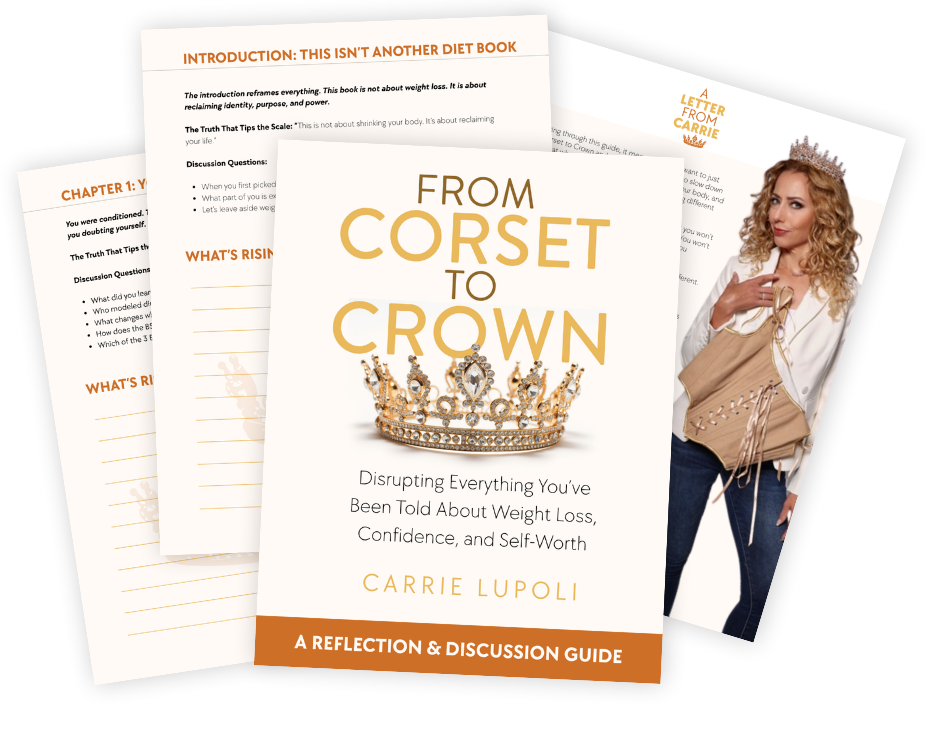

Book Companion Guide:
Whether you’re reading this on your own or with a small group, these guided questions and reflections are here to help you slow down, stay focused, and go a little deeper into what you’re taking in.
Each prompt is meant to help you slow down and connect the ideas on the page to your actual life. Instead of rushing through chapters, you’ll have an opportunity to process your beliefs, patterns, and next steps with more intention.
How to Use It
After each chapter, take a few minutes to reflect on the questions provided. You can journal your responses, talk them through with a partner, or bring them into a group discussion.
The goal isn’t to have perfect answers. It’s to build awareness. Because when you stop skimming your own life and start reflecting on it, change becomes personal, practical, and lasting.
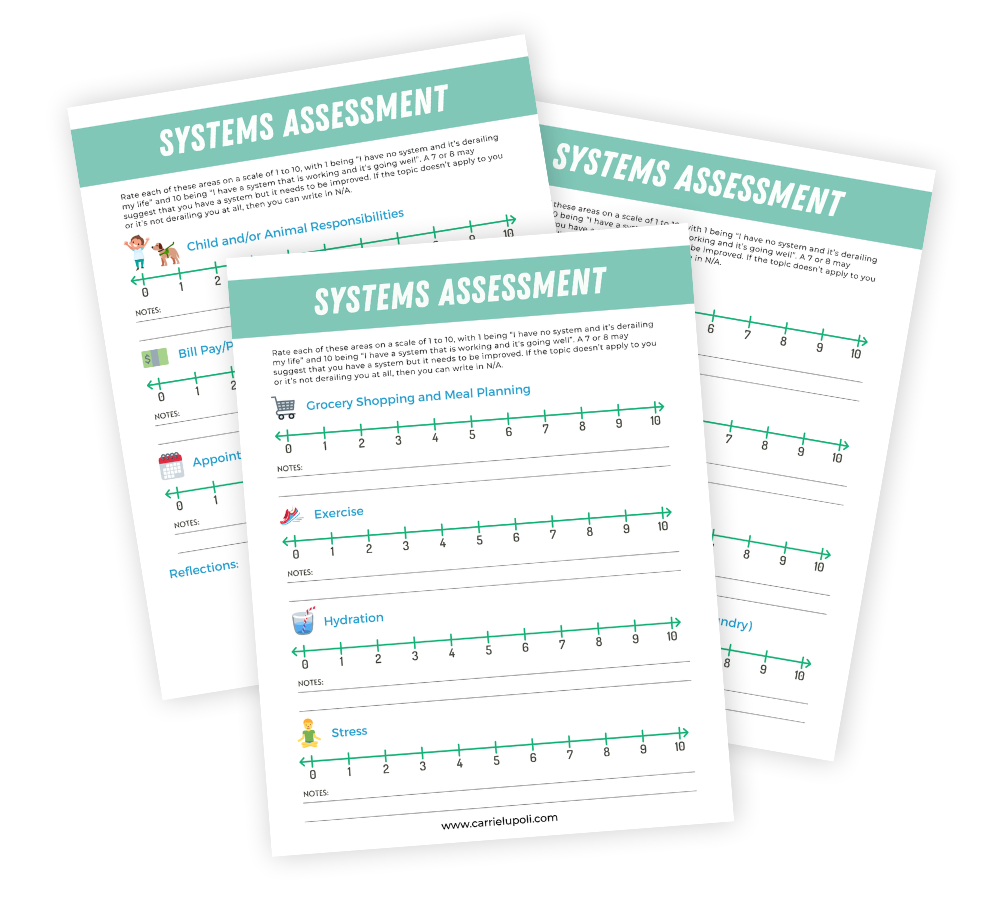

Systems Assessment
From Chapter 6,The Systems Assessment is a simple self-audit designed to help you see where your life is supported by structure and where it’s running on willpower.
You’ll rate key areas, like grocery shopping and meal planning, exercise, hydration, stress, sleep, work balance, household responsibilities, finances, and more, on a scale from 1 to 10. A 1 means you have no real system and it’s derailing you. A 10 means you have a system in place that’s working well and supporting your life.
Start by scoring each area honestly. Don’t overthink it. Your first instinct is usually right.
Then look for patterns. Where are you scoring low? Those are the areas where you’re likely relying on motivation instead of structure. A 7 or 8 often means you have a system, but it needs refining.
Choose one low-scoring area and focus on building or improving a simple, repeatable system there. Not ten changes. Just one.
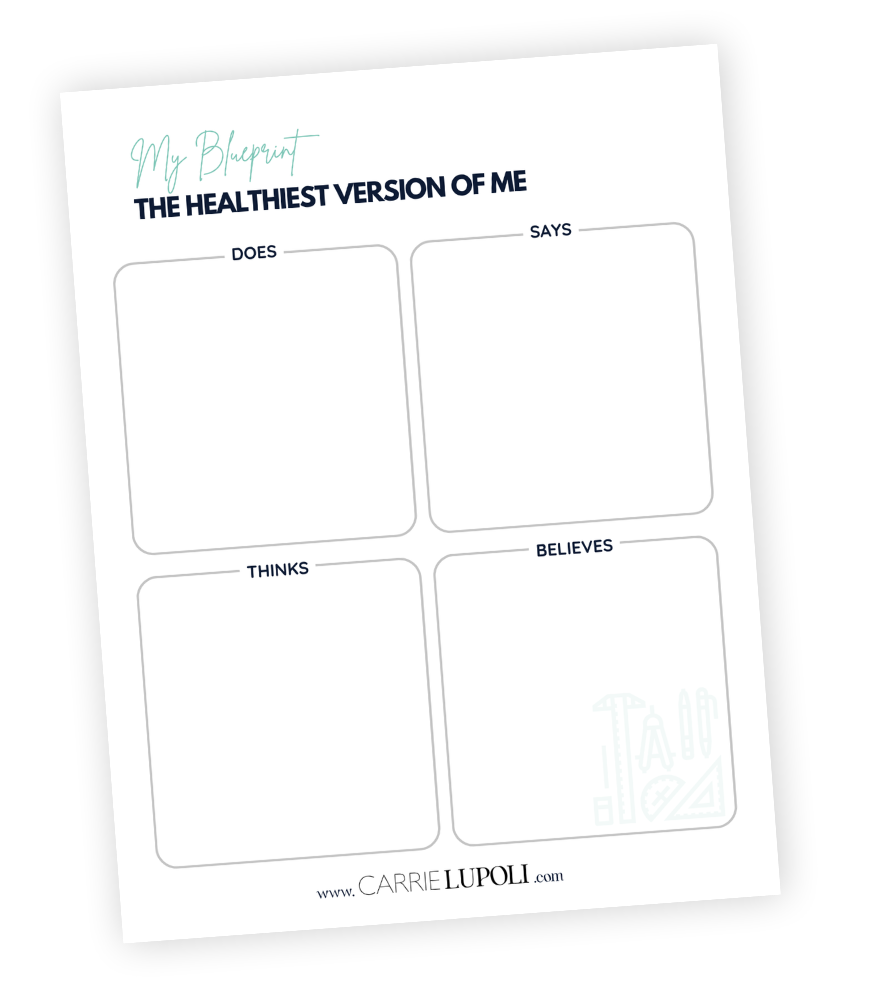

The Healthiest Version of You Blueprint
Much more powerful than setting another weight loss goal, this blueprint helps you define who you are becoming.
Instead of focusing on a number on the scale, you’ll identify what the healthiest version of you does, says, thinks, and believes.
This becomes your north star. A clear internal standard that guides your decisions, your habits, and your identity.
How to Use It
Take time to thoughtfully fill in each quadrant. Don’t rush it. Ask yourself: If I were already living as the healthiest version of me, how would I show up? What would I say to myself? What would I believe about my body? What actions would feel normal?
Keep this blueprint somewhere visible and revisit it often and update it regularly. When you feel stuck, tempted to fall back into old patterns, or unsure what to do next, come back to it.
Weight loss goals chase outcomes.
Identity creates direction.
And direction is what leads to lasting change.
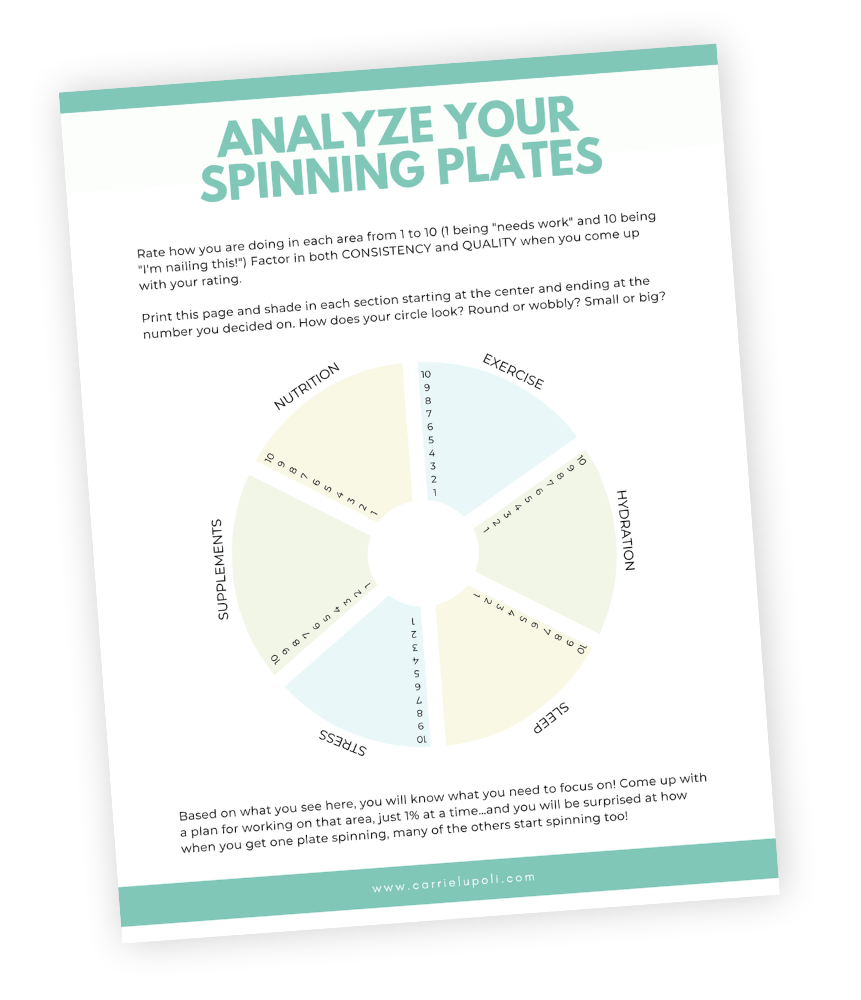

Six Spinning Plates Assessment
The Six Spinning Plates Assessment helps you see the full picture of your health instead of obsessing over just one area.
You’ll rate yourself from 1 to 10 in six key areas: Nutrition, Exercise, Hydration, Sleep, Stress, and Supplementation. When scoring, consider both consistency and quality. A 10 means you’re truly showing up in that area. A 1 means it needs attention.
How to Use It
Print the page and shade each section from the center outward to your chosen number. When you’re finished, look at your circle. Is it round and steady? Or uneven and wobbly?
This visual gives you instant clarity on which plate needs your focus right now. Instead of trying to fix everything at once, choose the lowest or most unstable area and commit to improving it just 1% at a time.
When one plate starts spinning smoothly, the others often follow.


Blood Sugar Visuals
These are the exact visuals referenced in Chapter 7: The BS of Blood Sugar. They’re designed to help you see, not just understand, what’s happening inside your body when blood sugar is stable versus when it’s spiking and crashing.
From the spike-crash cycle to the “Modern Day Health Pyramid,” these visuals connect the dots between daily choices, symptoms, and long-term disease risk.
Sometimes we don’t prioritize our health because we can’t see the consequences. These visuals make it visible.
How to Use Them
Print them and keep them somewhere you’ll see them regularly, inside a cabinet, on your desk, or near where you plan meals. Let them serve as a reminder that blood sugar stability isn’t about dieting. It’s about energy, mood, hormones, inflammation, and long-term protection.
They also work beautifully in small group settings. Use them as discussion starters. Walk through the spike and crash cycle together. Talk about which symptoms resonate most. Identify root causes and contributing factors.
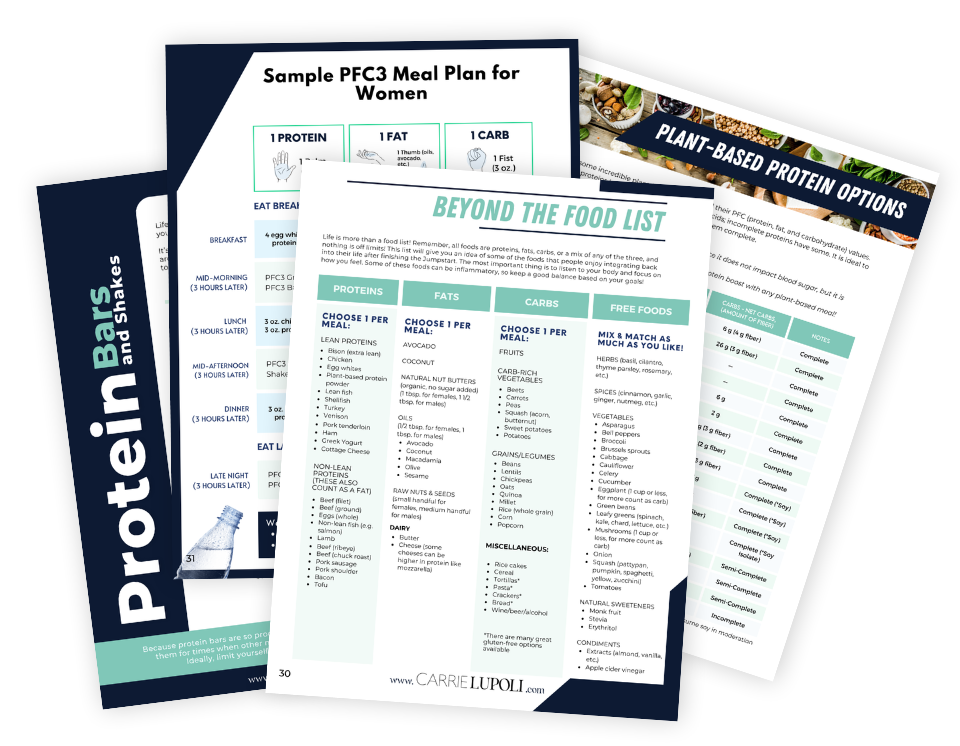

PFC3 Food Resources
These resources give you practical guidance for building balanced meals using the PFC3 framework: one protein, one fat, and one carb.
Inside you’ll find food lists, sample meal plans for women and men, plant-based protein options, and guidance for choosing protein bars and shakes wisely. This isn’t a rigid meal plan. It’s a flexible structure that helps you stabilize blood sugar while still eating real food you enjoy.
You’ll also see reminders that life is more than a food list. Nothing is off limits. The goal is balance, awareness, and understanding how food impacts your energy, cravings, mood, and long-term health.
How to Use It
Start by familiarizing yourself with the protein, fat, and carb categories. Practice building simple meals using one from each group. Use the sample meal plans as inspiration, not rules.
If you’re plant-based, reference the complete and incomplete protein chart to ensure you’re combining foods strategically. If you rely on bars or shakes, use the checklist provided to evaluate quality before grabbing one on the go.
This resource is meant to reduce confusion, not create it.
When you understand how to build a balanced plate, you stop dieting.
You start fueling.
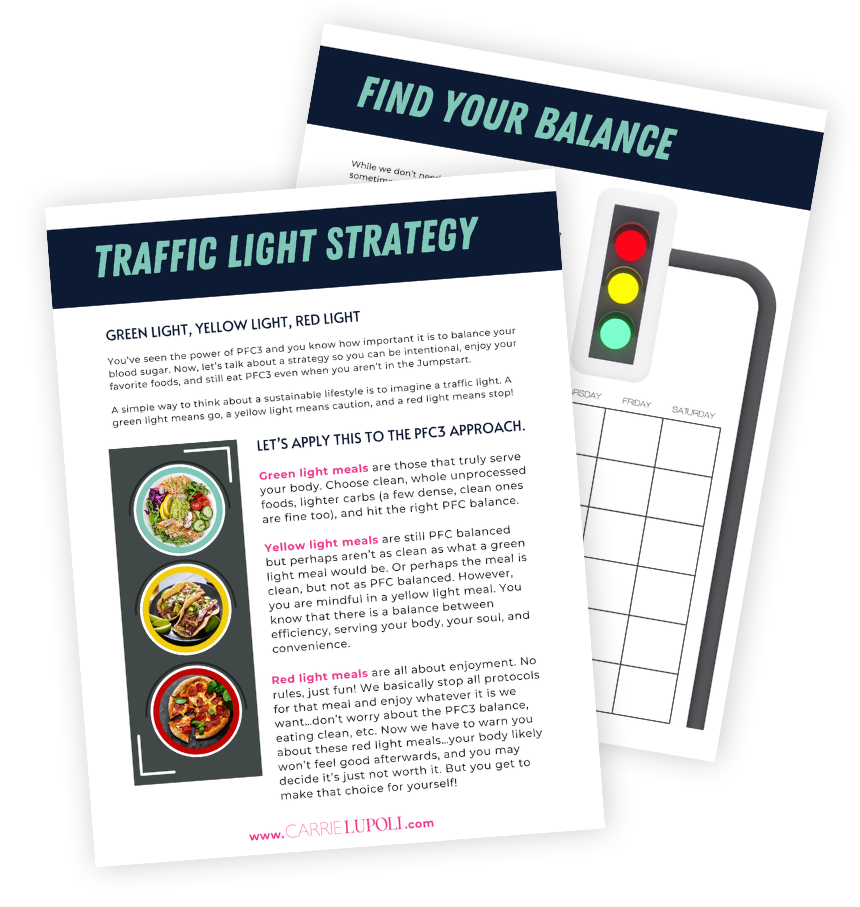

Traffic Light Strategy “Coloring Sheet”
This simple visual tool helps you assess your week without tracking calories, counting macros, or obsessing over every bite. Instead of logging food, you’ll use color.
The tracker includes six rows for your daily PFC meals and seven columns for each day of the week. After each meal, color the box green, yellow, or red based on how balanced it was. At the end of the week, you’ll have a clear snapshot of your consistency and patterns.
This isn’t about perfection. It’s about awareness. When you can see your week at a glance, you can connect your choices to your energy, cravings, mood, and overall progress toward optimal health.
How to Use It
Print the tracker and keep it somewhere visible. After each PFC meal, color in the corresponding box. Green for balanced. Yellow for slightly off. Red for out of alignment.
At the end of the week, review your pattern. Notice how your balance compares to how you felt physically and emotionally. Use it as data, not judgment.
This resource is meant to increase awareness, not control.
When you can see the pattern, you can shift the pattern.
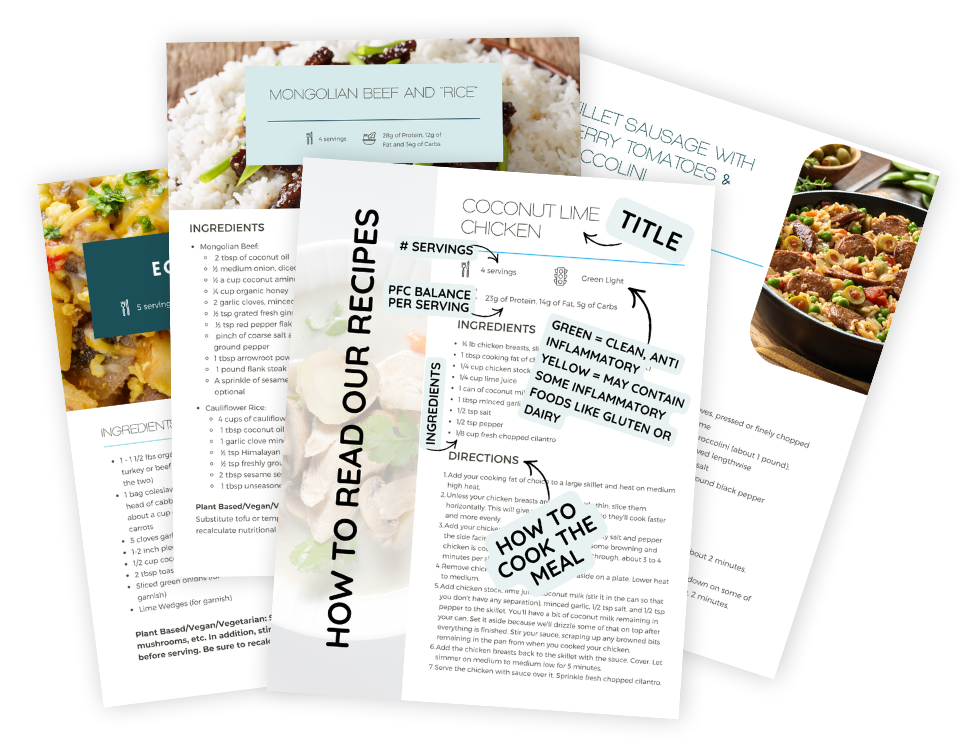

PFC3 Balanced Recipes
These recipes bring the PFC3 framework to life with real meals you can actually make and enjoy. Each recipe includes protein, fat, and carbs clearly listed per serving, along with a Green Light indicator so you can quickly see how it fits into your week.
Inside you’ll find simple skillet meals, plant-based options, family-friendly favorites, and balanced comfort foods that stabilize blood sugar without sacrificing flavor. This isn’t about complicated cooking, but it’s about making balanced meals practical and repeatable. Have fun with it!
How to Use It
- Start by choosing one or two recipes to try this week.
- Pay attention to the PFC balance listed per serving and notice how you feel after eating it.
- Use these meals as templates. Swap vegetables.
- Change proteins.
- Let them inspire your own combinations while keeping blood sugar stabilization in mind.
This resource is meant to build confidence in the kitchen, not overwhelm you. When you have go-to balanced meals, consistency becomes easier.
Keep the Rise Going
Want to rise with me every morning?
Join me on Instagram @Carrie_Lupoli for Morning Time LIVE at 8:00 am EST Monday - Thursday — it’s our daily reset to start the day with reflection, intention, and truth.
And be sure to share this opportunity with another woman who’s ready to rise too by sending her to www.CarrieLupoli.com/corsettocrown.